




































































































THE CLIMATE CHANGE IN INDIA—A DEVASTATION OF HEALTH AND PROSPERITY: LALIT GARG
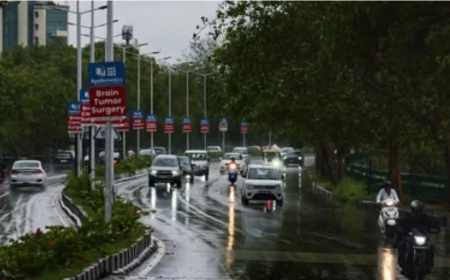
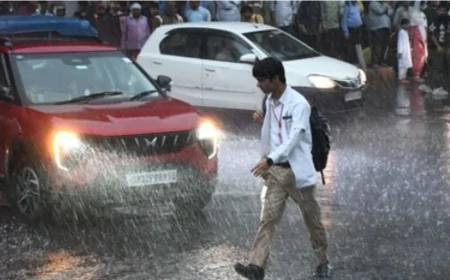
--The environmental challenges posed by climate change are now impacting the very existence of human civilization. Climate change is no longer a distant scientific concept, but an immediate reality, the severity of which is clearly evident in the Climate India 2025 report by CSE and Down to Earth. From January to September 2025, India experienced some form of extreme weather event—floods, droughts, heavy rains, storms, cold waves, or intense heat—on 99 percent of its days. During this period, 4,064 people died, 9.47 million hectares of crops were destroyed, approximately 58,982 animals died, and 99,533 houses collapsed, reflecting the depth of this crisis.

THE CLIMATE CHANGE IN INDIA—A DEVASTATION OF HEALTH AND PROSPERITY: LALIT GARG
29-NOV-ENG 12


RAJIV NAYAN AGRAWAL
ARA-----------------------------The environmental challenges posed by climate change are now impacting the very existence of human civilization. Climate change is no longer a distant scientific concept, but an immediate reality, the severity of which is clearly evident in the Climate India 2025 report by CSE and Down to Earth. From January to September 2025, India experienced some form of extreme weather event—floods, droughts, heavy rains, storms, cold waves, or intense heat—on 99 percent of its days. During this period, 4,064 people died, 9.47 million hectares of crops were destroyed, approximately 58,982 animals died, and 99,533 houses collapsed, reflecting the depth of this crisis. The agricultural sector became the biggest victim of these events, as climate imbalances directly affected farms, weather cycles, and yields. Rising temperatures and abnormal rainfall have severely impacted the rural economy. These challenges are the greatest in the world's most populous country. The 257 days of extreme weather in Himachal Pradesh, 532 deaths in Madhya Pradesh, and the loss of 8.4 million hectares of crops in Maharashtra demonstrate that this is not just an environmental issue, but a crisis of human life, health, and the economy.


In 2025, at least 18 states and union territories recorded the highest number of extreme weather days since 2022. From February to September 2025, extreme weather events were recorded in 30 or more states and union territories across the country for eight consecutive months. The situation in India is spreading globally. The years 2023, 2024, and 2025 were among the world's hottest years. Europe's persistent heatwaves, famines in Africa's Sahel region, forest fires in the Amazon and Australia, raging storms in the Pacific and Atlantic Oceans, and rapidly melting glaciers indicate that the Earth is heading toward a dangerous turning point. Weather imbalances, sea level rise, sudden temperature spikes, and erratic rainfall are not only making natural disasters more frequent but also making human life vulnerable. The primary cause of climate change is human activities—dependence on fossil fuels, deforestation, pollution, unplanned urbanization, and excessive consumption have increased greenhouse gases in the atmosphere to dangerous levels, resulting in abnormally warming Earth.
The impact of these conditions is visible in every sphere of life. Health impacts are increasing, deaths due to heatwaves are on the rise, and the frequency of new viruses and pollution-induced diseases has increased. Water resources are under threat, and rivers and groundwater are rapidly drying up in many regions. The food crisis is deepening as crops fail, driving up prices for grains and vegetables. Natural disasters are also disrupting economic structures, displacing millions, and rapidly increasing inequality. If the world fails to meet its goal of keeping temperatures below 1.5 degrees Celsius, the flow of Himalayan rivers will become erratic in the next three decades, coastal cities will be threatened, and human life will become increasingly difficult.
According to another report recently released, "The Lancet Countdown on Health and Climate Change 2025," climate change factors caused a 66% loss in the agricultural sector and a 20% loss in the construction sector last year. The report indicates that the loss of labor capacity due to extreme heat has resulted in a loss of $194 billion in potential income. It is noteworthy that this report was prepared by 128 international experts from 71 academic institutions and United Nations agencies, led by University College London. This report provides the most comprehensive assessment to date of the link between climate change and health. It states that between 2020 and 2024, an average of 10,000 deaths per year in India were linked to PM 2.5 pollution caused by forest fires. Worryingly, this increase represents a 28% increase compared to the period from 2003 to 2012, which should be a matter of serious concern.
Ironically, despite the serious findings of The Lancet, there appears to be no sincere international effort to jointly address this crisis. It is an undeniable fact that the world's developed nations are constantly evading their responsibility. The irresponsible approach adopted by US President Donald Trump, particularly in recent years, makes it unlikely that any serious joint global initiative to address this crisis will materialize in the near future. Developed nations appear to be ignoring the standard recommendations of the Paris Agreement. The facts revealed in CSE and Down to Earth's Climate India and The Lancet Countdown on Health and Climate Change 2025 reports are eye-opening and alarming.
Reacting to these worrying reports, CSE Director General Sunita Narain said, "The country no longer needs to just count disasters, but understand the scale at which climate change is occurring." She stressed the urgent need for global emission reductions, as no adaptation will be possible for disasters of this scale. CSE Program Director Kiran Pandey acknowledged that The report described rising temperatures during the summer as a worrying sign, which could trigger erratic and extreme weather events. Richard Mahapatra, Managing Editor of Down to Earth, said that this report is a necessary warning, and without decisive mitigation efforts, today's disasters will become tomorrow's new normal. At such a time, it's not just the responsibility of governments and international organizations, but every individual citizen must also participate in environmental protection. First and foremost, it's essential to adapt lifestyles to nature. Small actions like energy conservation, limited and judicious use of water, avoiding plastic, planting trees, segregating and recycling organic waste can yield significant results. At the domestic level, using solar energy, rainwater harvesting, composting kitchen waste, and reducing unnecessary consumption have a positive impact on the environment. Reducing vehicle use, prioritizing public transport, and adopting eco-friendly options like walking and cycling are powerful steps toward combating climate change.
Environmental sensitivity is as important as technological efforts. A sense of respect for nature, judicious use of resources, and a vision to preserve the Earth for future generations can become our collective strength against the climate crisis. If society develops the awareness that preserving nature is the foundation of life and progress, change begins naturally.
Education, awareness, and public participation are the most important weapons in this fight. Training children in environmental values in schools and homes will be extremely beneficial for the future. The climate crisis will not stop on its own; to stop it, determination, joint efforts, and making sustainable development a priority in life are essential. We only have one Earth, and there is no alternative. The message of the times is that if we do not take nature's warnings seriously, the times ahead will be even more difficult for humanity. But if every human being fulfills their part, the course of climate change can be reversed and the Earth can be provided with balance, peace, and stability.
What's Your Reaction?
 Like
0
Like
0
 Dislike
0
Dislike
0
 Love
0
Love
0
 Funny
0
Funny
0
 Angry
0
Angry
0
 Sad
0
Sad
0
 Wow
0
Wow
0