



















































SAWAN MANBHAWAN: GREENERY OF LITERATURE AND SENSIBILITY IN THE WET SEASON
Sawan is not just a season, but a deep spiritual feeling in Indian life, literature and culture. This season not only makes the earth green, but also wets the mind. Through folk songs, swings, Teej and poetry, Sawan becomes the voice of women's expression, waiting for love and the pain of separation.

SAWAN MANBHAWAN: GREENERY OF LITERATURE AND SENSIBILITY IN THE WET SEASON
15-JULY-ENG 43


RAJIV NAYAN AGRAWAL
ARA--------------------------Sawan is not just a season, but a deep spiritual feeling in Indian life, literature and culture. This season not only makes the earth green, but also wets the mind. Through folk songs, swings, Teej and poetry, Sawan becomes the voice of women's expression, waiting for love and the pain of separation.


Literary writers have seen it sometimes in makeup, sometimes in separation, and sometimes as a symbol of nature. But today's modern mind understands Sawan only as a season, does not feel it. This article highlights the cultural, literary and emotional aspects of Sawan and reminds us that getting wet is important not only with the body, but also with the soul.
Sawan teaches us - connect with nature, look within, and live the sensibility.
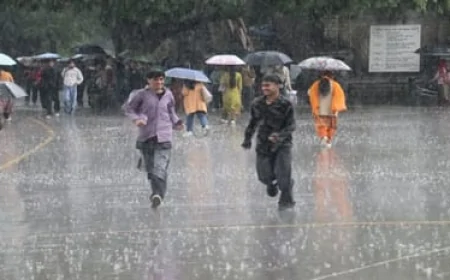
Sawan has arrived. With the first knock of the rainy season, when the clouds gather and the drops kiss the earth, not only the trees and plants, but the inner soul of man also starts becoming green. This month is not only of rain, but of memory, sensitivity and creation. When Sawan arrives, poetry starts flowing, folk songs start resonating, anklets start tinkling and even the angry love returns after dissolving in the moisture.
In the Indian psyche, seasons have been symbols of life, not just weather. Spring comes as the month of love, summer as the month of penance and Sawan as the month of waiting. In Sawan, often the beloved is alone, the beloved has gone to some faraway land, and in the midst of waiting, the poetry of separation is born. Therefore, the arrival of Sawan in literature is not only a natural, but a spiritual event.
Kajari songs like “Naihar se bhaiya bulaawa bhejwaa de”, “Kajrare nayanwa kahe bhar aayil”, are not just voices, they flow as the water of pain. The month of Sawan is the most colourful chapter of Indian folk tradition. Somewhere Teej is being celebrated, somewhere swings are being put up, somewhere mehndi is being applied and somewhere Rakhi songs are being prepared for sisters. This month is the time of creative flight of the female mind. Grandmothers' stories, mothers' songs, and daughters' wait - everything dissolves in the air of Sawan.
In states like Haryana, Uttar Pradesh, Bihar, Jharkhand and Rajasthan, Kajri, Jhula Geet, Sawani and Hariyali Teej take the form of folk poetry. These songs are not just entertainment, but cultural documents of women's empowerment - where women sing their feelings, complaints, love and even rebellion.
Literary writers have seen Sawan not only for depiction of nature, but also as a representative of human emotions. In the words of Mahadevi Verma, Sawan is the pain of loneliness:
"Neer Bhari Dukh Ki Badli" (water filled with sorrow). Maithilisharan Gupt saw Saavan in Shringar Rasa –
“From the playful rays of Chapala, drops of rain fell”
Be it Gulzar’s poem or Nagarjun’s language, Saavan says something for everyone. For some, it is the memory of broken relationships, for some, childhood spent in mother’s lap, and for some, the wet first night of love.
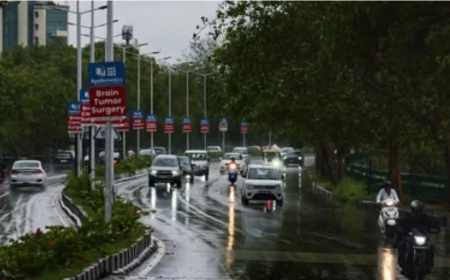
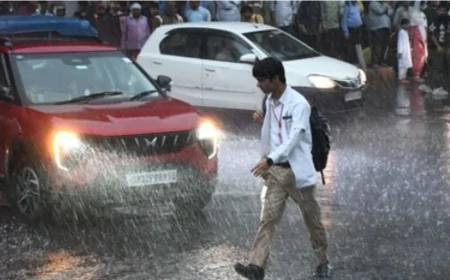
Today, when we sit in AC rooms, read weather updates on mobile, the real fragrance of Saavan gets lost somewhere. We have made rain only a traffic problem. Saavan has now become an Instagram story.
But have we ever felt the rain within?
The rain that washes us away – of ego, dryness, fatigue. Saavan moistens us again – makes us human. This season is an invitation to return to the lap of nature.
Today’s poets should not just depict Saavan, but should also capture the inconsistencies hidden within it. When there is no water in the fields of rural India and waterlogging in the cities, then this inequality should also become the subject of literature.
Poetry, apart from swings and kajri, will also have to give words to the unfulfilled dreams of farmers, ruined crops, and the crisis of climate change.
Saavan is not only the subject of poetry, it is also a favorite time of theater and folk dramas. In many parts of North India, swing festivals, Sawan song competitions, folk drama and poetry seminars are organized in this season.
This season is like the rebirth of artists. Their colors, their voices and their stage, all get moist – which reaches directly to the heart of the audience.
Today's man is seeing Sawan, but is not feeling it. His mind is entangled in so much information, machines and facts that he takes rain only as a forecast of the Meteorological Department.
But if you want to understand Sawan, you will have to open the window – of the mind as well as the room.
The drops will have to fall not only on the skin, but also on the soul. Sawan reminds us that a balance is needed between development and destruction.
The intense heat before the rains, water scarcity, forest fires – all this tells us that we have disturbed the balance of nature.
The rains of Sawan provide some relief from this disturbance, but also warn us that if we do not correct it now, Sawan will remain only a memory.
Let Sawan come. Let it come inside. When it falls as a drop, it should not fall only on the roofs, but also in your poetry. When it swings as a swing, it should not swing only on the trees, but also in your imagination. This season is of the mind, we just need to recognize it.
Those swings of childhood, the colors of henna applied by mother, the utensils kept on the roof, and the naked child running in the field – all are still alive somewhere inside us. Let them come out in Sawan.
Whenever clouds gather, do not pick up the mobile, open the window. And if you feel like it, sing an old song –“Come to meet me sometime, sing songs of the monsoon…”
What's Your Reaction?
 Like
0
Like
0
 Dislike
0
Dislike
0
 Love
0
Love
0
 Funny
0
Funny
0
 Angry
0
Angry
0
 Sad
0
Sad
0
 Wow
0
Wow
0