

























































REVOLUTIONARY ROLE OF PATNA’S YOUTH IN QUIT INDIA MOVEMENT-DO OR DIE
Quit India Movement which started on this day 83 years ago proved to be a turning point in India's freedom struggle. On 9 August 1942, Mahatma Gandhi's slogan 'Do or Die' united the country and the last decisive battle for independence began. Bihar, especially Patna, played a very important role in this movement.

REVOLUTIONARY ROLE OF PATNA’S YOUTH IN QUIT INDIA MOVEMENT-DO OR DIE
15-AUG-ENG 6


RAJIV NAYAN AGRAWAL
PATNA-----------------------Quit India Movement which started on this day 83 years ago proved to be a turning point in India's freedom struggle. On 9 August 1942, Mahatma Gandhi's slogan 'Do or Die' united the country and the last decisive battle for independence began. Bihar, especially Patna, played a very important role in this movement.


Quit India Movement started at a time when India had been pushed into the horrors of the Second World War. Japan had become aggressive against the British Empire and the threat to India from the eastern borders had increased. Britain included India in the war, but Indian leaders did not believe that Britain would be able to protect India. In such a situation, the Congress leaders decided that now the time has come when the British will have to leave India.
On 8 August 1942, in the historic meeting of the Congress Working Committee at Gowalia Tank Ground in Bombay (now Mumbai), the proposal of 'Quit India Movement' was passed. Mahatma Gandhi gave the slogan of 'Do or Die' and demanded the British to vacate India immediately. As soon as the movement was announced, the British government came into action and from the morning of 9 August, top Congress leaders were arrested across the country.
Prof. Avinash Kumar, Head of the History Department of Patna University, says that "Patna's participation in the Quit India Movement was not just symbolic, but decisive. Mahatma Gandhi had taught the country through the Non-Cooperation Movement of 1920 that a movement depends not only on leaders but on the common people. This thinking gave the basis for the Quit India Movement to spread across the country." Patna, which has been the center of political activities since then, had become the bastion of youth leadership and ideology due to Patna University being a residential university at that time. Prof. Avinash tells that the students of Patna University were very active in politics along with studies. If there was any political activity anywhere in the country, the students of the university would definitely hold a meeting and discuss it. Meanwhile, as soon as the movement was announced on 9 August, the students here spontaneously took charge of the movement.
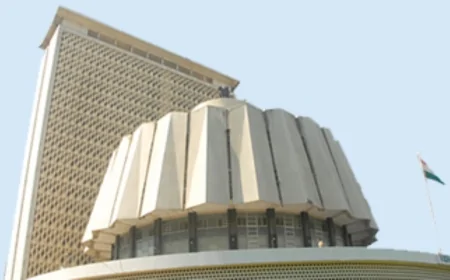
Prof. Avinash Kumar told that inspired by the consciousness of 9 August, on 11 August, a historic event took place on the land of Patna, which broke the backbone of the British. Where Saptamatru Shaheed Smarak is located in front of the Vidhan Sabha today, there was the secretariat of the British government at that time. Seven youths, carrying flags in their hands, moved forward to hoist the tricolor on that building.
As soon as they tried to hoist the flag on the secretariat, the British started firing bullets. The youth walking in the front was shot in the chest but before he fell, the one behind caught the flag. In this sequence, all the seven youths were shot one by one, but did not let the tricolour bow down. Finally, Masaurhi resident Ramanuj Singh, a BA third year student of Patna University, took out the tricolour from his pocket and hoisted it on the secretariat.''- Prof. Avinash Kumar, Patna University
Prof. Avinash Kumar said that this incident became a symbol of the cruelty of the British rule and the unwavering commitment of the Indians not only in Bihar but in the whole of India. The British rule was shocked. This incident showed that now people have no fear of the British. People had stopped fearing the bullets of the British and this incident shook the roots of the British rule. This is the reason why this incident was immortalised in history as 'August Revolution' after independence.
Prof. Avinash says that today's Gandhi Maidan was then called 'Bakipur Golf Course'. After the incident of 11 August, there was a huge gathering of students of Patna University here. This place soon became a hub for formulating the strategy of the movement and challenging the British rule. To suppress this uprising, the British arrested hundreds of students and put them in Bankipur jail. But the number of arrested students was so high that later they had to be shifted to jails like Hazaribagh, Ranchi, Bhagalpur and Buxar. This became a symbol of the expansion of the student movement and the strength of the youth.
Hazaribagh Jail Break: Prof. Avinash tells that two students of Patna College - Jayaprakash Narayan and Baikunth Shukla, stood up as the second line leaders of this movement. Both of them were imprisoned in Hazaribagh jail, but after escaping from there, they openly challenged the British rule. Both of them carried out the Hazaribagh Jail Break incident.
"Jai Prakash Narayan and Baikunth Shukla broke the Hazaribagh jail and took many revolutionaries with them. After escaping from the jail and reaching the Nepal border, both the leaders planned to fight the British with guerrilla tactics. By staying in Nepal, where the British Raj did not have direct control, they gave a new dimension to the movement. Jaiprakash Narayan decided that as long as there are no trained soldiers and weapons, guerilla warfare is the only solution.''-Prof. Avinash Kumar, Patna University.
The role of Patna's student leaders in the Quit India Movement was particularly noteworthy. Prof. Avinash tells that this movement was extraordinarily successful despite being leaderless. The British thought that they would end the movement by sending the top leadership to jail, but this proved to be their biggest mistake. Gandhiji The teachings of the mass movement of Patna had made millions of youth capable of leadership.
Prof. Avinash tells that the Saptamatru Smarak in front of Patna Secretariat today is a symbol of the martyrdom of those seven brave youths who did not let the tricolor fall. This memorial is not only a living memory of the freedom struggle on the land of Patna but is also a source of inspiration for the coming generations.
9th August is celebrated every year as 'Kranti Diwas', but this day is not just a historical memory. This day reminds us that when it comes to the independence of the country, no movement can be successful without youth power, public participation and leadership. The light of the torch that was lit 83 years ago is still in the consciousness of us Indians.
What's Your Reaction?
 Like
0
Like
0
 Dislike
0
Dislike
0
 Love
0
Love
0
 Funny
0
Funny
0
 Angry
0
Angry
0
 Sad
0
Sad
0
 Wow
0
Wow
0