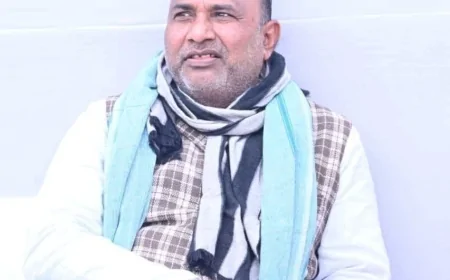













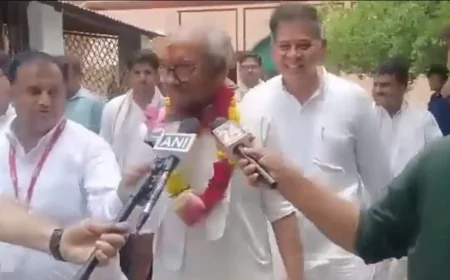
































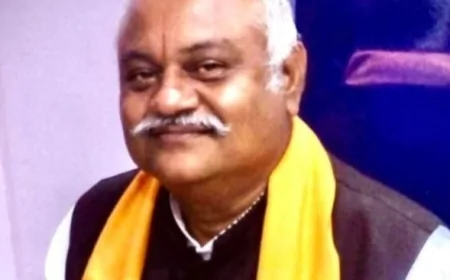
















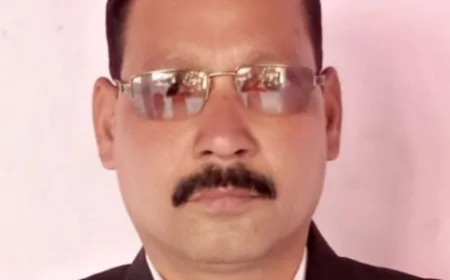






THE VB-G RAM JI BILL IS A DIRECT ATTACK ON THE SOUL OF MANREGA: DEVANAND SINGH
No matter how modern the language of NITI Aayog documents and government press releases may be, the real pulse of rural life in India is still determined by farming, labor, and uncertain employment. It is against this rural reality that the Mahatma Gandhi National Rural Employment Guarantee Act (MNREGA) has, over the past two decades, established itself not only as a scheme but also as a rights-based social security net. This is why Nobel laureate economist Joseph Stiglitz described it in 2016 as India's most fundamental and innovative program and advised the whole world to learn from it.

THE VB-G RAM JI BILL IS A DIRECT ATTACK ON THE SOUL OF MANREGA: DEVANAND SINGH
21-DEC-ENG 8


RAJIV NAYAN AGRAWAL
ARA--------------------------No matter how modern the language of NITI Aayog documents and government press releases may be, the real pulse of rural life in India is still determined by farming, labor, and uncertain employment. It is against this rural reality that the Mahatma Gandhi National Rural Employment Guarantee Act (MNREGA) has, over the past two decades, established itself not only as a scheme but also as a rights-based social security net. This is why Nobel laureate economist Joseph Stiglitz described it in 2016 as India's most fundamental and innovative program and advised the whole world to learn from it.


But now, the same MNREGA stands at a critical juncture. The Modi government has introduced a new bill to replace this 20-year-old law, named the 'Viksit Bharat Guarantee for Employment and Livelihood Mission (Rural)', which is being referred to in short as 'VB-G Ram Ji'. Along with the name change, this new act proposes several structural changes that have raised serious questions regarding the rural economy, the federal structure, and social justice. To understand MNREGA, it would be insufficient to view it merely as an employment scheme. It was India's first law that provided a legal guarantee of employment to rural families. Under this act, introduced by the UPA government in 2005, every rural household was guaranteed 100 days of unskilled work per year. If work was not provided within 15 days, there was a provision for unemployment allowance. This system was revolutionary in itself because it transformed employment from a matter of government favor to a citizen's right. In drought-prone states like Rajasthan, where villagers once begged for work at the doors of village heads, MNREGA shifted the balance of power. Now, the worker made the demands, and the government was accountable. The greatest relevance of MNREGA came to the fore during the Covid-19 pandemic. When millions of workers returned to their villages from cities after losing their jobs, MNREGA was the last resort that saved rural India from complete collapse. In 2020-21, the MNREGA budget reached a record high of Rs 1.11 lakh crore. The demand for employment was unprecedented, and it became clear that in times of crisis, MNREGA was not just an employment scheme, but a social pillar of national disaster management.
The government argues that the new act is in line with the goal of a ‘developed India’ and that it increases the number of employment days to 125. At first glance, this change may seem positive, but the real question is whether this employment will still be guaranteed? The most controversial provision in the new bill is that the scheme will no longer be automatically applicable across the country; the central government will have the authority to decide in which states and areas it will be implemented, and the expenditure ratio between the center and the states has been changed to 60:40. This change is a direct attack on the very essence of MNREGA.
Until now, the central government bore the entire cost of wages under MNREGA, while states had limited participation in material and administrative expenses. This did not deter states from increasing the demand for employment, but the new proposal obligates states to bear 40% of the total expenditure. At a time when most states are already grappling with financial crises, this change may discourage them from participating in the scheme. Experts say that if the demand for employment increases, the states' expenditure will also increase. In such a scenario, many states will either limit the scheme or lose interest in it altogether. This directly means that the guarantee of employment may remain limited to paper.
An important aspect of MNREGA was the administrative role of the states. Local governance, from Gram Panchayats to the district level, was given a decisive role in it. This strengthened democratic decentralization. This balance seems to be disrupted in the new bill. Section 5(1) grants the central government the authority to decide where the scheme will be implemented and how much funding will be allocated. This means that employment guarantees will now depend on the budget, not on a legal right. This change signals a shift from an entitlement-based scheme to a discretionary one.
A major social contribution of MGNREGA has been the participation of over 56% women, the prioritization of Scheduled Castes and Tribes, and the permission to carry out work on the private land of small and marginal farmers. However, the new proposal links the scheme to water resources, roads, digital infrastructure, and rural housing – sectors for which separate ministries and schemes already exist. This raises concerns that the MGNREGA budget will be diverted from rural employment to large infrastructure projects. The first to suffer the consequences will be the unskilled laborers for whom this scheme was created.
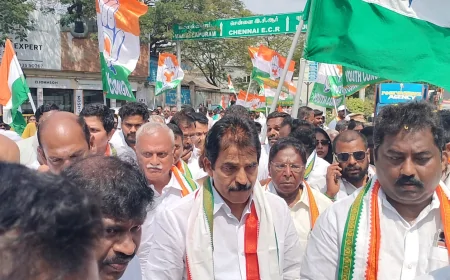
One aspect of the controversy is also symbolic. The Congress party alleges that Mahatma Gandhi's name has been removed from the new act. This is not merely a matter of a name, but also of the ideology that placed villages, labor, and self-reliance at its core. This is the first time since independence that Gandhi's name has been removed from a national scheme. This change also reflects the growing ideological distance between the current administration and Gandhian thought.
It is true that MGNREGA has not been immune to allegations of corruption. Complaints of fake job cards, payments without work, and fictitious employment have surfaced, but the solution to these problems is not to weaken the scheme, but to strengthen it. Instead, the goal was to make it transparent. Measures like RTI, social audits, Aadhaar-based payments, and digital tracking have made MNREGA more accountable than ever before. This shows that reform was possible, provided there was political will.
Overall, MNREGA has become more than just an employment scheme for India's rural society. It has become a means to prevent migration, empowered women with economic independence, provided Dalit and tribal communities with the opportunity to work with dignity, and led to the creation of sustainable assets in villages. If the new act truly aims to lead towards a developed India, it must preserve the spirit of MNREGA—the guarantee of employment, the rights-based framework, and the federal balance.
Otherwise, there is a strong apprehension that 'VB-G Ram Ji' will remain a scheme that is grand in name but limited in impact, and India's rural laborers will once again return to the same cycle of uncertainty from which MNREGA was created to liberate them. Today, the question is not whether MNREGA should be reformed or not. The question is whether India is ready to transform its largest social security law from a right-based entitlement to a mere grant.
What's Your Reaction?
 Like
0
Like
0
 Dislike
0
Dislike
0
 Love
0
Love
0
 Funny
0
Funny
0
 Angry
0
Angry
0
 Sad
0
Sad
0
 Wow
0
Wow
0