




















































LAUNDA NACH OF BHOJPUR: A VIBRANT FOLD TRADITION—ORIGIN, RISE, PRESENT STATUS AND CULTURAL DYNAMICS
-In the culturally rich tapestry of Bihar's Bhojpuri region, few art forms capture the essence of folk expression as vividly as Launda Nach. This unique performance tradition, where young men dress in women's attire to dance, sing, and enact comedic or satirical sketches, has long been a staple of celebrations in Bhojpur district. Often performed at weddings, festivals, and social gatherings, Launda Nach blends elements of dance, theater, music, and humor, reflecting the region's vibrant oral traditions and social commentary. The term "Launda Nach" literally translates to "boy's dance," highlighting its distinctive feature: male performers, known as "laundas," who impersonate women with elaborate makeup, saris, and jewelry, delivering energetic routines to Bhojpuri folk songs accompanied by instruments like the dholak, harmonium, and shehnai.

LAUNDA NACH OF BHOJPUR: A VIBRANT FOLD TRADITION—ORIGIN, RISE, PRESENT STATUS AND CULTURAL DYNAMICS
21-AUG-ENG 10


RAJIV NAYAN AGRAWAL
ARA-------------------------In the culturally rich tapestry of Bihar's Bhojpuri region, few art forms capture the essence of folk expression as vividly as Launda Nach. This unique performance tradition, where young men dress in women's attire to dance, sing, and enact comedic or satirical sketches, has long been a staple of celebrations in Bhojpur district. Often performed at weddings, festivals, and social gatherings, Launda Nach blends elements of dance, theater, music, and humor, reflecting the region's vibrant oral traditions and social commentary. The term "Launda Nach" literally translates to "boy's dance," highlighting its distinctive feature: male performers, known as "laundas," who impersonate women with elaborate makeup, saris, and jewelry, delivering energetic routines to Bhojpuri folk songs accompanied by instruments like the dholak, harmonium, and shehnai.


Bhojpur district, located in western Bihar and known for its historical significance in the Indian freedom struggle (e.g., the 1857 revolt led by Kunwar Singh), serves as a cradle for this art form. Launda Nach is not just entertainment; it's a mirror to society, often incorporating satire on politics, gender roles, and everyday life. Its fame extends beyond local boundaries, influencing Bhojpuri cinema, music, and even political events. Notably, former Bihar Chief Minister Lalu Prasad Yadav has been a vocal enthusiast of Launda Nach, frequently attending and enjoying performances, which has added a layer of political patronage to its popularity. Videos of Yadav relishing Launda Nach at his residence or public events have gone viral, underscoring how this folk art intersects with contemporary politics and culture.
This article delves into the origin, rise, and present status of Launda Nach in Bhojpur, while exploring relevant matters such as its socio-cultural implications, gender politics, economic aspects, controversies, and its role in modern entertainment. Drawing from historical accounts, ethnographic studies, and contemporary observations, it paints a comprehensive picture of an art form that has evolved from rural folk roots to a symbol of Bhojpuri identity, yet faces challenges in an era of globalization and changing social norms.
The origins of Launda Nach trace back to the folk traditions of the Bhojpuri-speaking communities in Bihar and eastern Uttar Pradesh, with Bhojpur district emerging as a key hub due to its central location in the Bhojpuri cultural belt. The term "Launda Nach" is derived from "launda," a colloquial Bhojpuri word for a young boy or lad, and "nach," meaning dance. However, its deeper roots lie in ancient Indian performing arts, particularly the Nat-Nati tradition mentioned in Sanskrit texts like the Natya Shastra (circa 200 BCE–200 CE), where male actors often portrayed female roles in theatrical performances.
Historically, Launda Nach evolved during the medieval period, influenced by the Bhakti movement and Sufi traditions that emphasized devotional music and dance. In the 16th–17th centuries, during Mughal rule, folk theater forms like Nautanki and Swang incorporated cross-dressing for comedic effect, as women were barred from public performances due to social taboos. In Bhojpur, this blended with local Bhojpuri folk songs (biraha and kajri) to create a hybrid form. The art form gained traction among migrant laborers (bidesiya, meaning "from foreign lands"), who performed it during festivals to cope with separation from home. As per ethnographic studies, Launda Nach originated as a male-only troupe (naach party) in the 19th century, when economic pressures forced young men from lower castes (often Dalit or backward communities like Nat or Dom) into this profession for livelihood.
In Bhojpur, the form's genesis is linked to the region's agrarian society and caste dynamics. During the British colonial era, Bhojpur's economy was dominated by indigo cultivation and zamindari exploitation, leading to poverty that pushed men into performative arts. Launda Nach became a way to earn during wedding seasons (October–February), where performers entertained all-male audiences with ribald humor and dances mimicking female grace. The Harivansh Rai Bachchan-inspired view sees it as an extension of "Bidesiya," a theater form created by Bhikhari Thakur in the early 20th century, incorporating migration themes and social satire. Thakur, a Bhojpuri playwright from Chhapra (near Bhojpur), popularized cross-dressing in his plays, influencing Launda Nach's theatrical elements.
The origin also ties to gender norms: In conservative Bhojpuri society, women were restricted from public dancing, creating a niche for male impersonators. This cross-dressing, while entertaining, carried stigma, associating performers with effeminacy or lower social status. Early performers were often from nomadic communities like the Nat, who traveled villages, blending acrobatics with dance. By the late 19th century, Launda Nach had solidified as a professional art, with troupes (akhadas) training young boys (aged 10–20) in makeup, dance steps, and vocal modulation.
Relevant to its origin is the cultural exchange with neighboring regions: Influences from Uttar Pradesh's Nautanki and Bengal's Jatra added dramatic flair, while Bhojpuri migration to Mauritius and the Caribbean in the indenture era exported the form, where it evolved into "Lavanda Naach." Thus, Launda Nach's birth in Bhojpur was a confluence of economic necessity, social restrictions, and artistic innovation, making it a resilient folk tradition.
The rise of Launda Nach in Bhojpur can be attributed to its adaptability and appeal in a society where entertainment was scarce and tied to rituals. From the early 20th century, the form gained momentum during weddings and festivals like Chhath Puja, Holi, and Ram Navami. In Bhojpur's rural settings, where electricity and cinema were luxuries until the 1980s, Launda Nach provided affordable, all-night entertainment. Troupes, consisting of 5–10 members (dancers, musicians, comedians), were hired for Rs 500–2,000 per show in the 1950s, rising to Rs 50,000–2 lakhs today for top performers.
The art's popularity surged with the Bhojpuri cultural revival in the 1960s–70s, fueled by migration to urban centers like Mumbai and Delhi. Bhojpuri films, starting with Ganga Maiyya Tohe Piyari Chadhaibo (1963), incorporated Launda Nach sequences, popularizing it beyond villages. Songs like "Launda Badnam Hua" from films mocked yet celebrated the form, turning performers into stars. Famous laundas like Ramchandra Manjhi (Padma Shri recipient in 2021) rose from Bhojpur roots, performing for decades and keeping the tradition alive.
Socially, Launda Nach rose as a form of catharsis. Its satirical skits lampooned politicians, in-laws, and social evils, providing comic relief in a patriarchal society. For migrant workers, it evoked nostalgia through themes of separation (bidesiya). Economically, it became a livelihood for marginalized communities, with performers earning during peak seasons and supporting families. The 1990s liberalization boosted its visibility; Bhojpuri music videos and albums featured Launda Nach, with artists like Pawan Singh blending it with modern beats.
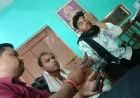
Politically, the form gained patronage from leaders like Lalu Prasad Yadav, Bihar's former Chief Minister (1990–2005). Yadav, known for his folksy style and Bhojpuri roots, has openly expressed fondness for Launda Nach, attending performances at his residence and public events. In 2023, videos of Yadav enjoying Launda Nach at Rabri Devi's Patna home went viral, with him clapping to dances by men in female attire. His son Tej Pratap Yadav has also participated, linking the art to Yadav's populist image. During elections, parties hire launda troupes for rallies, using satire to criticize opponents, as seen in 2015 when Yadav was "welcomed with folk dance."
The rise also involved gender politics: While empowering performers economically, it reinforced stereotypes, with laundas facing mockery for "effeminacy." Yet, it challenged norms by allowing men to explore fluidity in a safe, performative space. By the 2000s, Launda Nach had become a Rs 100 crore industry in Bihar, with 5,000+ performers, many from Bhojpur. Its integration into Bollywood (e.g., cameos in films like Gangs of Wasseypur) and YouTube channels amplified its reach, turning local artists into celebrities.
Today, Launda Nach in Bhojpur thrives amid modernization, but faces existential threats. With over 200 troupes in the district, it remains a wedding staple, commanding fees up to Rs 5 lakhs for premium shows. Digital platforms have boosted visibility: YouTube channels like "Bhojpuri Launda Nach" garner millions of views, with performers live-streaming for tips. The COVID-19 pandemic hit hard, canceling events, but post-2021 recovery saw a surge, with hybrid online-offline performances.
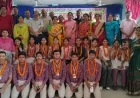
Evolution is evident: Traditional all-night shows now incorporate Bollywood remixes and LED lights, appealing to urban audiences. Women occasionally participate (as "Laundi Nach"), challenging male exclusivity, though rare in conservative Bhojpur. Famous artists like Manjhi, 84 in 2021, received the Padma Shri for preserving "Naach," a term preferred by some to avoid "Launda's" derogatory connotation.
Controversies abound: The politics of naming—Naach vs. Launda Nach—reflects class and caste tensions. Upper castes view it as vulgar, while performers reclaim it as cultural heritage. Gender issues: Cross-dressing invites homophobia and exploitation; young performers face abuse, with reports of trafficking into sex work. Economic exploitation is rife—managers take 50-70% cuts, leaving performers impoverished.
Lalu Yadav's fondness adds a political layer: His enjoyment of Launda Nach, often at family events, has been criticized as promoting "vulgarity," yet defended as cultural pride. In 2023, his viral video sparked debates on elite patronage vs. grassroots struggles.
Survival trends: Fusion with modern music (e.g., EDM Bhojpuri) attracts youth, but urbanization threatens traditional venues. Government initiatives like Bihar's folk art festivals promote it, but regulation is needed to address exploitation.
Launda Nach's relevance extends to socio-economic dynamics: It provides livelihoods in a district with 20% unemployment, but performers earn seasonally (Rs 20,000–1 lakh/month during peaks), facing stigma that hinders marriage or jobs. Caste plays a role—most laundas from OBC/Dalit groups, reflecting marginalization.
Gender politics: The form subverts norms by allowing men to embody femininity, but reinforces stereotypes through erotic dances. Feminist critiques see it as patriarchal (women excluded), while queer perspectives view it as gender-fluid expression.
Political intersections: Beyond Yadav's fondness, parties use it for vote banks, as in 2015 elections. Migration themes link to Bhojpur's labor outflows, with performers touring globally.
Cultural preservation: Amid Bollywood's appropriation, efforts like Sahapedia documentation safeguard it. Challenges include commercialization, diluting satire for sensuality.
Launda Nach remains a cornerstone of Bhojpuri identity in Bhojpur, evolving from humble origins to a celebrated yet contested tradition. Its rise reflects cultural resilience, while present controversies highlight needs for reform—protecting performers, addressing exploitation, and preserving authenticity. With patrons like Lalu Yadav amplifying its visibility, the art form's future lies in balancing tradition with modernity, ensuring it empowers rather than marginalizes. As Bhojpur navigates globalization, Launda Nach could thrive as a symbol of inclusive folk heritage, dancing into the next era.
What's Your Reaction?
 Like
0
Like
0
 Dislike
0
Dislike
0
 Love
0
Love
0
 Funny
0
Funny
0
 Angry
0
Angry
0
 Sad
0
Sad
0
 Wow
0
Wow
0