




























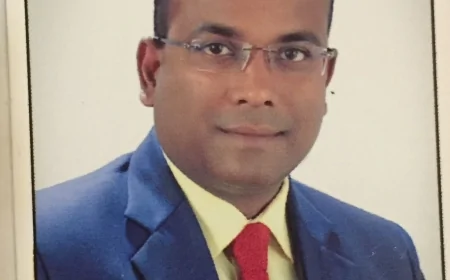

























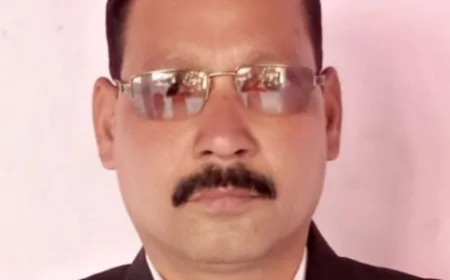





DISAGREEMENTS OVER SIR CAST A DEEP SHADOW OF DOUBT AND DISTRUST ON THE VERY NATURE OF DEMOCRACY: DEVANANAND SINGH
--India's democratic structure is as vast as it is sensitive. The pillar upon which its entire edifice rests is the voter list. This is no ordinary document, but a fundamental confirmation of citizenship and constitutional rights. The names on this list determine who will hold power, which direction power will swing, and the pace at which the pulse of democracy will beat. At a time when the Election Commission initiated the Special Intensive Revision (SRI), it was natural for the political landscape to be in turmoil. But the turmoil that is being witnessed is not merely disagreement over a technical process, but rather a deep shadow of doubt and distrust on the very nature of democracy.

DISAGREEMENTS OVER SIR CAST A DEEP SHADOW OF DOUBT AND DISTRUST ON THE VERY NATURE OF DEMOCRACY: DEVANANAND SINGH
29-NOV-ENG 15


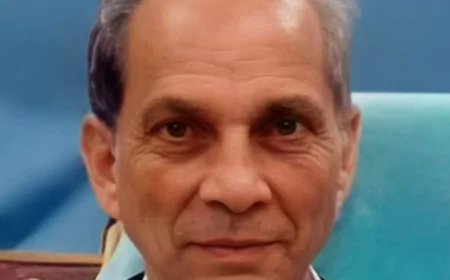
RAJIV NAYAN AGRAWAL
ARA-----------------------------India's democratic structure is as vast as it is sensitive. The pillar upon which its entire edifice rests is the voter list. This is no ordinary document, but a fundamental confirmation of citizenship and constitutional rights. The names on this list determine who will hold power, which direction power will swing, and the pace at which the pulse of democracy will beat. At a time when the Election Commission initiated the Special Intensive Revision (SRI), it was natural for the political landscape to be in turmoil. But the turmoil that is being witnessed is not merely disagreement over a technical process, but rather a deep shadow of doubt and distrust on the very nature of democracy.


The ongoing debate surrounding the SRI is not merely about whether the voter list should be updated, but rather about how it is being updated, under whose supervision, under whose authority, and who might be affected. The opposition claims that the entire process is being implemented in an opaque, hasty manner, and in violation of constitutional limitations. The Election Commission claims that it is a necessary step because migration, deaths, duplicate entries, and identity discrepancies across the country necessitate continuous revision of the voter list. The conflict between these two claims is no longer merely a political rhetorical battle; it is a serious dispute revolving around the very heart of the country's electoral process.
The harsh language used by Fakhrul Hasan Chand, representing the Samajwadi Party, to criticize the SRI clearly indicates that the opposition parties view the process not merely as a flawed system but as a form of constitutional encroachment. They say the case is pending in the Supreme Court and a final decision has not yet been reached, yet the Election Commission is rapidly moving forward with the SRI. Their primary question is: what law gives the Commission the authority to require citizens to fill out additional forms to reconfirm their citizenship or voter status? Is this a new way to verify citizenship? Does it cast doubt on both voting rights and identity? And if not, why are different standards being applied in different states? What constitutional principle is this disparity in accordance with?
These questions are not trivial, as they directly point to the Election Commission's credibility. The Commission has always been considered an institution that follows rules, independent of political influences. But when it itself is accused of bias and opacity, it is seen as the first crack in the country's democratic architecture. The Samajwadi Party's concerns are particularly acute because they view this as a targeted elimination process under the guise of voter list purification, which could impact specific sections of society: the poor, minorities, and opposition supporters.
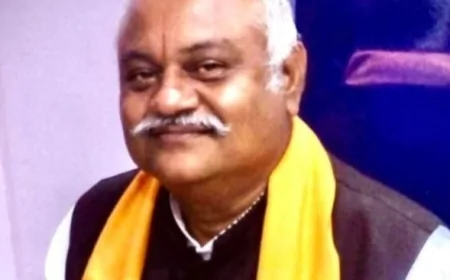
The RJD's approach is relatively balanced, but it also questions the haste in the process. Mrityunjay Tiwari says they will wait for the Supreme Court hearing, as this is the fundamental solution to the dispute. This stance also implies that the opposition views this issue as a constitutional challenge, separate from the electoral noise. After all, voting rights, if not a fundamental right, are among the most important democratic rights. If the process of its verification itself becomes controversial, how can we trust the fairness of elections?
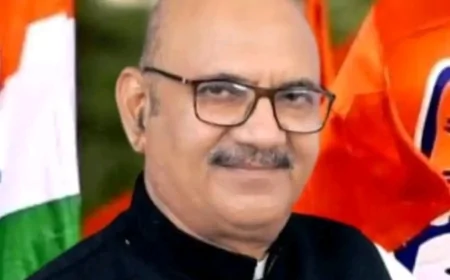
The Congress is viewing this controversy on two levels—one political and the other constitutional. What Sandeep Dixit said takes the allegations in another direction. He argues that the Election Commission is implementing SRI with a certain "obstinacy," even though its impact has already been seen, particularly in Bihar, where the list of deleted names clearly indicated the potential for political gain or loss. He alleges that most of the people whose names were deleted belonged to communities associated with the opposition. This allegation is extremely serious because even the possibility of influencing election results through the voter list shakes the entire structure of democracy.
On a different level, Dixit also stated that linking the return of Bangladeshi citizens to SRI is wrong. If an infiltrator is found, clear and concrete evidence should be provided, but this process is not a tool to identify illegal citizens. This is clearly a dig at the political effort to link the voter list to debates about nationalism and security, whereas the reality is that the primary purpose of SRI, if viewed in the Commission's terms, is merely a technical improvement.
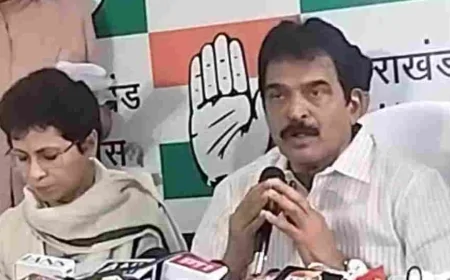
Congress spokesperson Surendra Rajput's statement is even more institutional. He expresses confidence in the judiciary and says the party will finalize its stance only after the court's decision. This indicates that there is a section within the opposition that favors viewing this entire dispute through constitutional discretion and believes that the Supreme Court is the only institution that can ultimately determine the legality of this process.
The controversy has now centered on the question of the extent to which the Election Commission has jurisdiction over the process of updating the voter list. Does the Commission have the right to demand additional documents from citizens? Does this violate voting rights? Isn't this questionable? And has this process been applied equally to all sections of society, taking into account the diversity, inequality, and social complexities present in the country? The opposition alleges no. They say the process is legally vague, not transparent, politically suspect, and could lead to unnecessary disenfranchisement.
Conversely, the Election Commission claims that updating the voter list is essential for democratic health. The Commission states that a clean list is impossible without correcting migration, death, identity discrepancies, duplicate entries, and fictitious names. And if the list is not clean, how will the credibility of elections be ensured? The problem lies in how the Commission is implementing this entire process, which is the root of the controversy. The thin line between correction and purification becomes extremely sensitive in politics, especially when the direction of election results can be swayed by just a few percentages of votes.
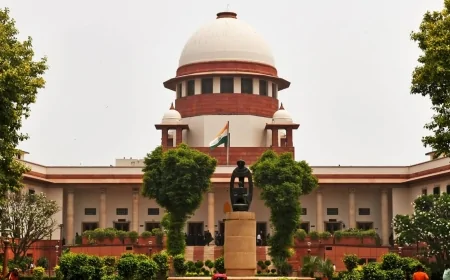
The most serious aspect of this entire controversy is its legal dimension, as the Supreme Court will now have to decide whether the Election Commission has the authority to implement a process like SRI. The court will also have to examine whether this update process can be carried out without the consent of state governments, whether it impedes voting rights, and whether it falls within or exceeds the scope of Article 324 of the Constitution. The court's decision will not only determine the validity of the SRI but also the direction of every future electoral process.
It would not be an exaggeration to say that this dispute is not limited to any one state, party, or election. It is a question of the very soul of Indian democracy. If the voter list itself becomes controversial, how will faith in elections be maintained? If large-scale deletions occur and there is suspicion that the grounds for deletion were not technical but political, a wave of distrust will soon spread through society. This fear is what is troubling the opposition, and this is the challenge the Election Commission faces; its every action has now become not just a process but a test of faith.
Ultimately, this entire controversy will determine the course of India's democratic future. The debate continues over whether SRI is a technical exercise or a constitutional risk, but it is clear that it focuses on a sensitive document like the voter list, where any change could have far-reaching political, social, and constitutional implications. The Supreme Court's decision, the Election Commission's transparency, and the integrity of political parties—these three pillars—will determine in the future whether SRI will strengthen democracy or lead it into a chasm of distrust.
The strength of democracy lies in ensuring that every citizen can vote without fear, doubt, and uncertainty. Therefore, every experiment conducted with the voter list is not merely a technical decision; it is trust. It is this trust that makes elections not just a process but a mandate. When it comes to trust, it is in the interest of the country and the Constitution to prioritize transparency, legitimacy, and equality.
What's Your Reaction?
 Like
0
Like
0
 Dislike
0
Dislike
0
 Love
0
Love
0
 Funny
0
Funny
0
 Angry
0
Angry
0
 Sad
0
Sad
0
 Wow
0
Wow
0