





















































WILL BIHAR’S POLITICS EVER BE FREE FROM THE SHADOW OF MUSCLE POWER AND REVENGE?
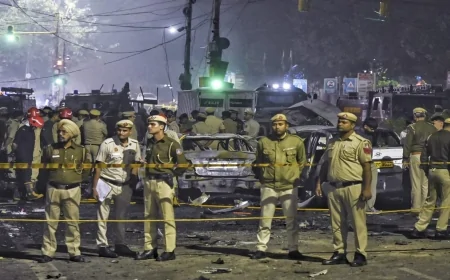
The Tal area of Mokama, located about a hundred kilometers from Bihar's capital, Patna, has once again witnessed a bloody feud. During election season, when every street and neighborhood was resonating with political slogans, an incident emerged from this area that shook the entire political landscape of Bihar. The brutal murder of Dular Chand Yadav in Tartar village, under the Ghoswari police station, has not only altered the political dynamics of Mokama but has also raised the question: will Bihar's politics ever truly be free from the shadow of muscle power and revenge?

WILL BIHAR’S POLITICS EVER BE FREE FROM THE SHADOW OF MUSCLE POWER AND REVENGE?
1-NOV-ENG 30


RAJIV NAYAN AGRAWAL
ARA-------------------------The Tal area of Mokama, located about a hundred kilometers from Bihar's capital, Patna, has once again witnessed a bloody feud. During election season, when every street and neighborhood was resonating with political slogans, an incident emerged from this area that shook the entire political landscape of Bihar. The brutal murder of Dular Chand Yadav in Tartar village, under the Ghoswari police station, has not only altered the political dynamics of Mokama but has also raised the question: will Bihar's politics ever truly be free from the shadow of muscle power and revenge?


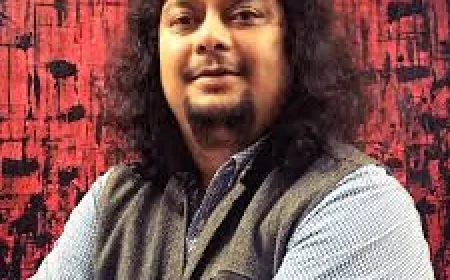
Dular Chand Yadav's name has resonated in Mokama's local politics for decades. In the 80s and 90s, he was considered one of the area's most powerful and influential figures. He was known not only for his wrestling skills but also for his local singing and folk style. This was the period when Lalu Prasad Yadav's star was at its peak in Bihar politics. Dularchand Yadav was considered close to Lalu Yadav at the time and even contested the election from Mokama, though he failed to win.
After losing the election, he changed his political direction several times, sometimes aligning with the RJD, sometimes with independent leaders, and sometimes remaining active in the independent political stream. But his real influence lay in the Tal belt stretching between Barh and Ghoswari, where politics, crime, and caste equations are deeply intertwined. The most interesting part of Dularchand Yadav's story is that he was once considered very close to Anant Singh, the strongman and former MLA of Mokama. Anant Singh was a name in Mokama politics that wielded fear, charisma, and power in equal measure, but this equation changed over time.
In recent years, Dularchand Yadav began making open statements against Anant Singh. He consistently targeted Anant Singh on social media, calling him a local dictator, and calling for a new alternative in Mokama politics. When Prashant Kishore's Jan Suraj Party announced Piyush Priyadarshi as its candidate from Mokama for the 2025 assembly elections, Dularchand Yadav openly came out in his support. He not only played an active role in the campaign but also sang and recorded a campaign song for the Jan Suraj candidate. This song, along with local flavor, also contained indirect attacks on Anant Singh. This may have made him a target of the new gang war politics in Mokama.
On the night of the incident, Dularchand Yadav was present in the Ghoswari area with the Jan Suraj campaign convoy. According to local sources, some unknown assailants first stopped him, brutally beat him with sticks, and then shot him. This attack was not the result of a simple quarrel; it appears to have been premeditated.
Jan Suraj candidate Piyush Priyadarshi has directly alleged that the attack was carried out by Anant Singh's supporters. He says that Dularchand's popularity and his outspoken statements were not acceptable to some people. This murder, in an election environment, is not merely the murder of a candidate's campaigner; it is being seen as a signal to Mokama's political landscape, highlighting who can and cannot speak in which area. The Tal area of Mokama is a world unto itself. Vast farmlands, waterways connected to the Ganges, and deep-rooted political and caste influences make this region a mini-laboratory in Bihar's politics. Here, power dynamics are determined not just by parties, but by personal influence and loyalties.
Dularchand Yadav was a powerful figure in this power structure. He was known as the King of Tal, not only because of his influence but also because of his local network and direct access to the public. He roamed villages without security, spoke directly to the people, and was often seen openly challenging the administration. His murder is symbolic in that it marks the end of an older generation that guided politics not solely by ideology but also by regional influence.
Prashant Kishore's Jan Suraj claims to introduce a new style of clean politics, a development-focused approach, and public participation in Bihar politics. However, in areas like Mokama, this new politics is clashing with the old system, which is steeped in influence, fear, and revenge. Dular Chand Yadav's support for Jan Suraj became a symbol of this conflict. He declared from an open platform that the focus would now be on development, not guns. This statement may have made some people uncomfortable. In Bihar, where caste loyalties and muscle power have been the primary basis for electoral victory, the use of Jan Suraj's clean image poses a direct challenge to the old network, and people like Dular Chand, who were trying to bridge the old and the new, have become the first targets.
The relationship between politics and crime in Bihar is not new. In areas like Mokama, Barh, Jehanabad, and Siwan, this relationship has deepened election after election for the past four decades. In the 1990s, when Lalu Yadav redefined the politics of the extremely backward and Dalit communities as social justice, in many areas this justice was sustained only by muscle power. Anant Singh, Surendra Yadav, and Mohammad Shahabuddin—these names wrote a chapter in Bihar politics in which the boundaries between crime and politics virtually blurred. Dularchand Yadav was a product of this culture and ultimately became its victim.
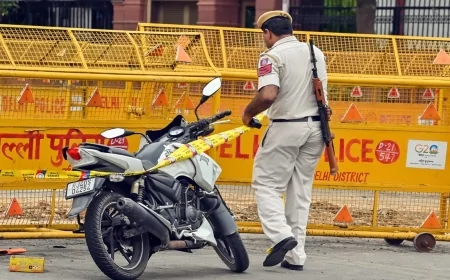
After the murder, the Patna Rural Police investigated. has been initiated. But the question resonates among the locals of Mokama and Ghoswari: will this investigation meet the same fate as many previous political murders? Political murders in Bihar are often reported as local rivalries or gang wars, but the political network behind them is rarely exposed.
Jan Suraj leaders have demanded that the CBI or an independent agency investigate this murder. Meanwhile, the JDU camp has dismissed these allegations as political gimmicks. Amidst this rhetoric, an atmosphere of fear prevails among the general public of Mokama. Villages become quiet after dusk, and people return home early. This Mokama massacre is not just a reflection of the death of one person, but a reflection of the failure of an entire political model. While the government claims good governance in Bihar, in areas like Tal, bullying prevails over law.
This question is also important because Mokama is a region of Bihar where the equations of power and crime have consistently shifted. Here, the powerful determine the political direction. Now that old figures like Dularchand Yadav are being killed, the question arises: is this a reconfiguration of the old power structure, or the beginning of a new era?
Dularchand Yadav's murder forces us to consider that politics in Bihar is still a battle of influence, not ideas. Whether it's a new party like Jan Suraj or an old party, until politics rises above local violence, caste loyalties, and personal influence, Bihar's democracy will remain incomplete. Mokama Tal is no longer just a geographical area; it has become a symbol of Bihar's political culture, where a new chapter of democracy is written in the ink of blood with every election. Dularchand Yadav's story reminds us that those who talk about change first face the violence of the very system they seek to transform. His death is not just the end of one person in Mokama politics; it is the murder of the hope that perhaps this time politics will be won not by guns, but by ideas.
What's Your Reaction?
 Like
0
Like
0
 Dislike
0
Dislike
0
 Love
0
Love
0
 Funny
0
Funny
0
 Angry
0
Angry
0
 Sad
0
Sad
0
 Wow
0
Wow
0