











































THIS TIME, THE BIHAR ELECTION IS NOT JUST A STRUGGLE FOR POWER BUT ALSO A LEST OF THE LEADERSHIP’S CREDIB ILITY
The season for the Bihar Assembly elections is once again filled with a flurry of political rhetoric and election strategies. The old question has once again arisen in the state's politics: will Nitish Kumar be able to become Chief Minister again, or will Tejashwi Yadav's Grand Alliance win the hearts of the people this time? The first phase of voting is on November 6th, and before that, all parties have fully deployed their political platforms.
THIS TIME, THE BIHAR ELECTION IS NOT JUST A STRUGGLE FOR POWER BUT ALSO A LEST OF THE LEADERSHIP’S CREDIB ILITY
4-NOV-ENG 21


RAJIV NAYAN AGRAWAL
ARA----------------------The season for the Bihar Assembly elections is once again filled with a flurry of political rhetoric and election strategies. The old question has once again arisen in the state's politics: will Nitish Kumar be able to become Chief Minister again, or will Tejashwi Yadav's Grand Alliance win the hearts of the people this time? The first phase of voting is on November 6th, and before that, all parties have fully deployed their political platforms.


Tejashwi Yadav, who has now become the vocal face of the Grand Alliance, has launched a scathing attack on the NDA, saying that the NDA will never make Nitish Kumar the Chief Minister of Bihar. This statement is not just a political accusation, but a reflection of the long-standing uncertainty within the NDA regarding Nitish Kumar's leadership position. Tejashwi Yadav's statement not only embodies political wisdom but also a psychological attack, raising the question in the public's minds as to whether Nitish Kumar is truly useful or acceptable to the BJP.
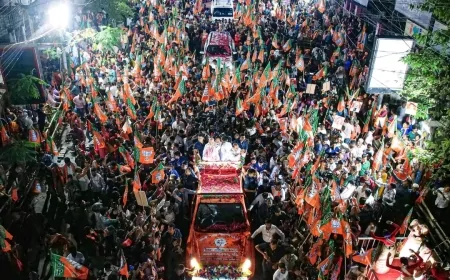
Tejashwi Yadav's statement comes at a time when Prime Minister Narendra Modi himself has been attending several rallies in Bihar, repeating old accusations of political hooliganism and dynasty politics against the Grand Alliance, appealing to the public to prevent the return of "jungle raj." The Prime Minister's statement that the RJD snatched the Chief Minister's post from the Congress at gunpoint is a clear indication that the BJP is trying to fuel anti-RJD sentiment by not projecting Nitish Kumar as its "main face" in this election.
But the most interesting aspect of this equation is that Tejashwi Yadav has used the ambiguity regarding Nitish Kumar's position within the NDA as a political weapon. He said that Nitish Kumar himself knows that the NDA will not make him Chief Minister. This will be evident to all in the future. This statement, in a way, challenges Nitish Kumar's personal political identity. The man who spent most of his life cultivating the image of "Sushasan Babu" (good governance leader) is now being questioned by the opposition, questioning whether Nitish even has the freedom to make decisions.
A characteristic of Bihar politics is that every election here is not just about issues, but also about personalities. Nitish Kumar and Tejashwi Yadav are both established in the public consciousness as opposites. Nitish represents the generation that emerged from Mandal politics and brought stability and moderation to governance, while Tejashwi represents a new generation of leaders who speak the language of youth aspirations, employment, and development. The difference in their ideologies and political styles is as stark as the competition between them to chart the future course.
Another significant allegation by Tejashwi Yadav is that the NDA has stalled development in Bihar. People talk about factories, IT parks, and data centers in Gujarat, but nothing of the sort is happening in Bihar. This statement is not merely an election statement but reveals a deeper socio-economic concern. Bihar's youth are still forced to migrate for employment and opportunities. The quality of educational institutions, lack of industrial investment, and the dilapidated state of infrastructure are all issues that are discussed in every election, yet solutions remain elusive.
On behalf of the NDA, Prime Minister Modi and BJP leaders argue that central government schemes are driving development in Bihar, but on the ground, the public is not experiencing the changes they have been hoping for for years. Tejashwi Yadav has sensed this discontent and has made issues like employment, migration, and social justice among the youth his main election agenda. Tejashwi's claim that murders and robberies are increasing under NDA rule, and that the government itself is protecting criminals, directly attacks Nitish Kumar's image of good governance, which he relied on to maintain his credibility in Bihar politics for nearly two decades. If the public perception strengthens that law and order has deteriorated and development has stalled, this could become a strong political opportunity for the Grand Alliance.
On the other hand, the NDA is busy pushing the message that a government led by Tejashwi Yadav and the RJD marks the return of jungle raj. This argument has been old and effective for the BJP, but now its edge seems to be weakening as younger voters see hope for change in a new generation of leaders. The Grand Alliance is claiming complete unity among all allies and that there are no disagreements regarding the chief ministerial post or ticket distribution. Tejashwi Yadav's assertion that if someone is given multiple positions, it is being done with everyone's consent is an attempt to convey the message of political harmony within the Grand Alliance. However, it is also true that internal competition and tussles over seat sharing are a part of any major alliance, and the Grand Alliance is no exception.
If we look at the Bihar electoral landscape in a broader context, this election has become an opportunity not just for a change of power, but for a shift in political direction. Nitish Kumar, who has maintained himself at the center of power by repeatedly switching sides, is now facing the toughest test of his political survival. Meanwhile, Tejashwi Yadav, who once entered politics as Lalu's son, is facing a tough challenge. He started his own party, and is now trying to establish himself as an independent and mature leader.
The people of Bihar face a difficult choice. On one side is Nitish Kumar, a symbol of stability and experience, and on the other, Tejashwi Yadav, a symbol of change and new energy. The BJP, the main force in the NDA, wants to leverage Nitish's experience but is avoiding a clear commitment to the Chief Minister's post. This ambiguity makes Tejashwi's statement even more relevant.
Rhetoric in politics is often not just a war of words, but a psychological strategy. When Tejashwi said that the NDA will never make Nitish Chief Minister, it was not just an attack on the BJP but also a way to instill a sense of insecurity among Nitish's supporters. This message reaches his voters that Nitish has now become a liability for the BJP.
At the same time, the BJP's stance shows that it is campaigning with itself at the center, rather than seeking votes in the name of a double-engine government in Bihar. The focus of Prime Minister Modi's rallies is not Nitish, but anti-RJD and anti-corruption. Ultimately, the Bihar elections are once again revisiting the same old struggles: development versus caste, stability versus change, and experience versus youthful aspirations. Tejashwi Yadav consistently conveys in his speeches that Bihar needs a new direction, while Nitish Kumar insists that work speaks for itself. The November 6th voting and subsequent results will determine whose voice the public listens to. But one thing is certain: this time, the Bihar elections are not just a struggle for power, but also a test of leadership credibility. The future of Nitish Kumar's political career is at stake, while the political maturity of Tejashwi Yadav is a test. The people of Bihar will decide whether they want the stability of experience or a new wave of change, and this decision will determine the direction of Bihar politics in the years to come.
What's Your Reaction?
 Like
0
Like
0
 Dislike
0
Dislike
0
 Love
0
Love
0
 Funny
0
Funny
0
 Angry
0
Angry
0
 Sad
0
Sad
0
 Wow
0
Wow
0