

























































THE PROLIFERATION OF COACHING CENTRES IN BHOJPUR DISTRICT: A DOUBLE-EDGED SWORD OF EDUCATION, EXPLOITATION AND SOCIETAL DECAY
-In the heart of Bihar's Bhojpur district, a quiet revolution in education is underway—or so it seems. Over the past decade, coaching centers have mushroomed across the district's lanes and bylanes, transforming sleepy neighborhoods into bustling hubs of aspirational learning. From Ara, the district headquarters, to smaller towns like Jagdishpur and Piro, these institutes promise to unlock the gates to prestigious careers in medicine, engineering (via IITs), railways, banking, and civil services. However, beneath the veneer of academic empowerment lies a darker reality viz. exploitation of desperate parents, unqualified teaching practices, moral degradation among teachers and students, and a systemic failure of formal education. As one local observer aptly puts it, these centers are proliferating "like mushrooms after rain," but their growth is more parasitic than productive, feeding on the vulnerabilities of a society grappling with unemployment, poverty, and unfulfilled dreams.

THE PROLIFERATION OF COACHING CENTRES IN BHOJPUR DISTRICT: A DOUBLE-EDGED SWORD OF EDUCATION, EXPLOITATION AND SOCIETAL DECAY
23-AUG-ENG 1


RAJIV NAYAN AGRAWAL
ARA-------------------------In the heart of Bihar's Bhojpur district, a quiet revolution in education is underway—or so it seems. Over the past decade, coaching centers have mushroomed across the district's lanes and bylanes, transforming sleepy neighborhoods into bustling hubs of aspirational learning. From Ara, the district headquarters, to smaller towns like Jagdishpur and Piro, these institutes promise to unlock the gates to prestigious careers in medicine, engineering (via IITs), railways, banking, and civil services. However, beneath the veneer of academic empowerment lies a darker reality viz. exploitation of desperate parents, unqualified teaching practices, moral degradation among teachers and students, and a systemic failure of formal education. As one local observer aptly puts it, these centers are proliferating "like mushrooms after rain," but their growth is more parasitic than productive, feeding on the vulnerabilities of a society grappling with unemployment, poverty, and unfulfilled dreams.


Bhojpur, with a population of over 2.7 million (as per the 2011 Census, projected to exceed 3.5 million in 2024), is emblematic of rural Bihar's challenges. Agriculture remains the backbone, but erratic monsoons, land fragmentation, and low yields push families toward education as a ladder out of poverty. Competitive exams like NEET, JEE, SSC, and banking PO have become the holy grail, with success rates abysmally low—NEET's all-India pass rate hovers around 50%, but in Bihar, it's often lower due to resource constraints. This desperation has birthed a booming coaching industry, valued at over Rs 5,000 crore nationally (as per a 2023 ASSOCHAM report), with Bihar contributing significantly. In Bhojpur alone, estimates suggest over 500 coaching centers operate, enrolling thousands of students annually. Yet, as critics argue, these institutes often prioritize profit over pedagogy, leading to wasted resources, shattered lives, and societal ills. This article therefore, delves deep into the phenomenon of exploring its causes, consequences, and related matters like examine the socio-economic drivers, the quality of education offered, ethical lapses including student-teacher dynamics and moral hazards, parental sacrifices, regulatory failures, and potential solutions. Drawing from local anecdotes, national data, expert opinions, and comparative analyses with other regions, the article mainly aims to provide a balanced yet critical view, highlighting how coaching centers, while filling a void, exacerbate inequalities and cultural shifts in Bhojpur.
The rise of coaching centers in Bhojpur is not an isolated trend but part of India's broader "coaching culture," which traces its roots to the 1970s with the expansion of competitive exams. Institutions like Kota's Bansal Classes (established 1983) pioneered the model, turning Rajasthan into an education hub. In Bihar, the trend accelerated in the 1990s with the liberalization of the economy, increasing job competition, and the state's poor public education system. Bhojpur, historically known for its revolutionary spirit (e.g., Kunwar Singh's 1857 revolt), shifted from agrarian unrest to educational aspiration amid economic stagnation.
Socio-economically, Bhojpur's challenges fuel this growth. The district's per capita income is around Rs 50,000 annually (Bihar Economic Survey 2023-24), below the national average, with 60% of the population reliant on agriculture plagued by floods and droughts. Unemployment among youth (15-29 years) stands at 20-25% (NSSO data), pushing families to invest in education as a ticket to stability. Parents, often daily wage laborers or small farmers, scrimp on essentials to afford coaching fees ranging from Rs 20,000 to Rs 1 lakh per year per subject. A 2022 study by the Centre for the Study of Developing Societies (CSDS) found that 70% of Bihar's rural families view competitive exams as the primary path to upward mobility, despite success rates below 1% for elite exams like UPSC or IIT-JEE.
From a handful in the 2000s, Bhojpur now hosts hundreds, clustered in areas like Ara's Babu Bazar, BDO block road, K G Road, Girija Mor and Ramna Maidan. Operators, often unemployed graduates, start with modest setups—rented rooms, blackboards—and scale via word-of-mouth.
Marketing is aggressive that counts Billboards promise "100% success" in NEET or banking exams, leveraging "lucky draws" of past toppers (often exaggerated). However, as critics note, these centers thrive on the failure of formal education. Bihar's schools suffer from teacher absenteeism (30% as per a 2021 Pratham report), overcrowded classrooms (student-teacher ratio 60:1), and outdated curricula. Colleges fare no better, with irregular classes driving students to coaching for "supplementary" learning that becomes primary.
This shift has economic implications: The coaching sector in Bihar generates Rs 2,000 crore annually (Bihar Chamber of Commerce estimate), but much is unregulated, evading taxes and labor laws. It creates jobs—teachers earn Rs 10,000-50,000 monthly—but often exploits them with no contracts or benefits.
Related matters include urban migration. Students from rural Bhojpur flock to Ara or Patna, straining infrastructure and leading to slum-like hostels. Environmentally, unchecked growth contributes to waste and congestion, while socially, it widens the rural-urban divide, with affluent families affording better centers.
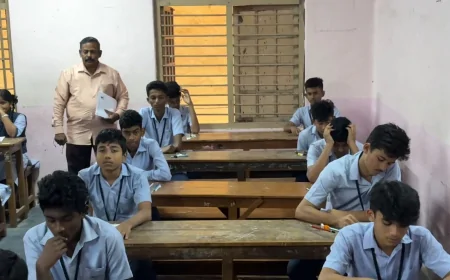
At the heart of the criticism is the quality of education in Bhojpur's coaching centers. Many operators are "failed aspirants"—individuals who couldn't crack exams themselves and turn to teaching as a fallback. A 2023 survey by the Bihar Education Department revealed that 60% of coaching teachers lack formal qualifications like B.Ed. or NET, relying on rote methods rather than conceptual teaching. Classes are overcrowded (50-100 students), with little individual attention, leading to high dropout rates.
Promises of success are often illusory. Centers advertise "guaranteed" entry into IITs or medical colleges, but data tells a different story: Bihar's NEET success rate is 40% (2023), with most toppers from elite centers in Patna or Kota, not local ones. In Bhojpur, anecdotal evidence suggests less than 10% of enrollees achieve their goals, with many failing due to subpar instruction. Teachers, often underpaid, prioritize quantity over quality, rushing through syllabi without doubt-clearing sessions.
The curriculum misalignment is another major concern. While exams like JEE emphasize problem-solving, local centers focus on memorization, ignoring practical skills. Fraud is rampant—fake testimonials, manipulated results—and some centers collude with exam leaks, as seen in the 2024 NEET paper leak scandal that rocked Bihar. Economically, this is sheer waste of resources: Parents borrow money at high interest rates (20-30%) from local moneylenders for paying fees, resulting in to large scale disappointments. A 2022 World Bank report on Bihar's education highlights how such "shadow education" diverts funds from productive investments to perpetuating poverty cycles. As a matter of fact, students are bound to psychologically suffer. Constant pressure leads to stress, anxiety, and suicides. For example, Bihar reported 150 student suicides in 2023 (NCRB data), many linked to exam failures. These Centers exacerbate this with "motivational" talks that set unrealistic expectations impacting the mental health of students.
The text's core critique—moral degradation in coaching centers—strikes at a deeper societal issue. In Bhojpur, where conservative values prevail, these institutes have become unintended social hubs. With mixed-gender classes, unsupervised environments foster relationships, often encouraged tacitly for enrollment. Teachers, sometimes involved romantically with students, blur professional boundaries, leading to scandals like elopements or inappropriate conduct.
Socially, this manifests in several ways: Premarital relationships, fueled by hormonal adolescence and lack of sex education, result in unplanned pregnancies. Bihar's teenage pregnancy rate is 12% (NFHS-5, 2019-21), with rural areas like Bhojpur higher due to limited awareness. Abortions, often unsafe, lead to health risks—WHO estimates 20% of maternal deaths in India from unsafe abortions. Abandoned infants, as mentioned, highlight societal stigma.
Gender dynamics are skewed. Girls face double standards, with "honor" at stake, while boys exploit situations. Parental ignorance—busy with livelihoods—compounds the problem; students use coaching as alibis for rendezvous in parks or Ramna Maidan. Valentine's Week amplifies this, with public displays ignoring cultural norms.
Related matters also include cyber risks attached to Mobile phones igniting sexual crimes or blackmailing leading to cybercrimes. According to State Police sources, Bihar reported 5,000 cybercrimes in 2023. Substance abuse too creeps in, with so called "study groups" turning into rave parties. Economic distractions further derail careers, perpetuating inter-generational poverty.
Culturally, this erodes traditional values. Bhojpur's Bhumihar and Rajput communities emphasize family honor, but coaching culture promotes individualism. Chain effects beyond that include broken marriages as individual past relationships haunt their futures contributing to making Bihar a hub of high divorce rate of 15% rise in 2022-23 as per family courts data.
The other side of the problem is Parental Sacrifices and the Exploitative Trap of Coaching Centers whereby
Parents in Bhojpur embody quiet heroism, sacrificing meals or selling family assets for paying high coaching fees. A daily laborer earning Rs 300-500 invests Rs 50,000 annually, hoping for a "government job" to break the cycle of poverty. Yet, exploitation is continuing unabated. Coaching Centers use "lifetime success guarantees" to lure, but deliver little. When students fail, blame shifts to "lack of effort," leaving families in debt. More so this socio-economic gap widens inequality. Truly speaking affluent families afford premium coaching, while poor ones settle for substandard ones which is a leading cause of perpetuating class divides.
Gender bias persists—boys get priority, girls face restrictions post-puberty. Parental distress is profound. Discovering distractions leads to heartbreak, sometimes health declines or suicides. It includes migration of Families which send their children to urban centers exposing them to risks like trafficking. The text's call for awareness resonates—parent-teacher meetings are rare, fostering opacity. Regulatory failures and Government Inaction despite Bihar's Coaching Institutes Control and Regulation Act, 2010, mandating registration of Coaching Centers operating illegally. A 2023 audit found only 20% registered in Bhojpur evading oversight on fee structure, shabby infrastructure, and poor teacher qualifications. Rather corruption hinders enforcement and operators bribe officials.
Nationally, the coaching industry lacks uniform regulation; the 2024 NEET scandal prompted calls for a central law, but implementation lags. In Bhojpur, unregulated growth causes traffic chaos and law-order issues, as crowds spill onto streets. Suggestions include mandatory installation of CCTV in centers, strict attendance in schools (75% rule), police patrols at memorials like Ramna Maidan, and heavy fines for misconduct. Universities must enforce classes reducing coaching dependence.
Protests like Agniveer (2022) show how centers incite unrest for visibility, disrupting public life. Government initiatives like Bihar's Super 30 (for underprivileged IIT aspirants) offer models, but scale is limited.
Students in Bhojpur echo the text's concerns. A anonymous interviewee described centers as "romance factories," where studies take a backseat to flirtations. Qualified teachers are rare; most are "jobless graduates" recycling notes. Success stories are exaggerated—toppers often self-studied. Psychological toll is very high and Peer pressure leads to relationships, regrets, and dropouts. Girls face slut-shaming, boys addiction to "easy fun." Alternatives like online platforms (Khan Academy) are emerging, but internet access is spotty limited to only 40% rural coverage.
In 2023, a Bhojpur center scandal involved a teacher eloping with a student, sparking protests. Another saw a pregnancy leading to abortion complications. These highlight systemic rot.
Economically, coaching diverts Rs 50,000 crore nationally from productive sectors, creating a "parallel economy" vulnerable to crashes (e.g., post-COVID closures). Culturally, it erodes Bihar's heritage of self-study (e.g., ancient Nalanda), promoting consumerism over knowledge.
Policy-wise, chaining with formal education is the key to do away with mushroom growth of Coaching Centers. Bihar's 2024 mandate for 75% attendance in colleges is a way forward but enforcement is weak. National reforms like the New Education Policy 2020 emphasize skill-based learning, reducing exam obsession. However
Global comparisons with China's gaokao coaching bans highlight risks and at the time South Korea's hagwon system also faces similar moral issues. In India, Kota's suicide epidemic (30 in 2023) mirrors Bhojpur's woes. In fact, solution lies in Community counseling, vocational training, and tech integration (e-learning). Empowering parents via awareness campaigns could curb exploitation through presenting Case Studies and Comparative Analysis. In Bhojpur, the Agniveer protests (2022) exemplified coaching influence. Centers mobilized students against the scheme, leading to arson and arrests, disrupting railways. Compared to Patna's Chanakya IAS, local centers lack proper infrastructure, focusing only on quantity not on quality. At the National level Kota's model shows scale's perils counting 2 lakh students but high suicides. Bhojpur's unregulated scene amplifies risks without benefits.
U.S. test prep (SAT tutoring) is regulated, emphasizing ethics. India could adopt similar licensing. The Role of Technology and Future Trends such as Digital coaching (Byju's, Unacademy) offers alternatives but in Bhojpur, low digital literacy (30% smartphone penetration) limits access. AI Tutors could democratize education, reducing physical centers' moral hazards.
Post-NEET reforms, focus on holistic education may diminish coaching dominance. Community-led initiatives, like village libraries, could counter.
Teachers defend themselves by stating that "No jobs force students towards coaching and they provide what schools don't." Whereas parents lament, "We sacrifice everything, but outcomes disappoint." And Experts (e.g., Pratham NGO) advocate systemic reforms, "Invest in public schools to make coaching redundant." Let us then stand together for reinforcing a dynamic and progressive public education system which not only focus on career building but also give equal importance to character building of students.
What's Your Reaction?
 Like
0
Like
0
 Dislike
0
Dislike
0
 Love
0
Love
0
 Funny
0
Funny
0
 Angry
0
Angry
0
 Sad
0
Sad
0
 Wow
0
Wow
0