
































































SRI KRISHNA JANMASHTAMI: COMPLETE PUJA VIDHI AND INFALLIBLE WAY TO GET DESRIRED BOONS
Janmashtami is a divine remembrance of the birth anniversary of Lord Shri Krishna, which is celebrated every year on the Ashtami Tithi of the month of Bhadrapad with utmost reverence and devotion. This festival is not just an annual celebration, but it is a witness to the historical moment when love, hope and Dharma appeared amidst the deep darkness and fear of the prison cell. This day commemorates the descent on earth of Lord Shri Krishna, the eighth incarnation of Lord Vishnu, who was born as the eighth son of Mata Devaki and Vasudeva in the Dwapar Yuga.

SRI KRISHNA JANMASHTAMI: COMPLETE PUJA VIDHI AND INFALLIBLE WAY TO GET DESRIRED BOONS
16-AUG-ENG 12


RAJIV NAYAN AGRAWAL
ARA-----------------------Janmashtami is a divine remembrance of the birth anniversary of Lord Shri Krishna, which is celebrated every year on the Ashtami Tithi of the month of Bhadrapad with utmost reverence and devotion. This festival is not just an annual celebration, but it is a witness to the historical moment when love, hope and Dharma appeared amidst the deep darkness and fear of the prison cell. This day commemorates the descent on earth of Lord Shri Krishna, the eighth incarnation of Lord Vishnu, who was born as the eighth son of Mata Devaki and Vasudeva in the Dwapar Yuga.


This holy festival symbolizes the victory of Dharma over Adharma and the divine manifestation of Lord Krishna. The significance of Janmashtami is not limited to religious rituals only, but it also contains deep moral and philosophical messages for individual life and society. This festival inspires us to keep love, truth and Dharma alive in our lives. It shows that it is possible to have hope and Dharma even amidst adversity and darkness, and underlines the importance of positivity and morality in life. Thus, the festival of Janmashtami teaches us how to remain steadfast on the path of Dharma and truth despite the challenges in life, which ultimately leads to wisdom, peace and happiness.
Lord Shri Krishna is revered as the eighth incarnation of Lord Vishnu, who was born in Mathura. According to mythology, he appeared to free the earth from the increasing Adharma and atrocities of his tyrannical uncle Kansa and to re-establish Dharma. Akashvani had predicted that the eighth son of Devaki would kill Kansa, due to which Kansa killed Devaki's first seven children. Lord Krishna, as the eighth son of Devaki, incarnated to free the earth from the atrocities of Kansa and to establish Dharma.
After birth, Vasudev took the infant Krishna across the Yamuna river to Nanda Baba and Yashoda Maiya in Gokul. This is where the divine pastimes of Bal Krishna began, including many miraculous feats such as butter theft, Raas Leela with the gopis, killing the snake Kaliya, and lifting the Govardhan mountain on his little finger. Each pastime of Shri Krishna, such as butter theft or lifting the Govardhan mountain, is not just an event but a reflection of the deeper truths of life and the omnipotence of the Lord. These pastimes teach devotees how to follow Dharma and love even in adverse circumstances, and how the Lord protects His devotees. This highlights both the human and divine aspects of the Lord, allowing the devotee to connect with Him more deeply.
After the Bal pastimes, Shri Krishna killed the tyrant Kansa in Mathura. Thereafter, to re-establish Dharma, He preached the Shrimad Bhagavad Gita to Arjuna in the battle of Kurukshetra. Every form and every leela of Shri Krishna points us towards some truth of life. His life teaches us to have depth in love, clarity in knowledge and integrity in action.
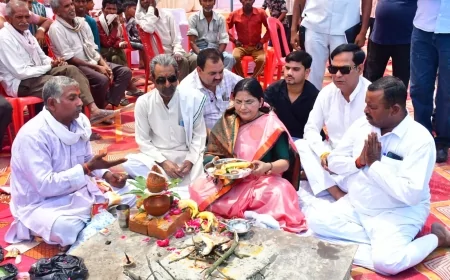
To perform the Janmashtami puja properly, cleanliness of the place of worship and collection of necessary materials is extremely important. Before the puja, the house and the temple are thoroughly cleaned and purified with Gangajal. Temples are decorated with flowers, lamps and colorful tableaux, which display various glimpses of Lord Shri Krishna's life. For the puja, a child form idol or picture of Lord Shri Krishna is installed on a wooden platform covered with a red or yellow cloth.
Collection of puja materials should be ensured so that the ritual can be performed seamlessly. Each material has deep symbolic significance, which is not only a part of the ritual but also helpful in the fulfillment of specific desires.
This table shows that puja is not just about collecting items, but also about understanding the sentiment and symbolism behind them, so that devotees can choose the items according to their wishes. For example, peacock feathers are used for Rahu Dosh Nivaran and auspiciousness, flute for love and sweetness, and cow-calf idols for wealth and progeny. The use of yellow clothes and flowers signifies Lord Krishna’s favourite colour, which is associated with financial gains and good news.
The festival of Shri Krishna Janmashtami is celebrated only during the auspicious muhurat of the Lord’s birth, which falls at midnight. The fast of Janmashtami is considered complete only after worshipping the moon at night.
On the day of Janmashtami, one should wake up early in the morning and take a bath. Clean the temple at home and light the lamp. Perform Jalabhishek of all the deities. On the morning of Janmashtami, after bathing Bal Gopal, he is adorned with clothes, crown, garland etc.
Before the auspicious time of Janmashtami, fresh cucumber with stalk is kept at the place of worship. Just as a child is born by cutting the umbilical cord, similarly cutting the stalk of cucumber is called “Naal Chhedan”. In the auspicious time, the stalk of cucumber is cut with a coin and by blowing the conch, Bal Gopal is given birth. The arrival of the year is celebrated. During this time, chants of Lord Krishna are chanted.
The worship at midnight is of special importance as it symbolizes the actual birth time of Lord Krishna. This is not just a tradition, but an attempt to bring to life the moment of their appearance. It gives devotees the opportunity to connect deeply with that divine event, thereby increasing the spiritual impact of the worship.
1. Invocation: After meditating on Lord Krishna, invoke Him by showing the invocation posture in front of the idol of Krishna while reciting the following mantra: 2. Asana: After invoking Lord Krishna, take five flowers in palms for the asana and offer them before you while reciting the following mantra: “Purusha evedagam sarvam yadbhutam yachcha bhavyam. 3. Padya (water for washing feet): After offering the seat to Lord Krishna, offer Padya (water for washing feet) while reciting the following mantra: 4. Panchamrit Abhishek and Bath of Bal Gopal: o First of all, give a soft massage with the light hands of Lord Krishna. After the massage, give them a gently bath with clean and pure water. o Then add a little water to sandalwood powder and prepare a fragrant ointment. o Take two clean vessels, arrange for the Lord to sit in one of them and fill the other with bath water. Add holy Ganga water and basil leaves to the bath water. Start bathing the Lord with this holy water while chanting the mantra. o Then, in order, give the Lord a Panchamrit bath. First take a bath with raw milk, then yogurt, then pure honey, then sugar and finally complete the bath with Ganga water. o IMPORTANT PRECAUTIONS: Use a new and special vessel for bathing, reserved only for the bathing of the Lord. Offer water from the conch. Do not place the image of God directly on the ground. Do not pour bath water down the drain. 5. Makeup and wearing clothes: After bathing, offer roses to Bal Gopal. Dress them in beautiful, clean and attractive clothes. Then wear murli, crown, armband etc., apply perfume and complete the makeup. If possible, offer Vaijayanti flowers, which are very dear to the Lord. Finally, decorate their head with a crown or turban with peacock feathers and wear a garland of flowers around their necks. 6. Anga Puja: Worship the Anga-devas of Lord Krishna while reciting the following mantra. For this, take rice, flowers and sandalwood in your left hand and leave it near the idol of Sri Krishna with your right hand while reciting each mantra: “Om Sri Krishnaaya Namah. 7. Bhog and Prasad Arpan: Offer makhan-mishri, panjiri (especially of coriander), panchamrit, and other bhog materials. Lord Krishna does not accept any offering without Tulsi, so be sure to offer Tulsi Dal. Keep Ganga water for drinking. 8. Jhula Jhulana: After Shringar, place Laddu Gopal on the swing and decorate the swing with flowers. Also, slowly sway the Lord with bhajans and kirtans. 9. Lighting lamps and incense: Light lamps with pure desi ghee and also light incense sticks. 10. Aarti: Do Maha Aarti while singing bhajans like “Aarti Kunjbihari Ki, Shri Giridhar Krishna Murari Ki”. Offer Aarti with Vedic mantras: “Om Shriye Jatah Shriya Aniriyaya Shriyam Vayo Jaritrabhyo Dadati Shriyam Vasana Amritatvamayan Bhavanti Satya Sa Mithamitdrau Shriya Evainam Tat Shriyamadhati Santatamricha Vashatkrityam” 11. Pradakshina: After Aarti, circumambulate (circumambulate from left to right) Sri Krishna while reciting the following mantra and offer flowers: 12. Forgiveness Prayer: Thank God for coming to worship and ask forgiveness for any mistakes. 13. Prasad Distribution: After the pooja, distribute prasad to all the devotees present.
Devotees who observe the fast should celebrate the birth of Lord Krishna at 12:00 pm. The fast can be observed after 05:51 am on August After consecrating Lord Krishna, worshiping and offering water to the moon, swinging the child Gopal and offering offerings, one should perform the fast by eating Paran Prasad. If a devotee wishes to eat earlier, he can celebrate the birth of Lord Krishna at night and eat after receiving offerings.
Janmashtami Vrat is given the title of 'Vrataraj' in the scriptures. It is believed that keeping this one day fast brings the fruits of many fasts. This fast destroys all sins and by following it with faith and regularity, all the wishes of man are fulfilled.
All the sufferings of Krishna devotees who observe the fast of Janmashtami are removed and their wishes are fulfilled. In the house where this fast is observed, fears like premature death, miscarriage, widowhood, misfortune and quarrel are eliminated. Anyone who observes this fast once enjoys all the pleasures of this world and resides in Vaikunthadham after death. By the merit of this fast, Krishna The devotee gets the merits of crores of Ekadashi. Apart from this, fame, glory, valour, wealth, fortune, splendour, health, longevity and happiness and prosperity are attained.
The worship and fast of Janmashtami is not limited to the fulfillment of just one or two wishes, but it provides holistic well-being in various aspects of life – children, wealth, love relationships, career, health, and spiritual peace.
For child birth: Janmashtami is a boon for couples who wish to have children. If childless couples bring a silver Kanha Ji on this day and worship it with rituals, they are definitely blessed with a child. Reciting Santan Gopal Stotra on this fast day fills the empty lap soon. Bringing a statue of a cow or a calf at home is also considered helpful.
For monetary gains and economic prosperity: On Janmashtami, it is considered auspicious to visit the temple of Lord Radha Krishna and offer him a garland of yellow flowers. Offering a silver flute to Lord Krishna and keeping it in the safe or purse after the puja brings monetary gains. Abhishek of Lord Krishna by mixing saffron in milk at 12 o'clock at night brings happiness and prosperity in the house. Circumambulating Tulsi ji on the evening of Janmashtami frees one from debt. For desired life partner and sweetness in relationships: Janmashtami fast is also observed to wish for a desired life partner. Due to the virtue of this fast, love relationships become strong and harmony remains in the family. Keeping a flute in the house maintains love, harmony and sweetness.
For success in career and business: Lord Krishna is considered a Karmayogi. Therefore, this fast must be observed to achieve desired heights in the field of work. With the grace of Kanha, the obstacles in career and business are removed.
The fast of Janmashtami is not limited to the renunciation of food items, but it is a deep spiritual discipline in which it is mandatory to follow physical restraint and mental purity. This overall purity makes the fast completely fruitful. Take special care of cleanliness in the house and your temple. Maintain purity of mind and concentrate on worship and devotion. Sleep at night after controlling the senses and follow celibacy. Recite Vedic mantras during worship. On the day of Janmashtami, one should not consume tamasic food like meat, alcohol, onion-garlic etc. even by mistake. Avoid lying, getting angry, having hatred etc. on this day. The idol of the deity should not be placed directly on the ground. Bath water should not be poured into the drain.
Temples across the country prepare to celebrate Janmashtami in different ways, incorporating local traditions and customs. In Bihar: Here people follow the tradition of breaking the dahi handi, which is associated with the legend of Bal Krishna stealing butter. Devotees draw Krishna's footprints from the threshold of the house to the puja room, which marks Krishna's arrival in the house. Temples in Patna, such as the Gaudiya Math, ISKCON Temple and Radha Gopal Mandir, have grand celebrations. Chhattisgarh (Raipur): In a unique tradition at the Jaitusaav Math, Malpua is made every year as prasad, which is prepared only on Janmashtami and Ramnavami. Rajasthan (Nathdwara): Lord Krishna's birth is celebrated with a 21-gun midnight salute at the Shrinathji temple. On Nandotsav, the cowherds celebrate by playing Holi with milk and curd, and Lord Shrinathji and Lalan are rocked in a golden cradle. The festival of Shri Krishna Janmashtami is not just a religious ritual but a deeply spiritual and cultural celebration that commemorates the divine manifestation of Lord Shri Krishna and the eternal messages of his life. The festival signifies the victory of dharma over adharma, the power of love and the importance of devotion in action. The elaborate ritual of worship, which includes steps from umbilical cord piercing to panchamrit abhishek and shringar, provides devotees an opportunity to connect deeply with the moment of the Lord's birth.
The fast and worship of Janmashtami is not limited to the fulfillment of only material desires but also provides multifaceted well-being in various aspects of life, including child birth, wealth gains, happy married life, career success and overall spiritual peace. This fast is revered as ‘Vratraj’, which destroys all sins and paves the way to salvation. However, to attain these benefits, it is imperative to follow physical restraint and mental purity.
Regional customs, such as Dahi Handi and special Bhog in Bihar, reflect the diversity and cultural richness of this festival. Ultimately, the festival of Janmashtami teaches us that despite the challenges in life, one can remain steadfast on the path of Dharma and truth, which ultimately leads to wisdom, peace and happiness. This festival inspires us to imbibe the principles of Lord Krishna in our lives and lead a meaningful life.
What's Your Reaction?
 Like
0
Like
0
 Dislike
0
Dislike
0
 Love
0
Love
0
 Funny
0
Funny
0
 Angry
0
Angry
0
 Sad
0
Sad
0
 Wow
0
Wow
0