





































INDIA’S RICH KNOWLEDGE TRADITION IS BEING REINTRODUCED TO THE NATION AND THE WORLD CULTURAL RENAISSANCE: GAJENDRA SINGH SHEKHAWAT
The Ministry of Culture launched ‘Gyan Bharatam’, a landmark national initiative dedicated to the preservation, digitization and dissemination of India’s manuscript heritage. On this occasion, the Ministry organised the first Gyan Bharatam International Conference on the theme ‘Reclaiming India’s Knowledge Tradition through Manuscript Heritage’ from 11th to 13th September 2025 at Vigyan Bhavan, New Delhi. Bringing together over 1,100 participants, including scholars, experts, institutions and cultural activists from India and abroad, the Conference has provided a platform for discussion, deliberation and collaboration to pave the way towards preserving, digitizing and sharing India’s manuscript wealth with the world. The Hon’ble Prime Minister will attend the Conference on 12th September to hear the presentations of the working groups and will thereafter address the attendees. The three-day deliberations will conclude with the closing session on 13th September, which will be chaired by the Home Minister of India.
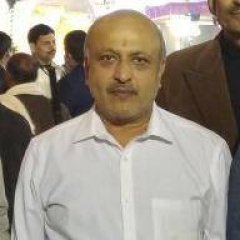

INDIA’S RICH KNOWLEDGE TRADITION IS BEING REINTRODUCED TO THE NATION AND THE WORLD CULTURAL RENAISSANCE: GAJENDRA SINGH SHEKHAWAT
12-SEP-ENG 3
RAJIV NAYAN AGRAWAL
DELHI-----------------------The Ministry of Culture launched ‘Gyan Bharatam’, a landmark national initiative dedicated to the preservation, digitization and dissemination of India’s manuscript heritage. On this occasion, the Ministry organised the first Gyan Bharatam International Conference on the theme ‘Reclaiming India’s Knowledge Tradition through Manuscript Heritage’ from 11th to 13th September 2025 at Vigyan Bhavan, New Delhi. Bringing together over 1,100 participants, including scholars, experts, institutions and cultural activists from India and abroad, the Conference has provided a platform for discussion, deliberation and collaboration to pave the way towards preserving, digitizing and sharing India’s manuscript wealth with the world. The Hon’ble Prime Minister will attend the Conference on 12th September to hear the presentations of the working groups and will thereafter address the attendees. The three-day deliberations will conclude with the closing session on 13th September, which will be chaired by the Home Minister of India.


Culture Minister Gajendra Singh Shekhawat was present as the Chief Guest at the inaugural session. The session was attended by several eminent dignitaries including Secretary, Ministry of Culture, Prof. Manjul Bhargava, Fields Medal winner and Professor at Princeton University, Prof. Amita Prasad Sarabhai, Additional Secretary, Ministry of Culture, Samar Nanda, Joint Secretary, Ministry of Culture, Indrajit Singh, Director, Ministry of Culture, Dr. Sachchidanand Joshi, Member Secretary, IGNCA, Prof. Ramesh Chandra Gaur, Dean (Administration) and Head, Kalanidhi Division, IGNCA and Prof. (Dr.) Anirban Dash, Director, National Mission for Manuscripts. In his opening welcome address, Vivek Agarwal set the tone for discussions. Prof. Manjul Bhargava delivered the keynote address.
Speaking on the occasion, Culture Minister Gajendra Singh Shekhawat said that India's rich knowledge tradition, which has remained intact for thousands of years despite challenges, conflicts and invasions, is now being re-presented to the country and the world through the Gyan Bharatam Mission launched under the leadership of Prime Minister Narendra Modi. He said that true pride arises only when people know, recognise and connect with their civilisational wealth, and the Mission seeks to make this possible by reviving manuscripts through digitisation, translation and technological innovation. Thousands of years ago, our Rishis and mystics through their deliberations, experiences and realisations created texts that are as relevant to the world today as they were when they were created. Based on an in-depth study of core subjects related to human life, these texts, even after millennia, continue to hold their significance for humanity, the environment and the entire ecosystem.
Emphasising that this cultural renaissance cannot be achieved through lectures or events alone, he stressed the need for collective responsibility in protecting and celebrating this heritage so that it becomes a matter of pride for every Indian. He also called for the creation of a national repository, clusters and centres of excellence across the country and lauded the efforts of institutions, universities and individuals who have preserved the manuscripts despite adverse circumstances. He described them as the true custodians of the treasure that belongs not only to India but to all humanity. Recalling that the National Manuscript Mission was launched during the tenure of Shri Atal Bihari Vajpayee, he said that some cataloguing and identification work did take place at that time, but the effort stalled in the subsequent years. He expressed confidence that the mission, now relaunched, will undoubtedly succeed and urged all to deliberate on how the envisaged national collection can be further enriched and expanded.
Prof. (Dr.) Manjul Bhargava, in his keynote address, said that India, with over ten million manuscripts, holds perhaps the richest repository of classical and vernacular traditions. These texts embody literature, science, mathematics, philosophy and art in deeply interdisciplinary ways. He emphasised that a thoughtful revival of this tradition can inspire national pride, strengthen education, enhance cultural diplomacy, empower communities, promote sustainable development and catalyse new research. In short, such a movement can awaken nothing less than an Indian renaissance. He further said that as the Gyan Bharatam mission begins, it should be seen not just as preservation but also as an effort to revive India's classical and local knowledge systems so that future generations can be inspired.
Vivek Aggarwal, in his opening address, said that it is a great responsibility and duty to preserve and protect India's traditions, ancient culture and tangible-intangible cultural heritage and present it to future generations. It is important to pass on the teachings from this heritage to the younger generation. He recalled that during the World Parliament of Religions, when someone asked, “Do you worship idols?” Swami Vivekananda had replied, “We do not worship idols, we worship tangibles.” “We worship the ideal hidden behind the 'I'." Quoting this statement, he said that similarly, we see manuscript not as a mere object but as a repository of knowledge. He further added that the deliberations in this conference will chart the future course of the Gyan Bharatam mission.
Dr Sachchidanand Joshi, while co-chairing the session on ‘Repatriation of Indian Manuscripts – Preserving Heritage, Restoring Identity’ said that repatriation is important but the first task is to find out where these manuscripts actually are. Even today, we do not have an accurate record of the alleged ten crore manuscripts that are in India, nor of the nearly one million manuscripts that are in countries like France, Germany, United Kingdom, Denmark, Sweden, Netherlands and even in the Hermitage Museum. He emphasised that identification, cataloguing and protection of digital copies must be done urgently, so that the vast repository of knowledge contained in them can be studied, preserved and eventually returned to India.
Throughout the day, manuscript science and paleography; surveys, documentation, metadata, digitisation tools, platforms and protocols Parallel sessions were held on topics such as (HTR, AI, IIF) Standards and Digital Archiving; Safeguarding Manuscript Heritage: National and International Perspectives; Conservation and Restoration of Manuscripts, etc. The sessions were attended by Professor Ramesh Kumar Pandey, former Vice Chancellor, Lal Bahadur Shastri Rashtriya Sanskrit Vishwavidyalaya; Professor Sachin Chaturvedi, Vice Chancellor, Nalanda University; Professor Bihari Lal Sharma, Vice Chancellor, Sampurnanand Sanskrit Vishwavidyalaya, Uttar Pradesh; Dr. Padma Subrahmanyam, Trustee, IGNCA, among many other eminent speakers and scholars. At the end of the inaugural session, Samar Nanda delivered the formal vote of thanks.
What's Your Reaction?
 Like
0
Like
0
 Dislike
0
Dislike
0
 Love
0
Love
0
 Funny
0
Funny
0
 Angry
0
Angry
0
 Sad
0
Sad
0
 Wow
0
Wow
0