













































































GURU NANAK’S CHILDHOOD REBELLION: THE SPIRITUAL REVOLUTION THAT CHANGED TRADITION
-The 15th century was a time in Punjab, when society was bound by religious rituals, caste discrimination, and outdated beliefs. At this time, in a village called Talwandi, a child was born whose thinking was far beyond his years. His name was Nanak. This same Nanak, who later became known as the great Guru who brought the message of equality, humanity, and love to the world.

GURU NANAK’S CHILDHOOD REBELLION: THE SPIRITUAL REVOLUTION THAT CHANGED TRADITION
5-NOV-ENG 21


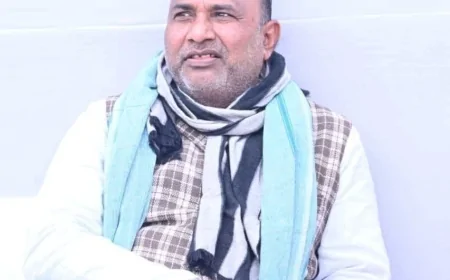
RAJIV NAYAN AGRAWAL
ARA------------------------------The 15th century was a time in Punjab, when society was bound by religious rituals, caste discrimination, and outdated beliefs. At this time, in a village called Talwandi, a child was born whose thinking was far beyond his years. His name was Nanak. This same Nanak, who later became known as the great Guru who brought the message of equality, humanity, and love to the world.


From childhood, young Nanak was calm, serious, and possessed extraordinary wisdom. While other children played and frolicked, Nanak constantly questioned the relationship between nature, man, and God. His mind was filled with spiritual curiosity from childhood. This curiosity gave him the vision that later led him to create a new path.
He was 11 years old. As per tradition, the Upanayana ceremony, the ceremony of wearing the sacred thread, was held at his home. This ritual was considered a symbol of "religious elevation" for certain sections of society at the time. Wearing the sacred thread had become a social identity—those who wore it were considered "high," and those who did not, "low." This very social perception irritated young Nanak.
The day of the ceremony arrived. Relatives gathered at home, the priest sat down, the chanting of mantras began, and preparations for the sacred thread began. But in this entire atmosphere, one person remained completely silent—11-year-old Nanak. The priest picked up the sacred thread and said lovingly, "Son, this is an auspicious moment in your life. Today you are embarking on the path of religion." That's when Nanak posed his question for the first time, in a low voice— "Pandit ji, what is this thread for?"
The priest was surprised. He replied that the sacred thread purifies a person, gives him knowledge, and places him in a special category. Nanak listened calmly. Then he said, "Does everyone get this thread? Or only some?" The Pandit was bewildered, but finally said, "This thread is worn by those of a higher caste." A serious glint appeared in Nanak's eyes upon hearing this. He said, "If this thread makes a person high or low, then I cannot wear it." A stunned silence fell over the gathering. People couldn't understand how such a small child could say such a big thing. Some relatives were angry, some were surprised, and some were lost in thought. But Nanak's voice held determination.
He asked the next question, "Pandit ji, can this sacred thread break?" The Pandit said, "Yes." "Can it get dirty?" The answer was, "Yes." "Can anyone pull it off?" The answer again, "Yes."
Then Nanak said in a calm voice, "Then Panditji, give me a sacred thread—one that doesn't break, doesn't get dirty, and won't get lost, and that people of every caste, every religion, and every country can wear. A sacred thread that purifies the soul, not just adorns the body."
His words were so profound that even the Pandit fell silent for a while. This wasn't just a child's question—it was an attack on the system that divided humanity based on caste. It was a voice of rebellion—but not of anger, but a rebellion of wisdom.
Guru Nanak refused to wear the sacred thread that day. This decision wasn't merely against a religious ritual, but against the mentality that weighed a person's honor based on their caste. Nanak said, "The true sacred thread is one of patience, truth, kindness, love, and compassion. This thread is not on the body, but on the soul."
This incident proved to be a turning point in history. Eleven-year-old Nanak preached a message of equality that the entire world would later embrace. Regardless of religion or community, anyone who reads this account of Guru Nanak realizes that it wasn't merely a protest against tradition, but the birth of a new way of thinking.
Nanak's father, Mehta Kalu Ji, was worried by this incident. He wondered what society would say. But he also knew that his son's vision was not ordinary. The truth in Nanak's words deeply affected his father. Both family and society realized that Nanak was not an ordinary child, but an extraordinary soul. Some in society said, "This boy is a rebel." Others said, "This boy is destined to become great." And time proved that Nanak's rebellion would later become a new path for humanity. This childhood decision of his gave birth to the principles that later formed the Sikh tradition: Meditation, Honest Work, Sharing with All, Equality, Humanity First
Today, when the world is embroiled in disputes over caste, religion, color, and ideology, Guru Nanak's 11-year-old rebellion holds a clear message: Religion should be a bridge to unite, not to divide. Purity lies not in threads, but in thoughts and actions. God belongs to no one class or caste; it belongs to everyone.
Times have changed, but this incident from Guru Nanak's childhood remains as relevant today. This story tells us that true religion is recognized not by external symbols, but by inner character and compassion. This story shows that even a small child can question the most important beliefs of society. And it also reminds us that this child later became a great teacher who brought a true message to the world.
What's Your Reaction?
 Like
1
Like
1
 Dislike
0
Dislike
0
 Love
0
Love
0
 Funny
0
Funny
0
 Angry
0
Angry
0
 Sad
0
Sad
0
 Wow
0
Wow
0