







































FOR PEACE, STABILITY AND PROSPERITY IN THE WORLD, INDIA, THE WORLD’S MOST POPULOUS COUNTRY, MUST BECOME SELF-SELIANT: PM
Prime Minister Narendra Modi today inaugurated and laid the foundation stone for development projects worth over ₹34,200 crore in Bhavnagar, Gujarat. Addressing the "Samudra Se Samriddhi" program, the Prime Minister welcomed all dignitaries and the public. The Prime Minister expressed gratitude for the birthday wishes sent to him on September 17th. Describing the affection received from the people as a great source of strength, Mr. Modi highlighted that the nation is celebrating the Seva Pakhwada (Sewa Pakhwada) from Vishwakarma Jayanti to Gandhi Jayanti, i.e., from September 17th to October 2nd. He reported that numerous service-oriented activities have taken place in Gujarat over the past two to three days. The Prime Minister reported that blood donation camps have been organized at hundreds of locations, with one lakh people donating blood so far. He noted that cleanliness drives have been launched in many cities, with millions of citizens actively participating. Shri Modi informed that over 30,000 health camps have been set up across the state, where the public, especially women, are being medically examined and provided treatment. He expressed his appreciation and gratitude to all those involved in service activities across the country.

FOR PEACE, STABILITY AND PROSPERITY IN THE WORLD, INDIA, THE WORLD’S MOST POPULOUS COUNTRY, MUST BECOME SELF-SELIANT: PM
24-SEP-ENG 1
RAJIV NAYAN AGRAWAL
DELHI----------------------Prime Minister Narendra Modi today inaugurated and laid the foundation stone for development projects worth over ₹34,200 crore in Bhavnagar, Gujarat. Addressing the "Samudra Se Samriddhi" program, the Prime Minister welcomed all dignitaries and the public. The Prime Minister expressed gratitude for the birthday wishes sent to him on September 17th. Describing the affection received from the people as a great source of strength, Mr. Modi highlighted that the nation is celebrating the Seva Pakhwada (Sewa Pakhwada) from Vishwakarma Jayanti to Gandhi Jayanti, i.e., from September 17th to October 2nd. He reported that numerous service-oriented activities have taken place in Gujarat over the past two to three days. The Prime Minister reported that blood donation camps have been organized at hundreds of locations, with one lakh people donating blood so far. He noted that cleanliness drives have been launched in many cities, with millions of citizens actively participating. Shri Modi informed that over 30,000 health camps have been set up across the state, where the public, especially women, are being medically examined and provided treatment. He expressed his appreciation and gratitude to all those involved in service activities across the country.


Paying tribute to Krishnakumar Singh, the Prime Minister recalled his great legacy. Shri Modi said that Krishnakumar Singh made a significant contribution to India's unity by joining the mission of Sardar Vallabhbhai Patel. He highlighted that inspired by such great patriots, the nation is continuously strengthening the spirit of unity. The Prime Minister emphasized that these collective efforts are further strengthening the resolve for a united India, a great India.
The Prime Minister noted that he arrived in Bhavnagar at a time when the auspicious festival of Navratri is about to begin. Shri Modi said that the reduction in GST will bring vibrancy and festive spirit to the markets. In this festive atmosphere, the Prime Minister highlighted that the nation is celebrating a grand celebration of prosperity from the sea. He emphasized that 21st-century India sees the sea as a major source of opportunities. Mr. Modi explained that projects worth thousands of crores of rupees have recently been inaugurated and foundation stones laid to accelerate port-based development. He added that the International Cruise Terminal in Mumbai was also inaugurated today to promote cruise tourism. The Prime Minister noted that development projects related to Bhavnagar and Gujarat have also commenced. He extended his heartfelt greetings to all citizens and the people of Gujarat.
The Prime Minister said, "India is moving forward with the spirit of world brotherhood and today India has no major enemy in the world, but in reality, India's biggest enemy is dependence on other countries." He emphasized that this dependence must be collectively defeated. He reiterated that excessive foreign dependence further exacerbates national failure. Mr. Modi said that for global peace, stability, and prosperity, the world's most populous country must become self-reliant. He cautioned that dependence on others compromises national self-respect. Mr. Modi stressed that the future of 1.4 billion Indians cannot be left to the mercy of external forces, nor can the resolve for national development be based on foreign dependence. He emphasized that the future of future generations should not be jeopardized. Mr. Modi declared that there is only one solution to a hundred problems: building a self-reliant India. To achieve this, India must face challenges, reduce external dependence, and demonstrate true self-reliance.
Emphasizing that India has never lacked potential, Mr. Modi said that after independence, the then-ruling party consistently ignored the country's inherent strengths. As a result, even six to seven decades after independence, India has not achieved the success it deserves. The Prime Minister cited two major reasons for this: prolonged entanglement in the license-quota system and isolation from global markets. He said that when the era of globalization arrived, the then-governments focused solely on imports, leading to scams worth thousands of crores of rupees. Mr. Modi stressed that these policies have significantly harmed India's youth and prevented the country's true potential from emerging.
Citing India's shipping sector as a prime example of the damage caused by flawed policies, Mr. Modi said that India has historically been a leading maritime power and one of the world's largest shipbuilding centers. He noted that ships built in India's coastal states once powered domestic and global trade. Mr. Modi said that even fifty years ago, India used domestically built ships, and more than 40 percent of its imports and exports were carried out through them. The Prime Minister criticized the current opposition party, saying that the shipping sector subsequently fell victim to their misguided policies. Instead of strengthening domestic shipbuilding, they preferred to pay freight charges to foreign ships. This led to the collapse of India's shipbuilding ecosystem and the decline of foreign ships. Dependence on increased. As a result, the share of Indian ships in trade declined from 40 percent to only 5 percent.
Presenting some statistics to the nation, Mr. Modi said that citizens would be surprised to know that India pays approximately $75 billion – approximately Rs. 6 lakh crore – to foreign shipping companies every year for shipping services. The Prime Minister noted that this amount is almost equal to India's current defense budget. He urged the public to imagine how much money has been paid to other countries in freight over the past seven decades. He pointed out that this outflow of money has created millions of jobs abroad. Mr. Modi emphasized that if even a small portion of this expenditure had been invested in India's shipping industry by previous governments, the world would be using Indian ships today and India would be earning lakhs of crores of rupees from shipping services.
The Prime Minister emphasized, “If India is to become a developed nation by 2047, it must become self-reliant. There is no alternative to self-reliance, and all 1.4 billion citizens must be committed to a single resolve – whether it is chips or ships, they must be made in India.” Mr. Modi said that with this vision, India's maritime sector is now moving towards next-generation reforms. He announced that, starting today, all major ports in the country will be freed from multiple documents and fragmented processes. The implementation of the 'One Nation, One Document' and 'One Nation, One Port' process will simplify trade and commerce. Mr. Modi highlighted that during the recent monsoon session, several outdated laws dating back to the colonial era were amended. He explained that several reforms have been initiated in the maritime sector, and five maritime laws have been reintroduced. These laws will bring about major changes in shipping and port administration.
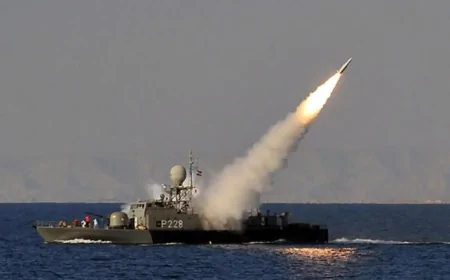
Emphasizing that India has been a master at building large ships for centuries, the Prime Minister said that next-generation reforms will help revive this forgotten legacy. He emphasized that over 40 ships and submarines have been inducted into the Navy in the past decade, and all, except one or two, were built in India. He pointed out that the massive INS Vikrant was also built domestically, including the high-quality steel used in its construction. Mr. Modi emphasized that India has the capability and there is no shortage of skills. He assured the nation that the political will required to build large ships is strongly present.
Emphasizing that a historic decision was taken yesterday to strengthen India's maritime sector, Mr. Modi announced a major policy reform under which large ships have now been granted infrastructure status. He said that when a sector receives infrastructure recognition, it reaps significant benefits. The Prime Minister emphasized that shipbuilding companies will now find it easier to obtain loans from banks and benefit from lower interest rates. All infrastructure financing benefits will now be available to these shipbuilding enterprises. Mr. Modi emphasized that this decision will reduce the financial burden on Indian shipping companies and help them compete more effectively in the global market.
Emphasizing that the government is working on three major schemes to make India a leading maritime power, the Prime Minister said that these initiatives will facilitate financial support for the shipbuilding sector, enable shipyards to adopt modern technology, and improve design and quality standards. He stated that over ₹70,000 crore will be invested in these schemes in the coming years.
Recalling a major seminar held in Gujarat in 2007, during his tenure as Chief Minister of Gujarat, to explore shipbuilding opportunities, Mr. Modi said that during this time, Gujarat had contributed to developing the shipbuilding ecosystem. He stated that India is now taking comprehensive steps to promote shipbuilding across the country. He emphasized that shipbuilding is not a simple industry; it is globally called the "mother of all industries" because it accelerates the growth of many allied sectors. The Prime Minister highlighted that industries such as steel, machinery, electronics, textiles, paints, and IT systems are supported by the shipping sector. He said that this significantly benefits micro, small, and medium enterprises (MSMEs). Citing research, the Prime Minister stated that every rupee invested in shipbuilding generates approximately double the economic return. He stated that every job created in a shipyard generates six to seven new jobs in the supply chain, meaning that 100 shipbuilding jobs can generate over 600 jobs in related sectors, underscoring the shipbuilding industry's massive multiplier effect.
The Prime Minister stated that focused efforts are being made to strengthen the skills required for shipbuilding. He said that the Industrial Training Institutes (ITIs) of India play an important role in this initiative. id that this sector is creating significant employment opportunities for the youth.
The Prime Minister emphasized that rapid progress in all sectors is essential for building a developed India. He reiterated that the path to a developed India lies through self-reliance. He urged citizens to remember that whatever they buy should be Swadeshi and whatever they sell should also be Swadeshi. Addressing shopkeepers, Shri Modi encouraged them to put up posters in their shops saying “Say with pride, this is Swadeshi”. He concluded his address by saying that this collective effort will transform every festival into a celebration of India's prosperity and wished everyone a Happy Navratri. Gujarat Chief Minister Bhupendrabhai Patel, Union Ministers C.R. Patil, Sarbananda Sonowal, Dr. Mansukh Mandaviya, Shantanu Thakur, Nimuben Bambhania and other dignitaries were present at the event.
What's Your Reaction?
 Like
0
Like
0
 Dislike
0
Dislike
0
 Love
0
Love
0
 Funny
0
Funny
0
 Angry
0
Angry
0
 Sad
0
Sad
0
 Wow
0
Wow
0