



















































































DIVINE DARSHAN OF SHIVA, GAURI AND GANESH IN BHOJPUR SANGAMESHWARNATH SHIVLING
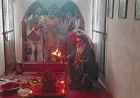
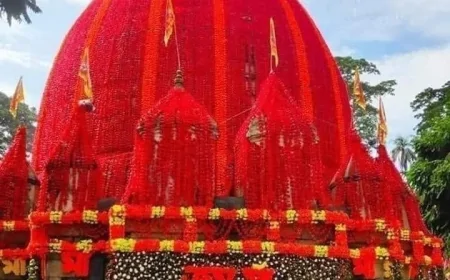
-Sangameshwarnath Dham located in Bindgaon village of Koilwar block of Bhojpur district of Bihar remains the main center of faith of devotees these days. In this unique Shivling, devotees get to see the divine form of Lord Shiva, Mata Gauri and Shri Ganesh together. This Shivling is not only important from the religious point of view, but its mythological and historical significance is also immense.


DIVINE DARSHAN OF SHIVA, GAURI AND GANESH IN BHOJPUR SANGAMESHWARNATH SHIVLING
16-JULY-ENG 10


RAJIV NAYAN AGRAWAL
ARA---------------------------Sangameshwarnath Dham located in Bindgaon village of Koilwar block of Bhojpur district of Bihar remains the main center of faith of devotees these days. In this unique Shivling, devotees get to see the divine form of Lord Shiva, Mata Gauri and Shri Ganesh together. This Shivling is not only important from the religious point of view, but its mythological and historical significance is also immense.


Confluence of three holy rivers: It is believed that in ancient times, the Ganges, Saryu and Son rivers used to meet at this place, due to which it is known as 'Sangameshwar'. Even though this confluence is not visible directly today, religious faith and spiritual energy are still alive here. It is said that the forms of Lord Shiva, Goddess Parvati and Lord Ganesha can be seen in the shape of this Shivling. This scene amazes the devotees.
About 25 km from Ara: As soon as the holy month of Sawan begins, devotees throng Shiva temples across the district. The Bhojpur district headquarters is located about 25 km north-east of Ara and 20 km south-east of Chhapra, the headquarters of Saran district. The confluence of the Ganga and Son rivers here is a place which is considered very important not only from the geographical point of view but also from the religious and mythological point of view.
Now the Saryu river meets the Ganga near Riwilganj: According to the Puranas, in ancient times this place was the confluence of the three rivers Ganga, Saryu and Son. But with time the geography changed and now the Saryu river meets the Ganga near Riwilganj. Still this meeting of Ganga and Son is unique even today. It is believed that Ganga is a female river and Son is a male river, thus this union is the only example of the confluence of male and female rivers in the natural form of rivers.
Penance place of Gods and Goddesses: This place situated at the confluence of Ganga and Son rivers has been the penance place of sages, saints, gods and goddesses since ancient times. According to mythological beliefs, once a meeting of Lord Brahma was organized in Brahmalok. Many sages and deities were present in the meeting and everyone was singing Vedic hymns in their turn. At the same time, sage Mandpal, in excitement, broke his voice. Seeing this scene, sage Durvasa, the ascetic son of Maharishi Atri and Mata Anusuya, present in the meeting, became angry.
Curse to Mother Saraswati: According to beliefs, her anger was so intense that she poisoned the atmosphere of the meeting while debating with sage Mandpal. Mother Saraswati, who was sitting near Brahma Ji in the assembly, smiled seeing this scene. Durvasa Rishi found this behavior uncontrollable and he cursed Mother Saraswati. You will go to the mortal world and live a hellish life for one year. Only then will you be free from this curse.
Here Mother Saraswati got freedom from the curse: Distressed by the effect of the curse, Mother Saraswati left for the earth. In search of a way to get freedom from her curse, she first reached the meeting point of Ganga and Son, where today there is a temple of Sangameshwarnath Mahadev. She was fascinated to see the unique beauty and peace of that divine confluence. There, at the confluence of Son river, which is as sacred as Mandakini, and Mother Ganga, she took a bath and made a Shivling from sand and worshipped it ritually. Pleased with her penance, Lord Shankar appeared and gave her the boon of freedom from the curse.
"Devotees become free from sins just by seeing the Shivling situated in Sangameshwarnath temple. On the day of Nagpanchami, people come here from far and wide to worship Kalsarpyoga. In the month of Sawan, devotees from the surrounding areas also come to see the Shivling." - Saint Yoganand Ji Maharaj, Mahant of the temple
Tapobhoomi of Mata Saraswati: It is mentioned in the epic Harshcharit written by the famous Sanskrit poet Banbhatta that once Mother Saraswati came to the mortal world, distressed by the curse of Durvasa Rishi. She came to this Sangam place and took a holy bath and made a Shivling from sand and worshipped it. The Shivling established by the goddess of knowledge like Saraswati is still revered as Sangameshwarnath.
Arrival of Lord Rama: It is described in the Balakand of Ramayana that when Maryada Purushottam Shri Ram was going on a Janakpur Yatra with his Guru Vishwamitra, he rested at this Sangam place. Here he took a holy bath and worshipped the Shivling. This place has thus remained a holy place for Ram devotees since the Treta Yuga.
Spiritual view of Shankaracharya: Adi Guru Shankaracharya has described the glory of this place in his famous poetic work Saundarya Lahari. He considers this place to be endowed with the beauty of the Goddess and the combined energy of Shiva-Shakti. This indicates that this confluence site is equally sacred for Shaiva, Vaishnava and Shakta traditions.
Part of Balarama Yatra described in Mahabharata: This Sangam is also mentioned in the Balarama Yatra festival of Mahabharata. When Lord Balarama went on a pilgrimage, he also bathed here and worshipped the Sangmeshwarnath Shivalinga.
Divine Darshan of Shiva, Gauri and Ganesh in Shivalinga: One of the most amazing features of Sangmeshwarnath Mahadev Temple is the Trimurti glimpse of the Shivalinga installed there. This Shivalinga is completely different from normal Shivalingas, because when seen from three different directions, three Shivalingas can be seen. Different divine forms appear.
In fact, when viewed from the front, the face of Lord Shiva is clearly visible. Ganesha's figure emerges from the left side and when viewed from the right side, the graceful image of Mother Gauri is reflected. This is not an ordinary coincidence, but a divine sign which proves that this Shivling is the combined form of Shiva, Shakti and son Ganesha in a single stone.
Vibrating Trishul: A trident located near the Shivling also makes the supernaturalness of this temple even more mysterious. This trident is always vibrating. Without any wind or external vibration. It is believed that this is a sign of Mahadev's awakened presence where the trident stands as a symbol of power, protection and determination.
Blessing of Saraswati's penance and Shiva's promise: There is a mythological belief that when Mother Saraswati performed rigorous penance by making a Shivling from sand at this place and pleased Lord Shankar and got freedom from the curse, then Shiva gave her a special boon. O Saraswati! Since this Shivling is made by your hands, I myself will always reside here. In this one form with Shakti (Gauri) and son (Ganesh).
"This place is very ancient, very important from mythological point of view, but unfortunately due to the negligence of the administration and public representatives, its importance has not reached the people even today." - Rajnikant, local teacher
Immense possibilities of tourism, yet silence: While on one hand Sangameshwarnath temple has unique features like miraculous Trimurti Shivaling, ever vibrating Trishul and Ganga-Son Sangam, on the other hand there is neither proper road facility nor Dharamshalas for stay nor information board and neither any official website or promotional material.
What's Your Reaction?
 Like
0
Like
0
 Dislike
0
Dislike
0
 Love
0
Love
0
 Funny
0
Funny
0
 Angry
0
Angry
0
 Sad
0
Sad
0
 Wow
0
Wow
0