






























































THE DONKEY ROUTE: SMUGGLING THE DREAMS OF YOUTH
Lured by the promise of a bright future abroad, Indian youth are falling prey to illegal routes. This network of agents not only breaks the law but also steals the hopes of families and the country's future.

THE DONKEY ROUTE: SMUGGLING THE DREAMS OF YOUTH
5-NOV-ENG 29


RAJIV NAYAN AGRAWAL
ARA--------------------------Lured by the promise of a bright future abroad, Indian youth are falling prey to illegal routes. This network of agents not only breaks the law but also steals the hopes of families and the country's future.


The "Donkey Route" is an illegal migration route through which Indian youth attempt to reach the United States or Europe without visas or valid documents. This route runs from India through Pakistan, Iran, Turkey, Greece, Italy, France, and then Mexico to the United States. Along the way, smugglers, agents, and criminal gangs extort money from travelers. Sometimes, people drown at sea or are caught crossing the border. Every year, hundreds of Indians die or disappear on this dangerous journey—leaving their families deeply in debt and grief.
A new and dangerous trend is rapidly spreading in many parts of India, especially in states like Haryana, Punjab, Gujarat, and Uttar Pradesh—the dream of reaching abroad via the "Donkey Route." The word "donkey" is derived from the English word "donkey," which means "to travel without permission or through an illegal route." It sounds like a movie story, but the reality is far more horrific. This route has not only devastated the future of young people but has also posed a serious humanitarian and economic crisis for society and the administration.
In rural and semi-urban India, "going abroad" is no longer just an aspiration but a symbol of success. In search of jobs, respect, and a better life, many young people risk everything. Agents offer them rosy dreams—"I'll be standing on American soil in just a few days," "I'll earn a salary in dollars," "Life there is like heaven."
But the truth is that these dreams often cost their lives. Most young people embarking on the donkey route are not told that the journey can last for months, traversing deserts, seas, and dangerous jungles. Along the way, they face hunger, thirst, cold, and violence. Many people simply disappear on this journey and are never heard from.
The entire Donkey Route business operates through an organized network involving fake travel agents, passport brokers, local leaders, and foreign gangs. According to one estimate, more than 5,000 young people in India attempt to travel abroad illegally every year, and the agents charge them between 15 and 25 lakh rupees.
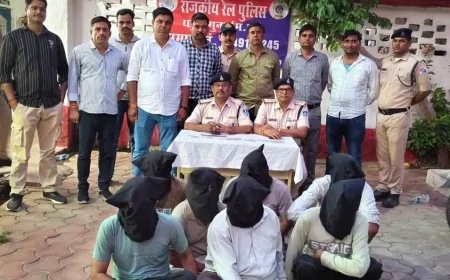
According to an Amar Ujala report, 3,053 fake travel agents were arrested from 2019 to 2025. However, the actual number is likely much higher, as most victims do not report due to fear or shame. Agents often target families struggling with unemployment and poverty, hoping their son will "settle abroad." But the result is debt, ruin, and shattered dreams.
Starting in India, this route travels through Pakistan, Iran, Turkey, Greece, Italy, France, and finally Mexico to the United States. During this journey, people are often crammed into boats at sea, forced to cross deserts, or stranded in icy forests. Numerous human rights organizations have reported that hundreds of Indians die or go missing every year on this journey.
In February 2023, two young men from Gujarat died near Turkey while trying to cross the European border. Such incidents have become commonplace. This is not only a crime but also a blot on humanity.
The US and European countries have now intensified surveillance on illegal migration. After 2022, the US has signed a data-sharing agreement with India, allowing for the immediate identification of those arriving via the Donkey Route. If caught, they are deported and often face months in prison.
On the other hand, the European Union has also implemented stricter visa and entry regulations. This has resulted in agents resorting to even more dangerous routes—such as sea routes or crossing through forests—further increasing the risk to life.
The Donkey Route is not just a crime but also a significant burden on the rural economy. A large segment of the youth, abandoning farming and local employment, even sell their land in pursuit of migrating abroad. A mindset has developed in villages that "those who haven't gone abroad haven't succeeded."
The result of this trend is a dwindling rural workforce, families sinking into debt, and young people losing faith in legitimate employment systems. This situation weakens India's demographic strength in the long run.
The Indian government has mandated registration and verification for travel agents. The Ministry of External Affairs has also launched an e-migrate portal, where a list of legitimate agents can be viewed. Despite this, due to lack of awareness and a corrupt system, fraudulent agents remain active.
Laws exist—the Immigration Act of 1983 and the Passport Act of 1967—but their effective implementation is lacking. In small towns, agents openly advertise "migration abroad," and the police only notice them when a major incident occurs.
The media has periodically tried to raise awareness about this issue. Newspapers like Amar Ujala have exposed how the "donkey-route" business has spread to hundreds of villages in Haryana, Punjab, and western Uttar Pradesh.
But society also needs to introspect: Why do young people feel they can't succeed in the country? Why do they have to go abroad? Has it become a symbol of prestige? Why is an environment unable to be created in villages that can provide opportunities to young people?
Campaigns should be launched at the village, college, and panchayat levels to highlight the dangers of illegal migration. The Ministry of External Affairs, the Labor Department, and the media should work together to ensure that no youth travels abroad without legal procedures.
Skill development, self-employment, and local industries should be encouraged for rural youth to reduce the allure of going abroad. Simply arresting fraudulent agents is not enough; their financial networks must be disrupted. Provisions such as asset confiscation and long sentences should be strictly enforced.
Society must understand that success doesn't come simply by setting foot on foreign soil. Opportunities exist within the country—we just need to change our perspectives. India should work with countries where these networks are active to curb cross-border human trafficking.
India has the world's largest youth population. This demographic asset can be a boon only if channeled properly. If these youth are pushed into illegal paths, it will be a huge loss to the nation.
Avoiding the Donkey Route requires not just law, but thought and discretion. It must be understood that no dream can be so big as to surpass human dignity, security, and self-respect.
The Donkey Route is not just a story of crime; it is a saga of the frustration, unemployment, and confusion of India's youth. Until society and the government work together to provide legal, safe, and respectable opportunities for youth, the business of such agents will continue to flourish.
It is time for strict action, true awareness, and a change in the mindset that believes that "going abroad is success." Because a truly developed India will be one where young people can realize their dreams in their own country.
What's Your Reaction?
 Like
1
Like
1
 Dislike
0
Dislike
0
 Love
0
Love
0
 Funny
0
Funny
0
 Angry
0
Angry
0
 Sad
0
Sad
0
 Wow
0
Wow
0