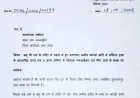























































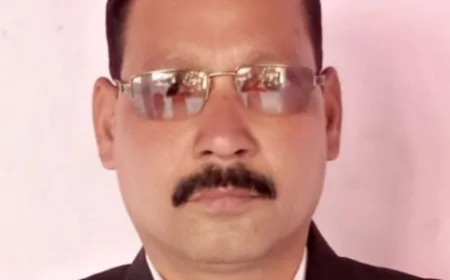






HINDI DIWAS FORTNIGHT IS BEING ORGANIZED ROADBLOCK IN THE PATH OF HINDI---ATUL PRAKASH
Today you may see Hindi progressing at a rapid pace. However, in a sense this is not wrong either. Certainly the world of Hindi is expanding. It has crossed the boundaries of the nation and has proved its worth on foreign soil as well. If you look beyond the borders, you will find Hindi running fast in the world of possibilities and creating a new world of possibilities of its own. There is no need to tell that foreigners who have a desire to enter the Indian market are also eager to learn Hindi now. If the NRIs in countries like Mauritius, Trinidad, South Africa, Guyana, Suriname and Fiji are nurturing this language as their heritage, then it is becoming a market need for other countries like America, Britain, Italy, Germany, Poland, Russia, China, Japan, Korea. It is no less pleasing to think that Hindi is being taught in more than 150 important universities of the world. Moreover, Hindi films are making their market across the border and Hindi songs have become a delight to the ears of non-Hindi speakers. In such a situation, when our Hindi seems ready to play a big role on the world stage, then anyone can ask the question that why are people like us getting so upset over the condition of Hindi?

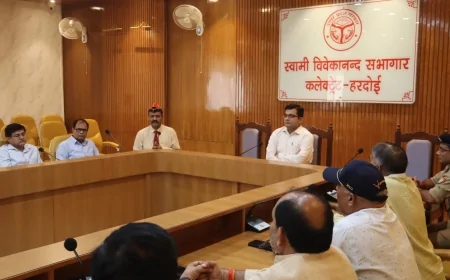
HINDI DIWAS FORTNIGHT IS BEING ORGANIZED
ROADBLOCK IN THE PATH OF HINDI---ATUL PRAKASH


4-SEP-ENG 4
RAJIV NAYAN AGRAWAL


ARA--------------------------Today you may see Hindi progressing at a rapid pace. However, in a sense this is not wrong either. Certainly the world of Hindi is expanding. It has crossed the boundaries of the nation and has proved its worth on foreign soil as well. If you look beyond the borders, you will find Hindi running fast in the world of possibilities and creating a new world of possibilities of its own. There is no need to tell that foreigners who have a desire to enter the Indian market are also eager to learn Hindi now. If the NRIs in countries like Mauritius, Trinidad, South Africa, Guyana, Suriname and Fiji are nurturing this language as their heritage, then it is becoming a market need for other countries like America, Britain, Italy, Germany, Poland, Russia, China, Japan, Korea. It is no less pleasing to think that Hindi is being taught in more than 150 important universities of the world. Moreover, Hindi films are making their market across the border and Hindi songs have become a delight to the ears of non-Hindi speakers. In such a situation, when our Hindi seems ready to play a big role on the world stage, then anyone can ask the question that why are people like us getting so upset over the condition of Hindi?
In this country, such English medium schools are coming up, where there is an undeclared censorship on speaking Hindi. To a large extent, our children have been Sanskritised in the form of ‘Papa-Mummy’. Now even in villages, saying ‘Mai’, ‘Babu’, ‘Kaka’ has become old fashioned and a matter of shame. At the pace at which conventisation is going on, even the idiom ‘Kukurmutte’ has been left far behind.
It is not easy to describe the condition of Hindi in India. There are more apprehensions than expectations. When people who have been eating Hindi for a long time start beating the drums of English, then what is left to say? Forget about the slave mentality decreasing after so many years of independence, it seems to be increasing day by day. Once Father Kamil Bulke had said, "Sanskrit is the mother, Hindi is the housewife and English is the maid." While saying this, Father, who came from Belgium and dedicated himself to Hindi, had deeply felt what the real linguistic needs of this country are. In fact, the places he had outlined for Sanskrit, Hindi and English are still as relevant today. But, unfortunately, the circumstances that our rulers are constantly creating, in which the maid has become the queen and is seen kicking and shoving the mother and the housewife every day. Mother (Sanskrit) has been brought to such a state that if you are seen speaking in its favour even by mistake, then without any ifs and buts, you will be labelled as orthodox, Manuvadi, bigot etc. The condition of Hindi is definitely not so pathetic right now, but if in the coming few years its condition also becomes the same and it is also brought to the brink of extinction, then it will not be surprising. Some people may laugh at my words and say that I am complaining unnecessarily
Hindi's most controversial words: From low to lapdog media, the time-journey of words-Atul Prakash
Words are not just voices, they are layers of time. Have you ever thought that in what sense the words which you consider abusive, were born?
We will go on a journey of the most controversial and powerful words of Hindi. We will learn how 'Neech' went from being a social classification to a derogatory slur and how 'Haramzada' became part of cinematic history. We will understand the changing meanings of ancient words like 'Shudra' and 'Yavan' and how words like 'Firangi', 'Ghulam' and 'Coolie' became symbols of colonialism.
We will also understand the origins of modern-day words like 'Godi Media' and 'Urban Naxal' and the politics behind them. We will also learn the surprising etymology of words like 'Kamina', 'Lafanga' and 'Bhadwa'. When you think about the power of language, its transformation and its impact on our lives, a strange question arises as to how these words originated.
Etymology and history of controversial words: 'Neech', 'Haramzada', 'Shudra', 'Yavan', Effect of colonialism on words: 'Firangi', 'Ghulam', 'Coolie', 'Native', Analysis of modern political words: 'Godi Media', 'Urban Naxal', Origin of commonly spoken abuses: 'Gaali', 'Bhadwa', 'Kamina', 'Lafanga', Why does the meaning of words change? Words do not just speak, they also determine our history, our thinking and the future of our coming generations.
Hindi words made from the mixture of two languages - Atul Prakash
The matter of language is also 'flowing water'. Let it flow, see where it stops. This is the era of fusion brother, where is there no adulteration! There are many words in Hindi which are a deliberate combination of two languages as per the need.
Many words have been formed from 'p' and are popular. For example, pay attention to words like 'double roti', 'railgadi' and 'naukar-chaakar'. There is hardly any person whose tongue has not used these words. These words are deeply ingrained in our daily life. But, have you ever paid attention to which language is the origin of these words? If you pay attention, you will find that Hindi 'roti' is easily digested with English 'double' and Hindi 'gaadi' is easily digested with English 'rail'. Persian 'chaakar' is also easily embraced in Hindi with Turkish 'naukar'.
Sanskrit has a deep relationship with Hindi, so words from both these languages are more likely to be seen in harmony together. In words like ‘atom bomb’, ‘sub dialect’, ‘guru bhai’, ‘atomic bomb’, ‘movement’, ‘farming arrangement’, ‘ghar-dwaar’, ‘compromise-premi’, ‘atom’, ‘sub dialect’, ‘guru’, ‘atom’, ‘movement’, ‘arrangement’, ‘door’, ‘premi’ are Sanskrit words while words like ‘bomb’, ‘dialect’, ‘brother’, ‘aava’, ‘farming’, ‘ghar’, ‘compromise’ are native to Hindi.
Apart from this, in the course of the development of the language, from time to time, Hindi speakers have had a lot of interaction with English, Persian, Arabic and Turkish speakers, and a process of word formation has also been going on continuously with the combination of these languages. We often use words like ‘khanapuri’ and ‘urinal’. ‘Khana’ and ‘pee’ are from Persian while ‘puri’ and ‘ghar’ are from Hindi. Similarly, in compound words like ‘dhan-daulat’, ‘compromise-praster’, ‘kaam-dhandha’, ‘gulab-jamun’, ‘khel-tamasha’, ‘chor-bazaar’, ‘daana-paani’, ‘baal-bachche’, ‘tan-body’, ‘sidha-sada’, the first half is Hindi while the second half is Persian. When Arabic words like ‘akhbar’, ‘kitab’ and ‘maal’ are mixed with Hindi words like ‘wala’, ‘ghar’ and ‘gadi’, they become ‘akhbarwala’, ‘kitaabghar’ and ‘maalgadi’. In ‘ticketbabu’, ‘pocket-killer’, ‘parcel-ghar’, ‘policeman’, ‘motor-car’, ‘thlua-club’ we can easily understand that ‘ticket’, ‘pocket’, ‘parcel’, ‘police’, ‘motor’ and ‘club’ are from English while ‘babu’, ‘killer’, ‘ghar’, ‘wala’, ‘car’, ‘thlua’ are from Hindi. Hindi words are also formed by the combination of Sanskrit and English. For example, ‘officer-club’, ‘cross-currency’, ‘press-conference’, ‘press-varta’ etc. If you want to see the combination of Sanskrit-Persian, then pay attention to words like ‘shayadar’, ‘advertisement-baazi’, ‘rose-garden’, ‘labourer-union’. ‘Chhaya’, ‘Vidyapan’, ‘Vatika’ and ‘Sangh’ are from Sanskrit while ‘Daar’, ‘Baazi’, ‘Rose’ and ‘Majdoor’ are from Persian.
Similarly, the Hindi ‘Gaadi’ was used in the Turkish word ‘Top’ to make ‘Topgadi’. When Sanskrit ‘Soldiers’ use this ‘Top’, they become ‘Top Soldiers’. In ‘Dhan-Daulat’, the Arabic word ‘Daulat’ is seen along with Sanskrit word ‘Dhan’. In Sanskrit word ‘Vivaah’, the Arabic word ‘Kharch’ makes arrangements for ‘marriage expenses’. If you reach a ‘Sugar Mill’, the Persian word ‘Sugar’ will be seen in the English word ‘Mill’. English and Arabic together make arrangements for ‘Pocket Expenses’. The success of ‘Golchi’ is also in the English word ‘Gol’ and the Turkish word ‘Chi’
Due to the language revolution of newspapers, ‘Deepawali’ became ‘Diwali’ and the word Vabal came from Urdu but became a ruckus in Hindi-Atul Prakash
Similarly, I have read ‘Diwali’ written in newspapers, while in many books it is written ‘Diwali’; what is the correct thing after all. Since we are talking about ‘Deepawali’, it is naturally ‘Diwali’. It has been written ‘Deepawali’ since before. The language revolution of ‘Diwali’ was started especially by Hindi newspapers.
The truth is that the name is ‘Deepawali’ and then ‘Diwali’, not ‘Dipawali’ and ‘Diwali’. Here and there, ‘Diwali’ is definitely heard in spoken language, but not everywhere.
Similarly, other names for lamp are ‘Deep’ and ‘Deeva’, not ‘Deep’ and ‘Diva’. ‘Deepawali’ or ‘Deepavali’ is formed by adding ‘Aavali’ or ‘Aavali’ to ‘Deep’. Either small ‘i’ or big ‘ee’ can be used on ‘l’, because in Sanskrit, both the words ‘Aavali’ and ‘Aavali’ are used for line or queue, but it is wrong to put small ‘i’ on ‘d’. In Sanskrit, the words ‘Aali’ and ‘Aali’ are also used in the sense of row and line. These words have other meanings too, but describing them here will be irrelevant. The word ‘Ali’, formed by contraction of these words, also means line or queue, but it is used only in Hindi poems to keep the rhyme correct by increasing or decreasing the syllables. Even if you make a word by adding ‘Aali’ or ‘Aali’ to ‘Deeva’ (Deepak), the word will be ‘Diwali’. To make ‘Diwali’, ‘Aali’ or ‘Ali’ will have to be added to ‘Diva’, whereas ‘Diva’ means day. For ‘Diya’ or ‘Deepak’, ‘Diva’ is required. I believe that if the words for which logical derivations are available are kept as logical as possible, it is better for the development of the language. Often you all read or write ‘Diya’ but its correct word is ‘Diya’. Nowadays people generally consider the word “Bawaal” to be correct and use it in conversation, whereas the correct word is ‘Vabaal’. It is an Arabic word. It has become a part of Hindi through Urdu. Those who know Urdu still know, understand and use it as ‘Vabaal’, but if the wise people of Hindi start making it ‘Bawaal’ out of ignorance, then the way is easy for the common people that ‘Mahajano yen gatah sa pathah’. ‘Vabaal’ means calamity, problem, trouble, entanglement, trouble. With this, Persian word ‘Jaan’ has been combined to form ‘Vabaalejan’; that is, trouble or entanglement for life. Persian words ‘Gardan’ and ‘Dosh’ have been combined to form ‘Vabaalegardan’ and ‘Vabaaledosh’. Both mean burden for the neck. ‘To be in trouble’ and ‘Vabaa’
There are also idioms like 'lejaan ho jana'. Now you think whether we have to make 'vabal' or 'bawaal' in Hindi language
Hey crazy people! Identify me, where did you come from........ I am the word-Atul Prakash
Before knowing where the words came from in Hindi language, it is necessary to identify the word and to identify the words, it is necessary to know the definition of the word first before knowing the types of words.
Definition of word- An independent and meaningful sound group formed by the combination of letters is called a word.
In this definition, it is to be specially noted that words are formed by the combination of letters, but to be called a word, it is necessary to have a meaningful sound group, otherwise that word will become meaningless. If considered on this basis, then there are two types of words, one meaningful word and the other meaningless word.
Meaningful words and meaningless words are two important concepts in Hindi that help in understanding the meaning and use of words.
Meaningful Words: Meaningful words are those words that have a meaning and which denote a thing, person, idea or action. These words are meaningful when used in a sentence.
Examples: Book: A written or printed material that imparts knowledge. Tree: A plant that stands erect by spreading roots in the ground and bears leaves and fruits. Food: Eating or consuming something.
Non-Meaningful Words: Non-Meaningful words are those words that do not have any meaning or which do not clearly denote a thing, person, idea or action. These words are meaningless or ambiguous when used in a sentence.
Examples:- Atter Sutter: Speaking or talking nonsense without any meaning. Nonsense: Nonsense or meaningless talk.
Meaningful words and non-meaningful words are important aspects of Hindi language that help in understanding the meaning and usage of words. Meaningful words are those that make sense in a sentence while nonsensical words are meaningless or ambiguous. Understanding both types of words can help us use our language more effectively.
In order to identify words, it is also important to identify meaningful and nonsensical words as well as traditional and nontraditional words.
Traditional Words: These are words that have been in use since ancient times and are used in a specific culture or society. These words often reflect the history, traditions, and values of that culture or society.
Examples: Pitra: Traditional word for father. Matri: Traditional word for mother. Guru: Traditional word for teacher or guide.
Non-Traditional Words: Non-Traditional words are words that are new or that are different from traditional words. These words are often used in modern contexts and reflect new meanings or concepts.
Examples: Internet: A modern word that refers to online networks. Smartphone: A modern term that refers to an advanced mobile phone. Social media: A modern term that refers to online platforms that are used for social communication.
Both traditional and non-traditional words are important parts of language. Traditional words connect us to our culture and history, while non-traditional words introduce us to new ideas and concepts.
We have learned about words, what are words? Now we will learn about the types of words.
Most people must have read or you must remember about four types of words in Hindi based on their origin. These four types are - Tatsam, Tadbhav, Desi and Videsh.
You people have read about mixed words in the past and learned how words are formed by combining two languages, so the fifth type in Hindi based on their origin is hybrid or mixed words.
So, words are considered to be of five types based on their origin. similar word, tadbhava word, indigenous words, foreign words, hybrid words.
What are similar words?-Tatsam words are those words which, despite being Sanskrit words, are used in their original form in Hindi. Like:- Fire, Air, Mother, Father, Tears, Light, Letter, Sun etc. Examples of similar words:- Fire, Ashta, Zone, Agriculture, Karma, Cupboard, Moon, Land, Milk, Naked, New, Mountain, Middle, Peacock, Night, Snake, Bath, Dry, Summer, Humid, Home, Dental, Shatabdi, Century etc.
2. What are Tadbhava words?--Tadbhava words are Sanskrit words whose form has changed in Hindi. Like fire to fire, tear to tear, air to wind, mother to mother, sun to sun etc. Examples of Tadbhav words:-Fire, Aanchal, Tears, Farming, Work, Door, Moon, Earth, Sun, Milk, Naked, New, Mountain, Beach, Peacock, Night, Snake, Bathing, Dry, Heat, House, Teeth, Rain etc.
3. What are Desi words?-Desi words are those which have come to Hindi from local dialects. Like stomach, turban, feet etc. Examples of Desi words:-Bowl, window, Khichdi, Lota, Boy, Car, Blacksmith, Box, Bird, Shoe, Cowrie, Water, Turban, Leopard, Branch, Seth, Forehead, Stomach, Kick, Punch, Slap, Chapa etc.
4. What are foreign words?-Foreign words are those words which are basically words of foreign language but are being used in Hindi. Like school, station, rickshaw etc.
Examples of foreign words:-Strange, rich, voice, mirror, spinning wheel, shop, resignation, college, engine, bicycle, radio, budget, button, camera, priest, pickle, bomb, cupboard, tar, tea etc.
5. What are hybrid words ?-Hybrid words are those words which are made by mixing different words of two languages. Like train, ticket, window etc.
Examples of hybrid words:-Marxism, watchmaker, operation, room, spittoon, jail visit, lathi charge, tear gas, convict, train, ticket office, mosquito net, pickpocket, doctor sahab, rose water etc.
Jagatnandan Sahay said that the journey of Hindi words has been a journey of continuous change and experimentation. This journey sometimes travels in the world of beauty riding on the wings of imagination, and sometimes challenges social inequalities by walking on the hard ground of reality.
If we start from Hindi poets and writers Nirala, Pant, Mahadevi and Prasad, then this journey passes through many millstones like Nagarjun, Trilochan, Ajneya, Kedarnath Singh, Kunwar Narayan and Raghubir Sahay.
Through words, there is a dense and sensitive expression in literature. It is not just rhyming or sentimentality but it is a fire born from the heat of experiences that penetrates deep into the reader.
Good words are testimony to their times and are also the voice of the soul. It is not momentary sentimentality but the result of long sadhana. In this process of literary creation, writers and poets have to go within themselves, extract language from within through words and find that feeling which is not ordinary but extraordinary. In the best literary arts of the world, beauty is also enhanced through words. If you have words, then you do not need any other material to write literature.
What's Your Reaction?
 Like
0
Like
0
 Dislike
0
Dislike
0
 Love
0
Love
0
 Funny
0
Funny
0
 Angry
0
Angry
0
 Sad
0
Sad
0
 Wow
0
Wow
0