

































































BABU LALAN JEE: A SADHAK OF NAAD
This article is a tribute… Music is not a “means of earning” but a “medium of dedication”.… To those sounds, which were never spoken – but were experienced.… To that Saadhak, who created a dialogue through the Mridang, and found rhythm even within silence.

BABU LALAN JEE: A SADHAK OF NAAD
26-JULY-ENG 29


RAJIV NAYAN AGRAWAL
ARA-----------------------------This article is a tribute… Music is not a “means of earning” but a “medium of dedication”.… To those sounds, which were never spoken – but were experienced.… To that Saadhak, who created a dialogue through the Mridang, and found rhythm even within silence.


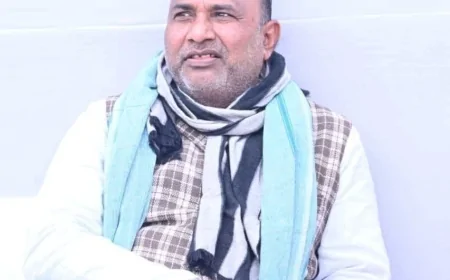
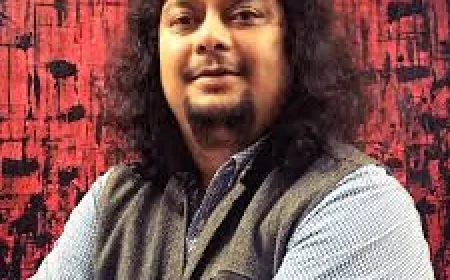
When the world was searching for the identity of artists in the glittering stages and bright lights, a Saadhak was silently researching ‘Naad’ in the soil of Bhojpur district of Bihar. That Saadhak was – Shatrunjay Prasad Singh, who was revered all over the country as “Babu Lalan Ji”.
He was born in a peaceful and cultural environment like Jamira Kothi – where music was not a performance, but a prayer. For him, Mridang was not just an instrument, but the voice of the soul. He devoted every moment of his life to this sound-sadhana, where every ‘dha’, ‘tin’, ‘ta’ came out from his soul.
In Lalan ji’s art, there was a wonderful amalgamation of the depth of the Banaras gharana, the dignity of the Mathura style and his own originality. When he played the thirai on the mridang, the listeners would get carried away not by the rhythm but by the emotion. He would awaken the rhythm within the rhythm – as if making even the tiniest particles of sound vibrate was his natural quality.
When a dancer on the stage of Kathak would search for rhythm with his feet, then Babu Lalan ji would give direction to his soul with his mridang. In his company, creation, engrossment and penance – all three would become one. But what made him unique was his humble nature and sense of gravity. He would say –
“Unless there is service in music, it is only noise.”
Today when we are surrounded by digital sounds and mechanical rhythms, the memory of Babu Lalan ji teaches us -
"Music comes alive when it comes out of the soul and touches the soul."
At the age of just 19, he gave his first independent pakhavaj recital performance in a prestigious music conference in Kolkata, where his playing style mesmerized everyone. With this beginning, his name started resonating in small and big gatherings and gradually his fame was established all over India.
Along with pakhavaj, he also received high level training in tabla. He received traditional training in tabla from the well-known guru Pandit Vikku Maharaj of Banaras Gharana, while around 1933 he learned the complex style of Paschim Baaj in tabla from Ustad Hassan Baksh Khan of Karachi (now Pakistan). Not only this, he also received formal training in Kathak dance from late Achchan Maharaj, father of Padma Vibhushan Pandit Birju Maharaj.
The sound of Babu Lalan ji's art resonated not only in Bihar but also in cultural centers like Kolkata, Jaipur, Udaipur, Lucknow, Delhi and Banaras. There was a unique amalgamation of tradition, imagination and soul in his playing style. The clarity of the Tihaiyas, Parans and Bols presented by him established him as a "Naad Yogi". His art journey was not limited to the stage only. He transformed Jamira Kothi into a cultural Tapobhoomi, where he selflessly taught Pakhavaj, Tabla and Kathak to the students. This place still echoes his musical practice and gurutva.
For his practice and pure artistic approach, he was awarded many national and international honors, prominent among which are: President's Award, Fellowship of Sangeet Natak Academy, Mardangik Chakra Choodamani, Sangeet Shiromani, Sangeet Martand, Laya Bhaskar, Governor's Award, Dance and Drama Award etc.
The life of Babu Lalan ji is a living example of the fact that a true artist is shaped not by performance but by hard work, restraint and dedication. He never allowed music to become a business, but carried it out as a spiritual responsibility.
Today, when there is a plethora of mechanical music and artificial rhythm, the memory of Babu Lalan ji teaches us this -
"Music is alive when it comes from the soul and touches the soul."
He was not just an instrumentalist, he was an era - which even today beats like a rhythm in the mind of every serious seeker.
What's Your Reaction?
 Like
2
Like
2
 Dislike
0
Dislike
0
 Love
0
Love
0
 Funny
0
Funny
0
 Angry
0
Angry
0
 Sad
0
Sad
0
 Wow
0
Wow
0