
















































































THE BILL TO REMOVE ARRESTED MINISTERS IS AN ATTACK ON THE OPPOSITION, NOT CORRUPTION
The 130th Constitutional Amendment Bill, 2025, introduced in the name of “public interest, welfare and good governance”, is actually a draconian law being designed to destabilise opposition-led state governments and weaken the federal structure of India. In an era of vendetta politics, where central agencies are deployed against opposition leaders, the provisions of this bill are designed to be misused for ulterior motives. The mention of “constitutional morality” in this bill is contrary to its basic spirit, as it violates the established principle that disqualification and punishment should be linked not to mere allegations or arrest, but to conviction by the courts. This principle of conviction is clearly incorporated in Section 8 of the Representation of the People Act (RPA), 1951. In today’s deadly political environment, where individuals can easily be accused, arrested and detained for long periods, this law will surely be used as a weapon to target political opponents and erode democratic norms

THE BILL TO REMOVE ARRESTED MINISTERS IS AN ATTACK ON THE OPPOSITION, NOT CORRUPTION
25-AUG-ENG 17


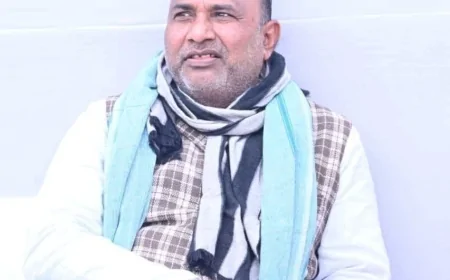
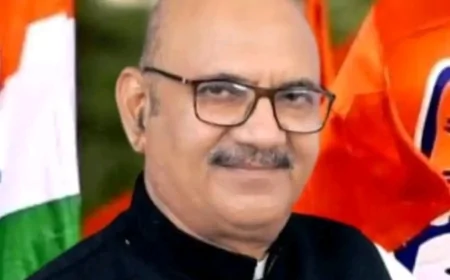
RAJIV NAYAN AGRAWAL
ARA----------------------------The 130th Constitutional Amendment Bill, 2025, introduced in the name of “public interest, welfare and good governance”, is actually a draconian law being designed to destabilise opposition-led state governments and weaken the federal structure of India. In an era of vendetta politics, where central agencies are deployed against opposition leaders, the provisions of this bill are designed to be misused for ulterior motives. The mention of “constitutional morality” in this bill is contrary to its basic spirit, as it violates the established principle that disqualification and punishment should be linked not to mere allegations or arrest, but to conviction by the courts. This principle of conviction is clearly incorporated in Section 8 of the Representation of the People Act (RPA), 1951. In today’s deadly political environment, where individuals can easily be accused, arrested and detained for long periods, this law will surely be used as a weapon to target political opponents and erode democratic norms.


Articles 75, 164 and 239AA of the Indian Constitution detail the procedures and prerequisites for the appointment and removal of ministers and clearly confer such power on the “President on the advice of the Prime Minister” and the “Governor on the advice of the Chief Minister”. The proposed amendment violates this constitutional intent. Articles 14, 19 and 21 ensure equality before the law, freedom of expression, due process and personal liberty. Automatic removal on unproven criminal charges violates these guarantees. It subverts the burden of proof and the presumption of innocence. The Bill also does not have a review clause. Once removed, ministers cannot automatically return to their posts even if they are acquitted or granted bail after a period of 30 days. There is also no provision for compensation if the arrest is found to be malicious. In fact, this will only lead to the misuse of laws like preventive detention and the UAPA.
As far as central agencies go, today the Enforcement Directorate (ED) has become the favourite stooge of the current ruling dispensation. However, the ED has a poor track record with only 38 cases resulting in convictions in the last five years. Its abysmal conviction rate also highlights the fact that most cases never even reach the trial stage. Of the prominent politicians investigated by the ED between 2014 and 2022, 95 per cent were opposition leaders. Bail under the PMLA is rare, particularly because of the twin conditions — the public prosecutor having the opportunity to oppose the bail application and the court being satisfied that the person is not guilty and is not likely to commit any offence while on bail — that must be met under Section 45. If this Bill becomes law, such excesses will increase even more!
Four serious objections must be raised against this Bill. First, it violates the presumption of innocence. It punishes ministers only on arrest, not on conviction. Thus, it destroys the constitutional guarantee of “innocent until proven guilty” and becomes a weapon in the hands of the executive for retribution. Second, it violates the separation of powers. Automatic removal bypasses parliamentary and judicial oversight, concentrates unchecked power in the hands of the executive and violates basic constitutional checks and balances. Third, due process is being denied for ministerial removal. Any removal without trial, framing of charges or judicial finding is a violation of due process, as established in the case of Rameshwar Prasad vs Union of India. Fourth, it creates a platform for political abuse. In keeping with the current well-established trend of central agencies targeting opposition leaders, this Bill risks constitutionalising vindictiveness rather than promoting clean governance.
This Bill is an unprecedented assault on the constitutional framework of India. It is a manifestation of the Modi government’s autocratic attempt to suppress the opposition and our democracy, reflecting its neo-fascist character. By allowing pre-trial detention and automatic removal of a Prime Minister, Chief Minister or Minister merely upon arrest, this Bill destroys the concept of presumption of innocence and due process, which are the bedrocks of a meaningful system of law and justice. It grants arbitrary power to central agencies, opening the door to vindictiveness against opposition leaders. The weaponisation of prosecution is already underway and cannot be made constitutionally sacrosanct.
What's Your Reaction?
 Like
0
Like
0
 Dislike
0
Dislike
0
 Love
0
Love
0
 Funny
0
Funny
0
 Angry
0
Angry
0
 Sad
0
Sad
0
 Wow
0
Wow
0