













































































SRI KRISHNA JANMASHTAMI: CELEBRATING THE DIVINE INCARNATION AND ETERNAL LEGACY OF LORD KRISHNA
Sri Krishna Janmashtami, often simply called Janmashtami or Krishna Jayanti, is one of the most vibrant and widely celebrated Hindu festivals, marking the birth of Lord Krishna, the eighth avatar (incarnation) of Lord Vishnu. Observed on the eighth day (Ashtami) of the dark fortnight (Krishna Paksha) in the month of Bhadrapada according to the Hindu lunar calendar, it typically falls in August or September in the Gregorian calendar. In 2024, for instance, Janmashtami was celebrated on August 26, with devotees worldwide engaging in fasting, devotional singing, and reenactments of Krishna's life events.

SRI KRISHNA JANMASHTAMI: CELEBRATING THE DIVINE INCARNATION AND ETERNAL LEGACY OF LORD KRISHNA
16-AUG-ENG 1


RAJIV NAYAN AGRAWAL
ARA---------------------------Sri Krishna Janmashtami, often simply called Janmashtami or Krishna Jayanti, is one of the most vibrant and widely celebrated Hindu festivals, marking the birth of Lord Krishna, the eighth avatar (incarnation) of Lord Vishnu. Observed on the eighth day (Ashtami) of the dark fortnight (Krishna Paksha) in the month of Bhadrapada according to the Hindu lunar calendar, it typically falls in August or September in the Gregorian calendar. In 2024, for instance, Janmashtami was celebrated on August 26, with devotees worldwide engaging in fasting, devotional singing, and reenactments of Krishna's life events.


The festival is not merely a commemoration of Krishna's birth but a profound spiritual occasion that encapsulates his teachings, leelas (divine plays), and philosophical wisdom. Krishna is revered as a god-child, a mischievous butter thief, a romantic lover, a wise charioteer, and the supreme deity who delivered the Bhagavad Gita—a timeless scripture on dharma (duty), karma (action), and bhakti (devotion). Janmashtami's significance lies in its ability to blend joy, devotion, and introspection, reminding devotees of Krishna's role in upholding cosmic order (dharma) against chaos and evil.
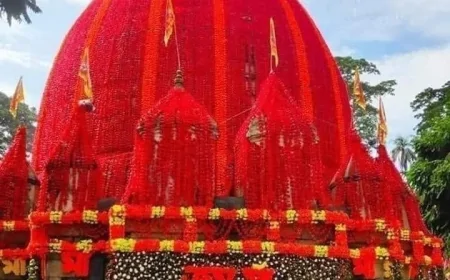
The celebration varies regionally: in Mathura and Vrindavan (Krishna's birthplace and childhood home), it's marked by elaborate dramas (Ras Leelas) and temple decorations; in Maharashtra, Dahi Handi recreates Krishna's childhood antics of breaking butter pots; while in Gujarat, it's part of larger Navratri festivities. Globally, ISKCON (International Society for Krishna Consciousness) temples host midnight vigils, kirtans (devotional chants), and feasts. But to truly appreciate Janmashtami, one must delve into the life of Lord Krishna—from the events preceding his birth to his departure from the mortal world. This article explores these aspects in depth, drawing from ancient texts like the Mahabharata, Bhagavata Purana, and Harivamsa, while highlighting Krishna's multifaceted persona as a divine strategist, philosopher, and eternal guide.
The story of Lord Krishna begins long before his physical manifestation on Earth, rooted in the cosmic cycle of avatars where Vishnu descends to restore balance when adharma (unrighteousness) prevails. According to Hindu cosmology, the world undergoes cycles of yugas (ages), and by the end of Dvapara Yuga, evil had proliferated under tyrannical rulers. The Bhagavata Purana describes how Mother Earth (Bhudevi), burdened by demonic kings, appealed to Lord Brahma for relief. Brahma, in turn, prayed to Vishnu, who assured that he would incarnate to alleviate the suffering.
The immediate prelude to Krishna's birth centers on the kingdom of Mathura, ruled by the tyrannical King Kansa. Kansa, son of Ugrasena, had usurped the throne and allied with demons like Jarasandha, the king of Magadha. Devaki, Kansa's sister, married Vasudeva, a noble Yadava. During their wedding procession, a celestial voice (Akashvani) prophesied that Devaki's eighth child would slay Kansa. Terrified, Kansa imprisoned Devaki and Vasudeva, vowing to kill all their offspring.
This prophecy was no mere coincidence; it was part of a divine plan. Vishnu, in his supreme form, instructed his eternal consort Yogmaya (the goddess of illusion) to orchestrate events. Yogmaya transferred Devaki's seventh embryo to Rohini (Vasudeva's other wife) in Gokul, where it became Balarama, Krishna's elder brother and an incarnation of Shesha Naga (Vishnu's serpent bed). Meanwhile, Vishnu himself entered Devaki's womb as the eighth child.
Kansa's reign of terror intensified; he murdered Devaki's first six children, embodying the archetype of a despot fearing his downfall. These acts symbolized the clash between dharma and adharma, setting the stage for Krishna's arrival as the protector of the righteous. The Harivamsa Purana elaborates on the celestial preparations: gods like Indra and Varuna rejoiced, while sages chanted Vedic hymns anticipating the avatar's descent. This pre-birth phase underscores Krishna's divine purpose—to eradicate evil and reestablish moral order, a theme echoed in the Vishnu Purana.
Astrologically, Krishna's birth was timed under auspicious stars: Rohini Nakshatra, with the moon in Taurus, signifying prosperity and strength. The socio-political context was one of oppression; the Yadavas, Krishna's clan, faced constant threats from Kansa's alliances with demons, reflecting the broader decay in Dvapara Yuga. Thus, Krishna's incarnation was a cosmic response to earthly pleas, blending mythology with moral philosophy.
Krishna's birth is the focal point of Janmashtami, celebrated at midnight when the Ashtami tithi aligns with Rohini Nakshatra. On that fateful night in Mathura's prison, as detailed in the Bhagavata Purana (Canto 10), the divine intervened spectacularly. The prison guards fell into a deep slumber induced by Yogmaya, chains unlocked miraculously, and doors swung open. Vishnu appeared to Vasudeva, instructing him to carry the newborn to Gokul and exchange him with Yashoda's daughter (Yogmaya incarnate).
Born with four arms holding conch, discus, mace, and lotus—symbols of his divinity—Krishna assumed a human form at Devaki's request, allowing her to behold his infant beauty. Vasudeva, braving a stormy Yamuna River (which parted at the touch of Krishna's feet), reached Nanda and Yashoda's home in Gokul. There, he swapped the babies, returning with the girl child.
Kansa, upon discovering the eighth child was a girl, attempted to kill her, but she transformed into Goddess Durga, warning him of his impending doom. This event confirmed the prophecy's inevitability, heightening Kansa's paranoia and setting off a chain of demon-slaying adventures for Krishna.
The birth narrative is rich in symbolism: the midnight hour represents the darkness of ignorance dispelled by divine knowledge; the prison signifies worldly bondage from which Krishna liberates souls; and the Yamuna's crossing evokes the journey from material to spiritual realms. Devotees fast until midnight on Janmashtami, breaking it after the symbolic birth, with temples reenacting the scene through Jhankis (tableaux) and Abhishek (ritual bathing of Krishna idols).
Krishna's childhood, or Bal Leela, is a treasure trove of divine plays that blend innocence with omnipotence, celebrated vividly during Janmashtami. Raised by foster parents Nanda and Yashoda in Gokul to evade Kansa's wrath, Krishna's early years were marked by miraculous feats that revealed his godhood while charming the Gopis (cowherd girls) and Gopas (cowherd boys).
Kansa, undeterred by the prophecy, dispatched demons to kill Krishna. The first was Putana, a demoness disguised as a nursemaid who poisoned her breast milk. Infant Krishna suckled her life force, slaying her and granting her moksha (salvation) as a mother figure—a profound lesson in compassion even for enemies. Subsequent demons like Trinavarta (whirlwind), Bakasura (crane), Vatsasura (calf), and Aghasura (serpent) met similar fates, each episode symbolizing the triumph of good over evil forms.
As Krishna grew, his leelas in Vrindavan became legendary. The Makhan Chor (butter thief) episodes, where he stole butter from Gopis' homes, represent the soul's yearning for divine love—butter symbolizing pure devotion. Yashoda's attempt to tie him to a mortar (Damodara Leela) failed due to his infinite nature, teaching humility and boundless love. The Govardhan Puja, where Krishna lifted Mount Govardhan to shield villagers from Indra's rains, critiqued ritualistic worship, emphasizing bhakti over egoistic offerings. This event is reenacted during Janmashtami with Govardhan Parikrama and feasts.
Krishna's Raas Leela with the Gopis in Vrindavan embodies divine romance, where he multiplied himself to dance with each, symbolizing God's omnipresence in devotees' hearts. These childhood tales, drawn from the Bhagavata Purana, highlight Krishna as a playful yet profound teacher, using leelas to impart lessons on dharma, love, and detachment.
Krishna's adolescence shifted from pastoral bliss to heroic confrontations. At age 10, he and Balarama were summoned to Mathura by Kansa for a wrestling festival, a trap to kill them. En route, Krishna subdued the hunchbacked Kubja with kindness and slayed the washerman demon. In the arena, he defeated wrestlers Chanura and Mushtika, then dragged Kansa from his throne and killed him, fulfilling the prophecy. He reinstated Ugrasena as king and freed his parents, Devaki and Vasudeva.
Post-Mathura, Krishna faced Jarasandha's 17 invasions, strategically relocating the Yadavas to Dwaraka, a fortified island city symbolizing resilience. As a young adult, Krishna's exploits included slaying Narakasura (freeing 16,100 captive women, whom he married symbolically), and defeating Rukmi during Rukmini's swayamvara, showcasing his role as a protector of women and dharma.
Krishna's friendship with Arjuna and marriage to Rukmini, Jambavati, and others underscored his diplomatic prowess. In the Syamantaka gem episode, he cleared accusations of theft, marrying Satyabhama. These youth adventures, from the Harivamsa and Vishnu Purana, portray Krishna as a strategist who balanced force with wisdom, preparing for his epic role in the Mahabharata.
Krishna's mature phase is immortalized in the Mahabharata, where he serves as the divine guide. As a relative of both Pandavas and Kauravas, he attempted peace during the Pandavas' exile, negotiating with Duryodhana but failing due to the latter's arrogance. Choosing to side with dharma, Krishna became Arjuna's charioteer in the Kurukshetra War, refusing to wield weapons.
The war's eve brought the Bhagavad Gita, Krishna's discourse to a despondent Arjuna. Spanning 700 verses, it covers karma yoga (selfless action), bhakti yoga (devotion), and jnana yoga (knowledge), emphasizing detachment from results ("You have a right to perform your prescribed duty, but you are not entitled to the fruits of action"). Concepts like the immortal soul, reincarnation, and surrender to God remain philosophical cornerstones.
During the 18-day war, Krishna's strategies were pivotal: he advised on formations like the Chakravyuha, revived Arjuna's morale against Bhishma and Karna, and used illusions to ensure victory for the Pandavas. His role in Abhimanyu's death and Ashwatthama's deception highlights the moral complexities of dharma in war. Post-war, Krishna consoled the grieving, installing Yudhishthira as king and delivering the Anu Gita.
Krishna's Mahabharata involvement illustrates his avatar purpose: to protect the virtuous and annihilate the wicked, as stated in Gita 4.8: "Whenever there is a decline in righteousness and an increase in unrighteousness, O Arjuna, at that time I manifest myself on earth."
After the war, Krishna returned to Dwaraka, where prosperity reigned but internal strife brewed. The Yadavas, cursed by sages for a prank by Krishna's son Samba (disguised as a pregnant woman), faced doom. A brawl at Prabhasa Tirtha escalated when iron filings (from a pestle, as per the curse) turned into weapons, leading to mutual destruction. Balarama departed via yoga, entering the ocean as Shesha.
Krishna, witnessing the Yadava clan's end, retired to the forest in contemplation. Mistaken for a deer by hunter Jara (a reincarnation of Vali from Ramayana), Krishna was shot in the foot—his only vulnerable spot—with an arrow tipped by the cursed iron. Accepting it as divine will, Krishna ascended to Vaikuntha, his eternal abode, marking the transition to Kali Yuga.
The Mahabharata and Bhagavata Purana describe his departure as a voluntary exit, having fulfilled his avatar's mission. Submerged Dwaraka (archaeologically evidenced off Gujarat's coast) symbolizes impermanence. Krishna's life, spanning 125 years, ended around 3102 BCE, per traditional chronology.
Krishna's journey from birth to departure encapsulates Hindu philosophy: as a child, he teaches joy in devotion; as a youth, courage against tyranny; in the Gita, selfless action; and in death, acceptance of cosmic order. His leelas inspire bhakti traditions like Vaishnavism, influencing saints like Chaitanya Mahaprabhu and poets like Jayadeva (Gita Govinda).
Janmashtami rituals—fasting, kirtan, and Dahi Handi—reflect these aspects, fostering community and spirituality. Globally, Krishna's teachings influence yoga, meditation, and ethics, with the Gita guiding figures like Gandhi and Einstein.
Janmashtami is more than a festival; it's a reminder of Krishna's timeless wisdom. From pre-birth prophecies to his Mahaprasthana, his life offers lessons in dharma, love, and detachment. As devotees swing cradles and chant "Hare Krishna," they honor an avatar whose legacy transcends time, guiding humanity toward enlightenment.
What's Your Reaction?
 Like
0
Like
0
 Dislike
0
Dislike
0
 Love
0
Love
0
 Funny
0
Funny
0
 Angry
0
Angry
0
 Sad
0
Sad
0
 Wow
0
Wow
0