























































MINI KASHI BUXAR: THE GRAND PANCHKOSHI MELA—A SYMBOL OF FAITH, UNITY AND TRADITION
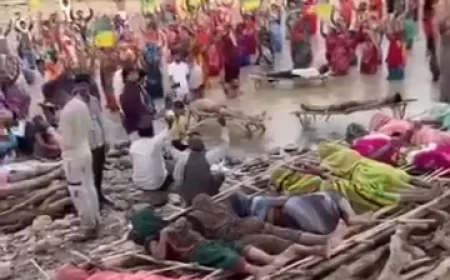
The waves of the sacred Ganga river echoed with devotional chants, the air was filled with the aromatic scent of litti baking on traditional cow dung cakes, the resonant peals of temple bells vibrated through the atmosphere, and the jubilant cries of devotees transformed Buxar into a living pilgrimage site. This captivating scene unfolded on a Thursday in Buxar, famously known as Mini Kashi, where the concluding day of the Panchkoshi Parikrama saw devotees preparing and partaking in litti-chokha as prasadam, upholding a tradition that traces back to the Treta Yug. The event, a magnificent confluence of spirituality and culture, turned every street and alley into a center for distributing sacred offerings, embodying the essence of devotion, indulgence, and brotherhood.



MINI KASHI BUXAR: THE GRAND PANCHKOSHI MELA—A SYMBOL OF FAITH, UNITY AND TRADITION
14-NOV-ENG 16


RAJIV NAYAN AGRAWAL
BUXAR------------------------The waves of the sacred Ganga river echoed with devotional chants, the air was filled with the aromatic scent of litti baking on traditional cow dung cakes, the resonant peals of temple bells vibrated through the atmosphere, and the jubilant cries of devotees transformed Buxar into a living pilgrimage site. This captivating scene unfolded on a Thursday in Buxar, famously known as Mini Kashi, where the concluding day of the Panchkoshi Parikrama saw devotees preparing and partaking in litti-chokha as prasadam, upholding a tradition that traces back to the Treta Yug. The event, a magnificent confluence of spirituality and culture, turned every street and alley into a center for distributing sacred offerings, embodying the essence of devotion, indulgence, and brotherhood.


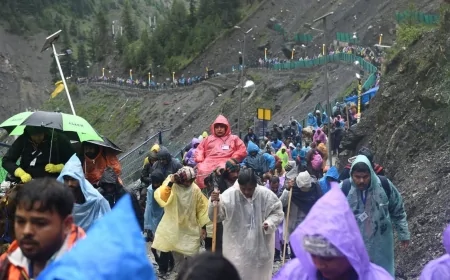
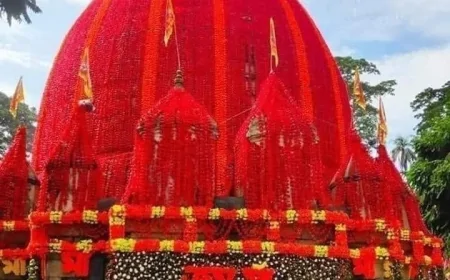
Buxar, often referred to as Mini Kashi due to its profound religious significance and numerous temples along the Ganga, once again showcased its rich spiritual and cultural heritage. The world-renowned Panchkoshi Parikrama Yatra, which commenced on November 9 and culminated on December 13 at Charitravan, drew throngs of pilgrims who immersed themselves in an ocean of faith. Places like Charitravan, Kila Maidan, and the Ganga ghats were packed with devotees from far and wide. From the night before, pilgrims began arriving from neighboring states such as Uttar Pradesh, Jharkhand, Madhya Pradesh, Rajasthan, and even from the neighboring country of Nepal. The early morning rituals included bathing in the holy Ganga, performing puja and archana, followed by the communal preparation and distribution of litti-chokha prasadam. The sky was hazy with smoke from the fires, faces glowed with devotion, and the fragrance of baking litti created an otherworldly ambiance. Devotees could be seen personally carrying cow dung cakes to bake their litti, consuming it as a divine blessing.
This festival is not merely a religious procession but a vibrant celebration that binds communities together. At the Shri Srinivas Temple complex in Charitravan, under the guidance of the Panchkoshi Parikrama Samiti's president, the revered Swami Achyut Prapannacharya Ji Maharaj, elaborate arrangements were made for a massive prasadam distribution. Long queues of devotees exemplified remarkable discipline and devotion. Mahants from various maths and ashrams across the city contributed to this effort. In his address, Swami Ji emphasized that the Panchkoshi is more than a circumambulation; it is a practice for self-purification and the welfare of society. He described the mela as a symbol of Buxar's spiritual identity and cultural unity.
The occasion also saw enthusiastic participation from social and political figures, highlighting its inclusive nature. The outgoing Sadar MLA, Sanjay Kumar Tiwari alias Munna Tiwari, organized a grand litti-chokha feast on Collectorate Road, where thousands of devotees received prasadam. Similarly, former IPS officer and BJP candidate Anand Mishra distributed prasadam among pilgrims at Goyal Dharmashala. These events brought together people from all communities, administrative officials, and ordinary citizens on an equal footing, establishing Buxar as an exemplary model of social harmony.
At Kamhariya Dham, Swami Gangaputra Lakshminarayan Ji Maharaj arranged a splendid prasadam distribution and accommodations for devotees in front of the Naulakha Temple. He reiterated that this tradition dates back to the Treta Yug, when Lord Shri Ram, after slaying the demoness Tadka, received blessings from the Panch Rishis and partook in prasadam at various sites, marking the inception of the Panchkoshi Yatra. His discourses, infused with insights from the Ramayana and Vedanta, filled the devotees with profound bhakti.
Renowned Dharmashastri Dr. Ramnath Ojha proclaimed Buxar as the land where creation is believed to have originated. He described the Panchkoshi Parikrama as a path to soul purification and achieving life's ultimate goals. He urged elected representatives and the administration to take concrete steps to promote Buxar's religious tourism, enabling the region to strengthen its global identity.
The Panchkoshi Parikrama has evolved beyond a mere religious journey into a festival of folk life. Every participant—be it a sadhu, a commoner, a local trader, or an administrative officer—appeared united by threads of devotion and service. This year's Panchkoshi Parikrama in Buxar proved once again that when faith and unity walk hand in hand, the entire city transforms into a grand temple. The mela of Mini Kashi is not just a religious event but a symbol of India's vibrant culture, collective harmony, and the unique fusion of devotion.
The history of the Panchkoshi Mela in Buxar is deeply intertwined with ancient Indian mythology and the epic Ramayana, making it one of the oldest ongoing traditions in the region. Buxar, located in Bihar along the banks of the Ganga, has a lineage that predates even the Ramayana period. The name "Buxar" is believed to derive from "VyaghraSar," referring to a tiger-faced pond associated with the sage Vedshira, whose hermitage was in this area. This etymology underscores the town's ancient spiritual roots, positioning it as a sacred site long before modern historical records.
According to mythological accounts, Buxar was known in antiquity by names such as Siddhashram, Vedgarbhapuri, Karush, Tapovan, and Chaitrath. It is revered as the place where Lord Ram and his brother Lakshman were disciples of Sage Vishwamitra. The pivotal event linking the Panchkoshi Parikrama to history is Lord Ram's encounter after defeating the demoness Tadka. As narrated by Swami Gangaputra Lakshminarayan Ji Maharaj, following the victory, Lord Ram sought blessings from the five sages (Panch Rishis) and partook in prasadam at five distinct locations. This act is considered the origin of the Panchkoshi Yatra, a tradition that has been preserved since the Treta Yug, the era of the Ramayana.
The parikrama involves a five-day pilgrimage circumambulating five sacred villages around Buxar, covering approximately 25 kilometers. This circuit echoes similar practices in other holy cities like Varanasi, where the Panchkoshi Parikrama is a 88-kilometer path around the city, believed to grant spiritual merits equivalent to visiting all sacred sites. In Buxar, the yatra typically aligns with auspicious occasions, such as around Vivah Panchami in November, commemorating the marriage of Lord Ram and Sita. Historical texts and local folklore describe how this pilgrimage has been an annual event, drawing devotees for centuries, evolving from a simple spiritual walk to a grand mela.
Archaeologically, Buxar boasts remnants of its glorious past. The Buxar Fort, erected by King Rudra Deo in 1054 AD along the Ganga, stands as a testament to the region's medieval history. This fort, with its strategic location, has witnessed numerous historical events, including the famous Battle of Buxar in 1764, which played a crucial role in British colonial expansion in India. However, the spiritual history overshadows these secular events, with the town being dotted with ancient ashrams and temples that date back to Vedic times.
The integration of local cuisine like litti-chokha into the ritual has historical roots in the agrarian culture of Bihar. Litti, stuffed wheat balls baked on cow dung cakes, and chokha, a mashed vegetable preparation, symbolize simplicity and sustenance for pilgrims during the arduous journey. This tradition is said to mimic the humble meals Lord Ram consumed during his exile, reinforcing the historical connection to the Ramayana. Over time, as Buxar developed as a pilgrimage center, the mela incorporated elements from surrounding regions, blending Bihari customs with influences from Uttar Pradesh and beyond.
In the colonial era, Buxar maintained its religious prominence despite political upheavals. Post-independence, efforts by local samitis and swamis have preserved and promoted the mela, ensuring its continuity. Today, the Panchkoshi Mela stands as a living historical monument, where ancient myths come alive through rituals, reminding participants of India's timeless spiritual legacy. The event's endurance through millennia highlights Buxar's role as a cradle of Hindu civilization, where history, myth, and devotion seamlessly merge.
The historical narrative of the mela also includes its evolution in response to societal changes. During the medieval period, under various rulers, the pilgrimage received patronage from kings and saints, who built temples and ghats to facilitate devotees. For instance, the Naulakha Temple and Shri Nath Baba Mandir are historical structures that serve as key stops in the parikrama. These sites, with their architectural grandeur, narrate stories of devotion from eras gone by. The fort's proximity to the Ganga ghats further integrates military history with spiritual practices, as pilgrims often visit these landmarks during the yatra.
Moreover, folklore preserved in texts like those on the Ganga's intangible cultural heritage emphasizes Buxar's amalgamation of Hinduism, animism, and spiritism. This syncretic history enriches the mela, making it a repository of diverse traditions. As Dr. Ramnath Ojha noted, Buxar is perceived as the origin point of creation in some scriptures, adding a cosmological dimension to its historical importance. Thus, the Panchkoshi Mela is not just an event but a historical continuum, bridging ancient epics with contemporary celebrations.
At its core, the Panchkoshi Mela is a profound religious observance that embodies the principles of Hindu pilgrimage, self-purification, and divine communion. The term "Panchkoshi" refers to a circumambulation spanning five kos (an ancient unit of distance, approximately 10-15 kilometers in total for Buxar), visiting five sacred spots that hold immense spiritual value. In Buxar, these include sites like Ramrekha Ghat, Charitravan, and Kamhariya Dham, each associated with episodes from the Ramayana.
The religious essence lies in the belief that completing the parikrama absolves sins, purifies the soul, and leads to moksha (liberation). Swami Achyut Prapannacharya Ji Maharaj's words resonate here: the yatra is a sadhana for atmashuddhi (self-purification) and lokkalyan (public welfare). Devotees undertake the journey barefoot, chanting mantras and performing rituals at each halt, mirroring Lord Ram's own path of dharma.
The mela's timing, often around Mahashivratri or Vivah Panchami, adds layers of significance. While Varanasi's Panchkoshi is linked to Shiva, Buxar's is predominantly Vaishnavite, centered on Ram. However, the presence of temples like Bihariji Mandir, dedicated to Lord Krishna, showcases the town's eclectic religious fabric. The Navlakha Temple at Charitravan, influenced by traditional architecture, is a focal point where the yatra concludes.
A key religious ritual is the Ganga snan (bath), symbolizing cleansing of impurities. Pilgrims dip in the river at dawn, offering prayers to the sun and ancestors. This is followed by puja at temples, where bells and aartis create a divine symphony. The culmination with litti-chokha prasadam is unique; offered to Lord Ram, it represents bhog (offering) from the Ramayana era. Baking on uple (cow dung cakes) invokes purity, as cow dung is considered sacred in Hinduism.
Religious discourses by swamis like Gangaputra Lakshminarayan Ji enrich the experience, drawing from Vedanta and Ramayana to inspire bhakti. The mela also incorporates elements of folk religion, with animistic practices in some rituals. Buxar's moniker as Mini Kashi stems from its temple density and Ganga ghats, akin to Varanasi. Temples like Shri Adinath Akhara and Nath Ashram are integral to the parikrama.
The yatra's religious merit is amplified by its communal aspect; participating in prasadam distribution is seen as seva (service), accruing punya (merit). For women, it's particularly significant, as in Varanasi traditions. Overall, the mela reinforces Hindu dharma's emphasis on pilgrimage as a means to spiritual elevation.
In deeper theological terms, the parikrama represents the cyclic nature of life and karma, with each step a metaphor for progressing towards enlightenment. Scriptures like the Puranas extol such yatras for their transformative power. In Buxar, this is palpable as devotees from diverse backgrounds unite in worship, transcending individual egos for collective devotion.
The Panchkoshi Mela transcends religion to become a powerful social institution, fostering unity, cultural exchange, and community bonding in Buxar. It draws lakhs of devotees annually, creating a melting pot where social barriers dissolve amid shared faith. Pilgrims from Uttar Pradesh, Jharkhand, Madhya Pradesh, Rajasthan, and Nepal converge, highlighting regional interconnectedness.
Socially, the mela promotes equality; everyone, from sadhus to politicians, partakes in rituals on equal terms. Events organized by figures like MLA Sanjay Kumar Tiwari and Anand Mishra exemplify how the festival bridges political and social divides, with thousands dining together in communal feasts.
This inclusivity extends to all communities, as administrative officials and locals collaborate, reinforcing social harmony.
Culturally, the mela is a showcase of Bihar's heritage. Folk music, dances, and artisanal displays enliven the atmosphere. The litti-chokha tradition has become a cultural icon, elevating a rustic dish to national fame. Households transform into preparation centers, with women leading the cooking, preserving gender roles while empowering community participation.
The festival boosts local economy through trade in religious items, food, and accommodations. It also addresses social issues; swamis' calls for promoting tourism aim at development. Environmentally, the use of eco-friendly cow dung underscores sustainable practices.
Socially, it strengthens family ties, with generations participating together. The mela's role in cultural preservation is evident in its integration of modern elements like world record attempts for litti-chokha preparation, blending tradition with contemporary appeal.
In essence, the Panchkoshi Mela is a social equalizer, where devotion unites diverse strata, fostering a sense of belonging and cultural pride.
The Panchkoshi Mela in Mini Kashi Buxar stands as an enduring testament to India's spiritual depth, historical richness, and social cohesion. As devotees depart with hearts full of bhakti, the event leaves an indelible mark, promising to return next year with even greater fervor. In a world of rapid change, this mela reminds us of the timeless power of faith and unity.
What's Your Reaction?
 Like
0
Like
0
 Dislike
0
Dislike
0
 Love
0
Love
0
 Funny
0
Funny
0
 Angry
0
Angry
0
 Sad
0
Sad
0
 Wow
0
Wow
0