

























































MEANINGFUL INITIATIVE OF SIR SHOULD NOT BE OPPOSED BUT WELCOMED
Chief Election Commissioner Gyanesh Kumar has taken a commendable and courageous step to address electoral irregularities and shortcomings by announcing the launch of Special Election Revision (SIR) in 12 states and union territories, after Bihar. This initiative is not merely a technical or administrative exercise, but a decisive effort to further strengthen the roots of Indian democracy.
MEANINGFUL INITIATIVE OF SIR SHOULD NOT BE OPPOSED BUT WELCOMED
1-NOV-ENG 2


RAJIV NAYAN AGRAWAL
DELHI--------------------------Chief Election Commissioner Gyanesh Kumar has taken a commendable and courageous step to address electoral irregularities and shortcomings by announcing the launch of Special Election Revision (SIR) in 12 states and union territories, after Bihar. This initiative is not merely a technical or administrative exercise, but a decisive effort to further strengthen the roots of Indian democracy. The soul of democracy resides in the fairness and transparency of its electoral system, and this step by the Election Commission should be seen as a concrete, positive, and necessary effort in that direction. Learning from Bihar's SIR process, this time the Commission has allocated more time for the process to avoid the haste and chaos that occurred in Bihar. Aadhaar cards will be accepted as a supporting document, simplifying the process.


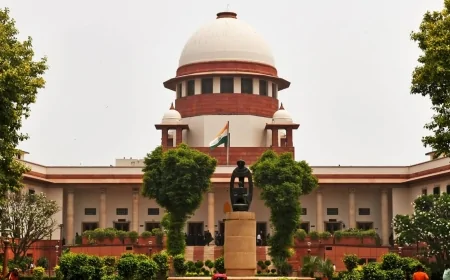
Of course, this time the number of states is 12, and the challenge is correspondingly greater. It is hoped that the difficulties encountered during the revision process in Bihar will serve as experience for the Commission, preventing similar problems elsewhere. Chief Election Commissioner Gyanesh Kumar, while announcing the SIR schedule, stated that the process will ensure that no eligible voter is left out and no ineligible voter is included in the list. The states selected for the second phase include Uttar Pradesh, Gujarat, Madhya Pradesh, Chhattisgarh, Rajasthan, Tamil Nadu, West Bengal, Goa, Kerala, Puducherry, Andaman and Nicobar Islands, and Lakshadweep. Of these, Kerala, Puducherry, Tamil Nadu, and West Bengal are scheduled to hold assembly elections next year. Assam, which also has assembly elections next year, was excluded from the second phase. The Commission has already clarified its stance on the Aadhaar card this time: it will not be valid as a birth, citizenship, or residence certificate, but it can be submitted as a document in the SIR. This clarity was necessary because the Aadhaar card issue in Bihar reached the Supreme Court during the first phase. Documents should be accessible to the maximum population, and Aadhaar is the simplest means of identification today.
The accuracy, transparency, and fairness of the voter list are the backbone of democracy. In a vast and diverse country like India, the accuracy of the voter list is a major challenge. Therefore, the SIR process should be conducted at regular intervals. The first SIR was conducted nearly two decades ago. At least now, it should be ensured that such gaps in the SIR do not occur, as millions of people now migrate for employment, most of whom settle there. It has often been observed that the names of deceased individuals remain on the list, while the names of new eligible citizens are not included. From rural areas to metropolitan cities, this discrepancy impacts voter turnout and casts doubt on the credibility of election results. The purpose of the SIR is not to determine someone's citizenship or to exclude as many people as possible from the voter list. It should be simple enough to motivate people to become voters and instill enthusiasm for democracy's biggest festival. This initiative by the Chief Election Commissioner represents a concerted and scientific democratic effort to address these shortcomings. If implemented honestly on the ground, it will enhance both the sanctity of the voter list and the dignity of democracy.
This is crucial for India, the world's largest democracy, and requires the role and cooperation of political parties, who should approach this process positively. The opposition parties' attempts to create an atmosphere of opposition and roll up their sleeves for this commendable and much-needed initiative raise questions about their credibility and responsibility. It is often observed that when the Election Commission takes corrective measures, various political parties react according to their own interests. However, the health of democracy will be strengthened only when all parties prioritize transparency over political gains and losses. Instead of opposing this initiative, the opposition should welcome it and cooperate in its implementation in the right direction, not view it with suspicion and distrust. However, political parties have a significant responsibility to fulfill their responsibilities throughout this process, not to limit themselves to blaming others, but to fulfill their responsibilities throughout the process. Similarly, this is the time for civil society organizations to become active. Their monitoring can make the work of the BLA more streamlined and accurate. Overall, the Election Commission, which envisioned holding simultaneous elections across the country, now faces the challenge of fulfilling this primary responsibility without any doubt.
Electoral reform in the digital age is not just a matter of human resources or administrative will, but also of technological transparency. Measures like biometric verification, online enrollment, and data cross-verification have become essential. The Special Election Revision will lay the groundwork for this: cleaning and reorganizing electoral data. India's electoral process is known as the largest democratic exercise in the world. But this distinction will only be meaningful if there is no doubt about the integrity of the voter list, the fairness of polling stations, and adherence to the code of conduct. This initiative by the Election Commission is a concrete step towards that goal. Democracy is not just about counting votes, but about trust, and this trust is based on the Election Commission's integrity and transparency. and activism. Section 21 of the Representation of the People Act, 1950, empowers the Election Commission to prepare and revise voter lists. Correcting voter lists is not only the Election Commission's constitutional right but also an essential requirement for free and fair elections. Ironically, some parties are unhappy with this requirement being met. They raised a hue and cry over the SIR in Bihar, taking to the streets with the slogan of vote theft and even approaching the Supreme Court. However, their efforts failed neither before the Supreme Court nor with the people of Bihar, as they were merely spreading false propaganda.
This initiative by Gyanesh Kumar is not merely a technical amendment, but a message of renewal in democratic culture. Elections are not merely a means of changing power, but also a test of public trust. If this campaign is completed with honesty and public participation, it will further mature India's democracy. Now, the responsibility lies not only with the Election Commission, but also with every citizen and political party to welcome this reformative initiative and play their part in keeping this grand festival of democracy flawless. Isn't it strange that opposition parties both complain about irregularities in voter lists and oppose their revision? Although their propaganda has been exposed, the Election Commission must be prepared for opposition-ruled states to oppose the SIR process. It must be vigilant to ensure that no mistakes are made in the process of correcting voter lists, as opposition parties may try to tarnish this constitutional process by exaggerating minor issues.
What's Your Reaction?
 Like
0
Like
0
 Dislike
0
Dislike
0
 Love
0
Love
0
 Funny
0
Funny
0
 Angry
0
Angry
0
 Sad
0
Sad
0
 Wow
0
Wow
0