





















































KAVI KAILASH:THE UNSUNG MARTYR OF BHOJPUR AND THE QUIT INDIA MOVEMENT
In the storied history of India’s freedom struggle, the Quit India Movement of 1942 stands as a defining moment of mass defiance against British colonial rule. Launched by Mahatma Gandhi on August 8, 1942, with the clarion call of "Do or Die," the movement ignited a nationwide uprising, demanding the immediate withdrawal of British forces during the tumult of World War II. While national icons like Gandhi, Jawaharlal Nehru, and Vallabhbhai Patel dominate historical accounts, the movement’s success was deeply rooted in the courage of local heroes who risked their lives in remote districts. One such figure is Kavi Kailash, a poet and freedom fighter from Ghoradei village in Bhojpur district, Bihar, whose literary talents earned him the title "Kavi" (poet).
ARA (RNI) In the storied history of India’s freedom struggle, the Quit India Movement of 1942 stands as a defining moment of mass defiance against British colonial rule. Launched by Mahatma Gandhi on August 8, 1942, with the clarion call of "Do or Die," the movement ignited a nationwide uprising, demanding the immediate withdrawal of British forces during the tumult of World War II. While national icons like Gandhi, Jawaharlal Nehru, and Vallabhbhai Patel dominate historical accounts, the movement’s success was deeply rooted in the courage of local heroes who risked their lives in remote districts. One such figure is Kavi Kailash, a poet and freedom fighter from Ghoradei village in Bhojpur district, Bihar, whose literary talents earned him the title "Kavi" (poet).
Kavi Kailash became a symbol of resistance during the Quit India agitation in Bhojpur, a region with a storied revolutionary legacy dating back to Kunwar Singh’s 1857 Revolt. His most audacious act—hoisting the Indian tricolor at the Ara collectorate on September 28, 1942—epitomized the rebellious spirit of Bihar, where the movement sparked widespread disruptions, arrests, and sacrifices. Tragically, his participation culminated in martyrdom, cementing his place as a local hero whose story continues to inspire patriotism in Bhojpur. This article delves into Kailash’s life, his role in the national movement, and his lasting legacy, drawing from regional historical records and the socio-political context of Bhojpur during the freedom struggle.


Details of Kavi Kailash’s early life are limited, as is common for many grassroots freedom fighters whose stories were preserved through oral traditions and district records rather than national archives. Born in Ghoradei, a small village in Bhojpur district (then part of Shahabad district in the British Bihar and Orissa Province), Kailash likely grew up in the early 20th century amidst the agrarian hardships that defined rural Bihar. Bhojpur, known for its fertile Gangetic plains, was predominantly agricultural, with farmers grappling with heavy land revenues, exploitative zamindari systems, and frequent famines worsened by colonial policies. The region’s social fabric was shaped by caste dynamics, with Rajput, Bhumihar, and Dalit communities coexisting, often united in their resentment against British rule.
Kailash’s family background is not well-documented, but his title "Kavi" indicates a deep affinity for literature and poetry, likely influenced by Bihar’s rich cultural heritage. Bihar had long been a cradle of intellectual and revolutionary thought, producing figures like Swami Sahajanand Saraswati, who founded the Bihar Provincial Kisan Sabha in 1929 to advocate for peasant rights. Growing up in this environment, Kailash was likely exposed to the Non-Cooperation Movement (1920–1922) and the Civil Disobedience Movement (1930–1934), during which Bhojpur’s residents participated in salt marches, boycotts, and protests. Local lore portrays him as a young man passionate about poetry, using his verses to critique colonial oppression and social injustices, much like his contemporary, Ramdhari Singh ‘Dinkar,’ Bihar’s renowned poet who infused nationalism into his works.


By the 1940s, Kailash had emerged as a vocal advocate for independence in Ghoradei and surrounding areas. His poetic talents earned him respect among villagers, who recited his compositions at gatherings. Although his poems are not widely archived, they reportedly revolved around themes of freedom, unity, and resistance, resonating with the Gandhian ethos that permeated Bihar. The province was a stronghold for the Quit India Movement, with leaders like Jayaprakash Narayan (from nearby Sitab Diara) organizing underground resistance after the arrest of top Congress leaders on August 9, 1942. Kailash’s early involvement likely stemmed from these influences, transforming him from a rural poet into a dedicated activist.
Kavi Kailash’s active role in the freedom struggle intensified with the Quit India Movement, which swept through Bihar like wildfire. Gandhi’s call from Bombay’s Gowalia Tank Maidan resonated deeply in Bhojpur, where economic grievances—such as wartime inflation and forced recruitment for the British war effort—fueled widespread discontent. The movement in Bihar was characterized by spontaneous uprisings: students abandoned schools, workers went on strike, and crowds attacked symbols of colonial authority, such as police stations and collectorates. In Shahabad (Bhojpur), the agitation was particularly intense, with reports of rail derailments, telegraph wire cuttings, and flag hoistings.
Kailash’s most celebrated act took place on September 28, 1942, when he led a daring effort to hoist the Indian tricolor at the Ara collectorate, the administrative heart of Bhojpur. This was no ordinary protest; raising the national flag on a government building was a direct challenge to British sovereignty, symbolizing the people’s claim over their land. Accompanied by fellow activists, Kailash unfurled the Tiranga amid chants of "Bharat Mata ki Jai" and "Quit India," inspiring a crowd that had gathered in defiance of prohibitory orders. This act was part of a broader wave in Bihar, where similar flag-hoisting incidents occurred in Patna, Muzaffarpur, and other districts, often escalating into violent clashes.
His participation extended beyond this singular event. As a poet-activist, Kailash mobilized villagers through his verses, which were recited at clandestine meetings and processions. These poems, infused with patriotic fervor, called for unity across castes and communities, countering the British divide-and-rule tactics. In Bhojpur, the movement saw widespread participation from farmers and youth, with Kailash reportedly organizing boycotts of British goods and encouraging non-payment of taxes. His efforts aligned with the underground leadership of the All India Congress Committee, which continued operations despite mass arrests.
The British response was swift and brutal. Bihar witnessed some of the harshest repressions during the Quit India Movement, with over 1,000 deaths in police firings and thousands imprisoned. Kailash’s flag-hoisting act drew immediate attention from colonial authorities, who deployed Baluchi police units—notorious for their ruthlessness—to suppress the uprising.
Tragically, Kavi Kailash’s defiance led to his martyrdom on the same day as his heroic act. Following the flag hoisting at the Ara collectorate, British forces confronted the protesters. In the ensuing clash near the collectorate pond, Kailash was shot and killed by Baluchi police. This immediate execution underscored the ferocity of colonial repression in Bihar, where many activists were killed on the spot rather than tried. Some accounts suggest he was arrested and later hanged in Patna on December 28, 1942, but district records confirm his death near the collectorate, reflecting the chaos and conflicting reports typical of the era.
Kailash’s sacrifice was not in vain; it ignited further resistance in Bhojpur. News of his death spread rapidly, fueling more protests and solidifying his status as a local martyr. His killing exemplified the human cost of the Quit India Movement in Bihar, where figures like Basawan Singh and Jagdish Prasad Singh also perished in jails due to torture. Kailash’s act and subsequent martyrdom contributed to the movement’s momentum, increasing pressure on the British and hastening the path to independence.
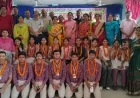
Kavi Kailash’s legacy endures in Bhojpur as a symbol of courage and patriotism. Though not as nationally recognized as Kunwar Singh, his story is preserved in local folklore, school curricula, and district memorials. Ghoradei village honors him annually on Independence Day and Republic Day, with processions reciting his poems and reenacting the flag-hoisting event. The Ara collectorate site remains a poignant reminder of his defiance, and local historians strive to include him in broader narratives of the freedom struggle.
In the socio-political context, Kailash’s life reflects the pivotal role of rural intellectuals in India’s independence. As a poet, he bridged art and activism, much like other literary figures in Bihar who used words as weapons. His martyrdom highlights the decentralized nature of the Quit India Movement, where local actions collectively weakened colonial rule. Today, amid India’s celebration of Azadi Ka Amrit Mahotsav, Kailash’s story serves as a call to remember the unsung heroes whose sacrifices paved the way for freedom.
Kavi Kailash remains a beacon for Bhojpur’s youth, embodying the spirit Gandhi invoked: to live and die for the nation. His brief but impactful life ensures that the flame of resistance he lit in 1942 continues to illuminate the path of patriotism.
What's Your Reaction?
 Like
0
Like
0
 Dislike
0
Dislike
0
 Love
0
Love
0
 Funny
0
Funny
0
 Angry
0
Angry
0
 Sad
0
Sad
0
 Wow
0
Wow
0