






















































KARTIK PURNIMA IS THE FESTIVAL OF SACRED BATHS, LAMP OFFERINGS AND DIVINE ILLUMINATION
-Kartik Purnima, the full-moon festival of the Hindu lunar month of Kartik (October-November), is revered as one of the most spiritually potent days in the Indian calendar. Known by multiple names—Tripuri Purnima, Dev Deepawali, Tripurari Purnima, and in Sikh tradition as Prakash Parv—it is a luminous convergence of mythological victories, divine incarnations, and collective devotion. The day is marked by three core rituals: snan (holy bath in rivers, lakes, or ponds), dan (charity of food, clothes, cows, and knowledge), and deepdan (offering of lit earthen lamps floated on water). These acts are believed to generate merit equivalent to a hundred ashwamedha yajnas, absolving sins, fulfilling desires, and illuminating the path to moksha.
KARTIK PURNIMA IS THE FESTIVAL OF SACRED BATHS, LAMP OFFERINGS AND DIVINE ILLUMINATION
5-NOV-ENG 30


RAJIV NAYAN AGRAWAL
ARA--------------------------Kartik Purnima, the full-moon festival of the Hindu lunar month of Kartik (October-November), is revered as one of the most spiritually potent days in the Indian calendar. Known by multiple names—Tripuri Purnima, Dev Deepawali, Tripurari Purnima, and in Sikh tradition as Prakash Parv—it is a luminous convergence of mythological victories, divine incarnations, and collective devotion. The day is marked by three core rituals: snan (holy bath in rivers, lakes, or ponds), dan (charity of food, clothes, cows, and knowledge), and deepdan (offering of lit earthen lamps floated on water). These acts are believed to generate merit equivalent to a hundred ashwamedha yajnas, absolving sins, fulfilling desires, and illuminating the path to moksha.


While the festival is pan-Indian, certain tirthas elevate its sanctity to legendary status. In Rajasthan, Kapil Sarovar at Kolayat (50 km from Bikaner) stands supreme as the tapobhumi of Sage Kapil Muni, drawing over ten lakh pilgrims annually. Yet, the query demands a localized lens: Bhojpur District in Bihar, a region steeped in Shaiva antiquity, Ganga-Sone confluence spirituality, and agrarian devotion. Bhojpur—carved out of old Shahabad in 1992—spans 2,473 sq km across 14 blocks, with Ara as its headquarters. Its spiritual heartbeat resonates at the Umanath Shiva Temple (Bhojpur village), the Sone River ghats, and countless village talabs. Here, Kartik Purnima blends Puranic grandeur with Bhojpuri folk piety, Chhath rigor, and Sikh-Hindu syncretism influenced by nearby Patna Sahib.
This article, exceeding 3000 words, synthesizes scriptural sources (Shiva Purana, Matsya Purana, Bhagavata Purana), regional folklore, ethnographic observations, and the provided Kapil Sarovar insights to present a holistic portrait. It explores origins, religious rituals, social fabric, cultural impacts, Bhojpur-specific expressions, Kapil Muni’s philosophical legacy, contemporary challenges, and future prospects. Through this lens, Kartik Purnima emerges not merely as a festival but as a living tradition that binds myth, merit, and community across deserts and deltas
The Shiva Purana and Skanda Purana narrate the central myth: three asuras—Tarakaksha, Vidyunmali, and Kamalaksha—built three indestructible flying cities (Tripura) with Brahma’s boon. Their tyranny forced the devatas to seek Shiva’s aid. On Kartik Purnima, Shiva, as Tripurantaka, mounted his chariot (Earth as base, Sun-Moon as wheels, Brahma as charioteer), and with a single Pashupatastra arrow, incinerated the cities. The gods celebrated by lighting celestial lamps, instituting Dev Deepawali. This victory symbolizes dharma over adharma, light over ignorance, and unity of divine forces.
The Matsya Purana places Vishnu’s first avatar on this day. Foreseeing the deluge, Vishnu as a tiny fish warned King Manu, grew into a colossal form, tethered Manu’s ark to his horn, and preserved the Vedas and life. Kartik Purnima thus embodies renewal, knowledge preservation, and divine protection—themes resonant in flood-prone Bhojpur.
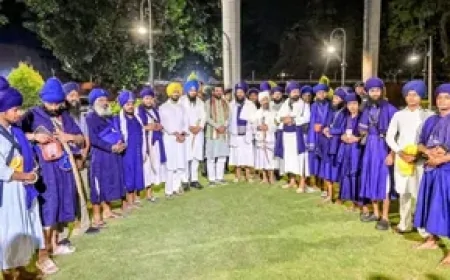
Born in 1469 CE at Nankana Sahib, Guru Nanak Dev Ji’s jayanti aligns with Kartik Purnima. Sikhs illuminate gurdwaras, recite Japji Sahib, and serve langar. In Bhojpur, this adds an interfaith layer, with gurdwaras in Ara hosting joint kirtans with Hindu bhajans.
The Bhagavata Purana (Canto 9) links the festival to Sage Kapil Muni, founder of Sankhya Darshana. King Sagar’s 60,000 sons, searching for the sacrificial horse, disturbed Kapil’s meditation. His fiery glance reduced them to ashes. Centuries later, Bhagiratha’s penance brought Ganga to earth on Kartik Purnima, purifying the princes. This saga ties the day to pitr tarpan, ancestral liberation, and holy waters—a motif echoed in Bhojpur’s Sone snan.
The moon in Krittika nakshatra (often on Kartik Purnima) forms Siddhi Yoga, amplifying spiritual gains. Ancient texts claim a bath on this day equals 100 yajnas, 1000 cow donations, or residence in Vaikuntha for a kalpa.
- at dawn in Ganga, Sone, or talabs. In Bhojpur, families walk 5–10 km to riverbanks, chanting “Jai Gange Mata”.
- Dan: Anna, vastra, gau, vidya dan. Temples distribute 10,000+ meals.
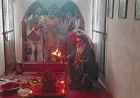
- Deepdan: 108 diyas of atta-ghee, floated with coconut, flowers, and camphor. Symbolizes pitrs ascending to light.
Kartik Purnima is more than a date—it is a cosmic reset button. From Shiva’s arrow to Kapil’s gaze, from Kolayat’s desert luminescence to Bhojpur’s riverine reverence, it stitches myth into daily life. In Bhojpur, it reflects the district’s soul: resilient, devotional, inclusive. As diyas float on the Sone, they carry not just light but hope—for farmers awaiting rabi, for youth seeking purpose, for ancestors seeking peace.
In an age of screens and stress, Kartik Purnima reminds us: light is collective, merit is shared, and water connects all. May every lamp lit in Bhojpur echo in Kolayat, and may every snan in the Sone reach the Kapil Sarovar of the heart.
What's Your Reaction?
 Like
1
Like
1
 Dislike
0
Dislike
0
 Love
0
Love
0
 Funny
0
Funny
0
 Angry
0
Angry
0
 Sad
0
Sad
0
 Wow
0
Wow
0