



























































EVERY PARTY IS ENGAGED IN A GAME OF BARGAINING FOR ITS SURVIVAL
In Bihar politics, elections aren't just about seats; they're also a battle for prestige, survival, and the future of politics. The game of alliances in coalition politics is played out at the highest levels of bargaining. This politics is no longer as straightforward as it used to be, where alliances meant a convergence of policies. Now, alliances are determined by the number of seats, ministerial positions, and the role of one's political heir. This is the picture seen in both the NDA and Grand Alliance camps.

EVERY PARTY IS ENGAGED IN A GAME OF BARGAINING FOR ITS SURVIVAL
13-SEP-ENG 3


RAJIV NAYAN AGRAWAL
PATNA--------------------------In Bihar politics, elections aren't just about seats; they're also a battle for prestige, survival, and the future of politics. The game of alliances in coalition politics is played out at the highest levels of bargaining. This politics is no longer as straightforward as it used to be, where alliances meant a convergence of policies. Now, alliances are determined by the number of seats, ministerial positions, and the role of one's political heir. This is the picture seen in both the NDA and Grand Alliance camps.


This time, when the alliance partners began making their demands in the Bihar electoral battle, it seemed as if every party had entered the fray to fight for its own survival. The Nitish Kumar-led NDA alliance was no exception. Here, both Jitan Ram Manjhi, founder of the Hindustani Awam Morcha Secular (HAM-SE), and Upendra Kushwaha, president of the Rashtriya Lok Janshakti Party (RLJP), were seen demanding a "respectable share" in their own ways.
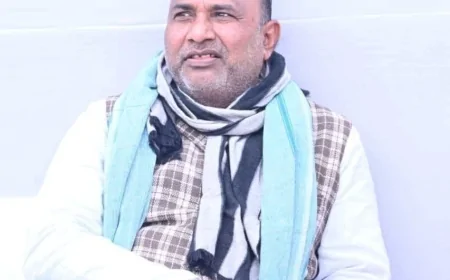
To understand Manjhi's political landscape, it's important to understand his two dreams: first, to achieve national party status for his party, the Hindustani Awam Morcha, and second, to elevate his son, Santosh Suman, to the position of Deputy Chief Minister. These two dreams are deeply intertwined. If the party wins more seats, a better performance could qualify it for a national party, and if the Dalit leadership is demonstrated to be strong, the demand for a Deputy Chief Ministership would gain political legitimacy.
Manjhi initially demanded 25 to 30 seats. His calculations were simple: winning even 20 seats would once again make the party a decisive force in state politics. He repeatedly reminded NDA strategists that his strike rate in the last assembly elections was 60 percent and in the Lok Sabha elections, 100 percent. His message was clear: "We may be small, but we have the potential to win." Politics isn't just a game of numbers; it's also a game of messaging and psychology. Manjhi knew that open confrontation over seat sharing would cause significant losses. Therefore, he never threatened to leave the NDA or publicly expressed his dissatisfaction. His strategy was to maintain pressure, but don't break bridges.
An interesting trend in current politics is that veteran leaders are now busy establishing their heirs. Lalu Yadav paved the way for this by appointing Tejashwi Yadav as Deputy Chief Minister. Ram Vilas Paswan, by appointing his son Chirag Paswan as the LJP's new leader, sent the message that giving leadership to the new generation is no longer a compulsion, but a strategy.
Manjhi is also following this path. His desire to appoint Santosh Suman as Deputy Chief Minister is not merely a matter of family, but of political survival. He knows that both age and times are rapidly changing. If he doesn't establish his son on this electoral stage, his party may lack leadership or recognition next time. Therefore, the number of seats is not just an electoral goal for him, but a major strategic necessity. His rationale behind demanding to contest 25 to 30 seats was that only then could he move forward towards achieving national party status. According to the Election Commission of India's rules, a party gains national party status when it is recognized in four states or secures 6% of the total vote and four Lok Sabha seats. Manjhi wants to take the first step towards this in Bihar.
Bargaining during coalitions isn't just a top-level game; its impact reaches the grassroots. When a leader demands more seats, he also sends a message to his workers that their struggle has value, and they are not marginalized. Such pressure keeps the political organization alive. The purpose of Manjhi's aggressive statements was to energize his cadre. He made it clear that the struggle of every party worker was not a personal ambition, but an extension of a collective dream. This dream was to become a symbol of political recognition of Dalit leadership and social equality.
If Manjhi represents emotional bargaining in politics, Upendra Kushwaha embodies rational strategy. He has always been recognized as a "thinking politician" in Bihar politics. This time, too, he neither displayed any hasty seat-seeking behavior nor feigned dissatisfaction. Kushwaha knew that this election was crucial for the BJP. Both Prime Minister Narendra Modi and Nitish Kumar wanted to win this battle at all costs. Therefore, it was a time for restraint and strategic patience for Kushwaha. He never spoke of leaving the alliance, but instead politely reiterated his demand for a respectable share.
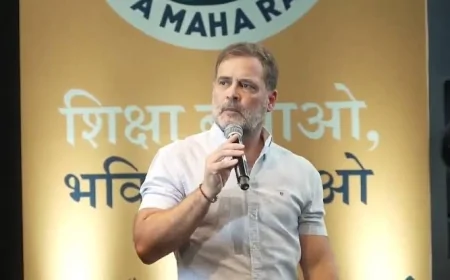
His mission transcends seat-seeking politics and is to reform education. He has repeatedly stated that real change in Bihar's politics is impossible without transforming the education system. This is why, despite his differences with Nitish Kumar, he took to the streets with this mission. Even today, he believes that he needs the support of the central BJP government to realize his vision of education reform.
Therefore, when the BJP offered him a limited share in the coalition, he accepted it, believing it to be "fair and realistic." He not only accepted the coalition rules set by Prime Minister Modi but also embraced them politically. He also understood the meaning. This rule, in a way, is a minimum guarantee of respect for smaller parties, and Kushwaha understands this fact well. In Bihar politics, the compulsion of alliance and the equation of respect go hand in hand. No major party wants its smaller ally to become angry and defect to the opposition. The smaller party also knows that leaving the alliance would mean a threat to its political existence. Therefore, this tug-of-war between the two ultimately results in a respectable compromise.
Both Manjhi and Kushwaha understand this equation well. Manjhi knows that leaving the NDA would be risky for his political future, while Kushwaha believes that only with the support of the BJP can he accomplish his mission. While the two leaders' perspectives differ, their goals are the same: respect and stability.
If we look at the alliance history of the past decade, there has been a significant change in the language of bargaining. Previously, open threats were issued regarding seat demands, stating that if enough seats were not secured, they would take a different path. Now, this language has changed to a demand for a respectable share. The terminology is polite, but the message is clear: we want equality. This shift has also occurred because today's voters value the stability of alliances. The credibility of a leader who breaks an alliance every time he gets angry is questioned. Both Manjhi and Kushwaha have grasped this new political sensibility.
The most interesting element in Bihar politics is the beauty of conflict, where protest is also a strategy, and silence is also a message. Whether it's Jitan Ram Manjhi's Dinkar-inspired poem or Upendra Kushwaha's restrained silence, both tell the same story: we want our share of respect, but will not destabilize the alliance.
This maturity marks a new chapter in Bihar politics. It shows that smaller parties have learned to think strategically rather than emotionally. Overall, the current electoral situation in Bihar has made it clear that coalition politics is no longer moving towards "confrontation" but towards "respect-based participation." Leaders like Jitan Ram Manjhi and Upendra Kushwaha are becoming symbols of this new politics, where the demand for seats is both emotional and strategic, but not destructive.
Manjhi's dreams remain unfulfilled, while Santosh Suman's political rise and his strategy for HAM-S's national status indicate that he is not in a hurry. Meanwhile, Upendra Kushwaha's vision is set on a long-term mission like education reform, where politics is the means, not the end.
This new picture of Bihar shows that alliances are no longer merely a power equation, but a mechanism of survival and respect. This is a political era where the threat of leaving the alliance has been replaced by a respectable partnership. And perhaps this is the new culture of Bihar's politics. Celebration and struggle are also dialogue, and bargaining is also a sign of maturity.
What's Your Reaction?
 Like
0
Like
0
 Dislike
0
Dislike
0
 Love
0
Love
0
 Funny
0
Funny
0
 Angry
0
Angry
0
 Sad
0
Sad
0
 Wow
0
Wow
0