




















































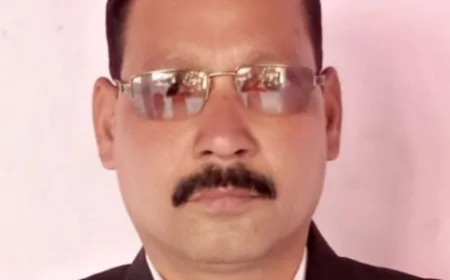



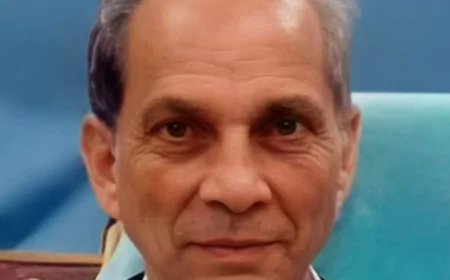



BOOK RELEASE CEREMONY OF ‘EK SAAMAAJIK KARYAKARTA KI AATMKATHA” IN KARATH VILLAGE, BHOJPUR(BIHAR): A TRIBUTE TO ROOTS AND LIFELONG SOCIAL SERVICE
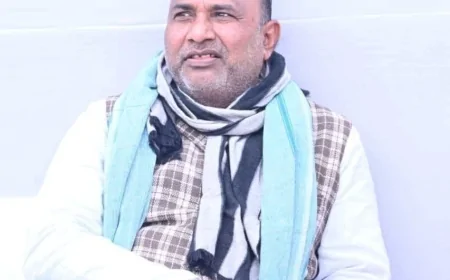
--Karath, a small village in Tarari block of Bhojpur district, Bihar, witnessed an emotional and historic moment on an ordinary winter afternoon when social activist and writer Satyendra Kumar Singh chose his birthplace for the first public release (lokaarpan) of his autobiography Ek Saamaajik Karyakarta Ki Aatmakatha. The event was not merely the launch of a book; it was a heartfelt act of gratitude towards the soil that raised him, the dust in which he played as a child, and the people who shaped his dreams.
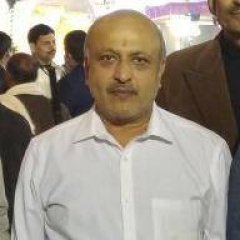


BOOK RELEASE CEREMONY OF ‘EK SAAMAAJIK KARYAKARTA KI AATMKATHA” IN KARATH VILLAGE, BHOJPUR(BIHAR): A TRIBUTE TO ROOTS AND LIFELONG SOCIAL SERVICE
21-NOV-ENG 23


RAJIV NAYAN AGRAWAL
ARA--------------------------Karath, a small village in Tarari block of Bhojpur district, Bihar, witnessed an emotional and historic moment on an ordinary winter afternoon when social activist and writer Satyendra Kumar Singh chose his birthplace for the first public release (lokaarpan) of his autobiography Ek Saamaajik Karyakarta Ki Aatmakatha. The event was not merely the launch of a book; it was a heartfelt act of gratitude towards the soil that raised him, the dust in which he played as a child, and the people who shaped his dreams.


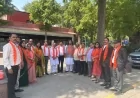
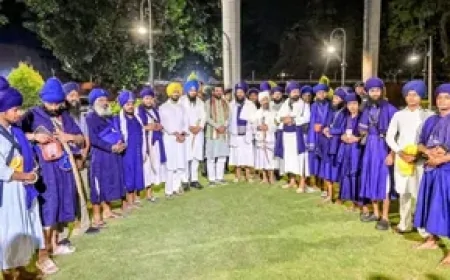
The venue, Saraswati Gyan Mandir, the playground of the local middle school, was packed with villagers, students, teachers, senior citizens, retired army officers, educationists, and social workers. The presence of a serving Deputy Commandant of the Indian Army as chief guest, former block-level officers, and respected village elders lent the programme a rare dignity. For Karth, a village that rarely finds mention beyond district-level news, the day will remain etched in memory for years to come.
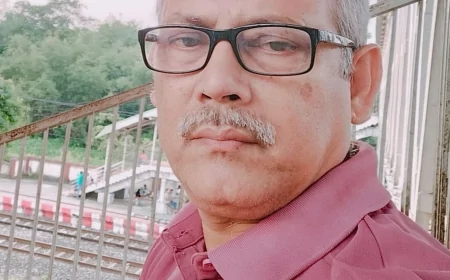
The Author’s Address: “I Wanted to Bow Before the Soil That Made Me” In an emotion-choked voice, Satyendra Kumar Singh (67) began his address with folded hands: “This autobiographical book is the story of my childhood spent in Karth village, my family background, my education, and the achievements earned in the field of social service. By organising the first lokaarpan of this book in my janmabhoomi Gram Karth, district Bhojpur, Bihar, I had only one intention – to express my eternal gratitude to my motherland, in whose dust I played and grew up.
The honourable guests, visiting teachers, students, enlightened and elder villagers present here today fill my heart with immense pride. I am grateful to all of you and I pray that your blessings, love, affection, and respect remain with me throughout my life.”
He further explained that the book is a living chronicle of the past 65 years of his life – from childhood joys and sorrows to the facts, emotions, and truths of the present. While writing, he mentally re-entered his own body of different ages and recreated (re-lived) his childhood, adolescence, youth, and mature adulthood. The autobiography is divided into nine chapters:
1–2. Childhood, adolescence, and youth – experiences, values, and some unhelpful traditions that can still be useful to society if understood properly. 3–4. Social, political, and environmental events witnessed during his youth. 5–9. Detailed description and analysis of rural and tribal development service work carried out in different phases; struggles against social evils; pain and problems of the marginalised; and folk tales from Adivasi and Bhojpuri communities that help understand the collective psyche.
The book also carries rich documentation of rural and Adivasi culture, traditions, proverbs, and lived experiences of struggles, obstacles, and triumphs in the field of social service.
Guests’ Observations: A Life Lived on the “Path of Fire”
Rajneesh Singh, a young speaker, remarked: “In today’s age when every professional is securing an air-conditioned future for himself and his family inside closed offices, very few choose to become social workers. A social worker gets administrative, political, and financial support from some quarters, but also faces opposition and has to live every moment on a path of fire. Satyendra ji accepted those burning challenges and made a life and a pen (lekhani) out of them. Today it is a matter of pride not only for Karath and Bhojpur but for the entire country when government of India conferred upon him the most coveted Award ‘Indira Priyadarshini Virkshmitra Puraskar for the year 1994 in recognition of praiseworthy work in the field of social forestry.”
The chief guest, a serving Deputy Commandant of the Indian Army, visibly moved, said: “Even though I happen to be an army officer, my eyes are moist today. A son of this soil has released his biography amidst the very earth, water, and people of Karath and in the presence of the people of Karath. I too have spent my entire service life in the service of the nation and humanity. I am inspired by Satyendra ji’s contribution in the field of social development of tribal communities specially Paharias and Santhals and with him good luck for his continuing journey – a priceless and fearless voice of under privileged ones.”
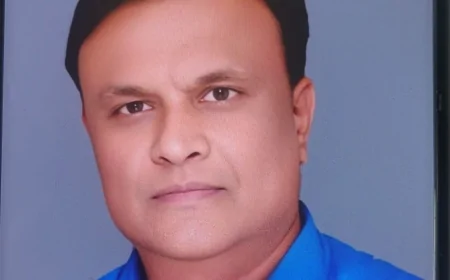
Former Principal, educationist and senior journalist Dr. Rajiv Nayan Agarwal praised the author’s decision to have the book released by the hands of the Deputy Commandant and other dignitaries in the village itself: “By doing so, he has reminded us that those who remain connected to their roots never lose the real sense of life, no matter how high they rise. This book will be useful for researchers, students, and all those walking on the path of social service.”
Eighty-eight-year-old respected teacher and litterateur Brij Bihari Singh said with a smile: “In my almost ninety years of life, I still feel like a student today. A 67-year-old writer from our own Karth village has opened new doors of curiosity for me. By organising the lokaarpan in the village, he has made a meaningful attempt to repay the debt of his motherland.”
A Book That Is More Than an Autobiography
Though titled an autobiography, the book transcends personal narrative. It is a social document of rural Bihar of the 1960s–2020s, a first-hand account of tribal life in central India, a critical reflection on successes and failures of development programmes, and a repository of nearly three hundred folk tales, proverbs, and cultural practices that are fast disappearing. The author has consciously kept the language simple so that college students, researchers, and grassroots workers can benefit from his six decades of lived experience.
The vote of thanks was delivered by Upendra Prasad, Headmaster of Upgraded Middle School, Udavantnagar, who described the day as “a festival of letters and social commitment” for the entire block.
When a Village Becomes a University for a Day
The lokaarpan of Ek Saamaajik Karyakarta Ki Aatmakatha in Karath was not just the launch of one man’s life story; it was a quiet yet powerful celebration of roots, resilience, and lifelong service. In an age when most book launches happen in five-star auditoriums of metropolitan cities, Satyendra Kumar Singh brought ministers of the republic, army officers, academicians, and hundreds of villagers together under the open sky of the same playground where he once played gilli-danda.
For the children of Karth who sat wide-eyed listening to speeches, the message was clear: greatness does not mean leaving the village behind; greatness can mean returning to the village again and again – with a book, with a dream, and with an unshakable sense of gratitude.
The dust of Karth has produced many brave soldiers, hardworking farmers, and honest teachers. On this day, it also produced a writer who proved that the greatest tribute one can pay to one’s birthplace is to place the story of one’s life back into its loving, calloused hands.
Some others who also addressed were Col. Satish Singh, Yadunandan Singh, Ram Jee Sahay, Sriman Narayan. Dr. Kumar Rajiv Nayan, former Principal, H P D Jain School, Ara, Uday Prakash Singh, former Joint Director, Minister of Youth Affairs, Prof. Kanhaiya Prasad Singh, Dr. Lalan Prasad Singh and others. Retired Principal Brij Bihari Singh presided over the meeting while Haidar Ali conducted and Yogendra Singh, Principal, Girls Middle School, Udwantnagar, extended vote of thanks.
What's Your Reaction?
 Like
0
Like
0
 Dislike
0
Dislike
0
 Love
0
Love
0
 Funny
0
Funny
0
 Angry
0
Angry
0
 Sad
0
Sad
0
 Wow
0
Wow
0