


























































BIHAR ASSEMBLY ELECTIONS 2025: A VIBRANT DEMOCRACY IN BHOJPUR DISTRICT
The 2025 Bihar Assembly Elections in Bhojpur district unfolded as a testament to India's enduring democratic spirit. Covering all seven assembly constituencies namely Ara, Badahara, Jagdispur, Sandesh, Shahpur, Tararri and Agiaw ®, the polling process largely passed off peacefully under stringent security measures, despite isolated incidents and instances of voter boycott. With approximately 56% voter turnout, the day highlighted a mix of enthusiasm and apathy. Many residents chose to stay indoors, were away from their stations, or simply abstained, yet women, youth, and elderly voters—including a centenarian—displayed remarkable zeal. Long queues formed from morning, with voters emerging smiling after casting their ballots. Streets, lanes, and intersections buzzed with discussions and debates favoring various parties, turning the election into a communal festival of opinions.


BIHAR ASSEMBLY ELECTIONS 2025: A VIBRANT DEMOCRACY IN BHOJPUR DISTRICT
6-NOV-ENG 4


RAJIV NAYAN AGRAWAL
ARA----------------------------The 2025 Bihar Assembly Elections in Bhojpur district unfolded as a testament to India's enduring democratic spirit. Covering all seven assembly constituencies namely Ara, Badahara, Jagdispur, Sandesh, Shahpur, Tararri and Agiaw ®, the polling process largely passed off peacefully under stringent security measures, despite isolated incidents and instances of voter boycott. With approximately 56% voter turnout, the day highlighted a mix of enthusiasm and apathy. Many residents chose to stay indoors, were away from their stations, or simply abstained, yet women, youth, and elderly voters—including a centenarian—displayed remarkable zeal. Long queues formed from morning, with voters emerging smiling after casting their ballots. Streets, lanes, and intersections buzzed with discussions and debates favoring various parties, turning the election into a communal festival of opinions.


This election in Bhojpur was not merely about numbers; it encapsulated the essence of participatory governance. From gratitude expressed by political outfits to acts of defiance over unmet promises, the day revealed the multifaceted nature of Indian democracy. Security arrangements ensured smoothness, while sporadic disruptions underscored lingering grievances. As the Election Commission emphasized, every vote is precious, and the dignity of every voter remains paramount.
The assembly elections in Bhojpur's seven constituencies concluded without major upheavals, thanks to robust security deployments. From dawn, polling booths witnessed orderly queues as voters patiently awaited their turn. The administration's proactive measures included adequate police and paramilitary forces at sensitive and hypersensitive booths. CCTV surveillance, webcasting, and drone monitoring were employed to maintain transparency and deter irregularities.
District authorities appealed to citizens to vote fearlessly and on time, reinforcing democracy's strength through public participation. Facilities like wheelchairs, ramps, and volunteers catered to disabled and elderly voters, making the process inclusive. In Ara, the epicenter of activity, voters from diverse backgrounds—women in vibrant saris, energetic youth, and frail seniors—lined up peacefully. The atmosphere was one of celebration, with polling stations transforming into hubs of democratic fervor.
Enthusiasm peaked among first-time voters and women, who turned out in significant numbers. Elderly participants, some over 100 years old, braved the queues to exercise their franchise. One such inspiring figure was a nearly 100-year-old grandmother from Shri Ram Singh Shivganj's family, who arrived at the booth accompanied by her grandchildren to vote in support of Prime Minister Narendra Modi. Her determination symbolized intergenerational commitment to the electoral process.
The Election Commission's slogan resonated throughout: voting is not just a right but a celebration. In Bhojpur, this was evident in the smiling faces post-voting and the lively debates on roads and bylanes. Parties and candidates benefited from this engagement, with discussions often tilting toward development agendas promised by alliances like the NDA.
Post-polling, the Bharatiya Janata Party (BJP) in Bhojpur expressed profound thanks to the Election Commission, administration, and voters for ensuring a peaceful process and purportedly favoring the National Democratic Alliance (NDA). BJP District President Durga Raj, who cast his vote in Piro under the Tarari constituency, led the chorus of appreciation. He thanked officials for seamless conduct across all seven constituencies and lauded the public for backing NDA candidates unanimously.Barhara MLA and candidate Raghavendra Pratap Singh voted at his Dhamar booth, joining leaders in celebrating high turnout in NDA's favor. Party workers exuded optimism, citing tremendous enthusiasm among supporters. Durga Raj asserted that victory for NDA was certain in every constituency, driven by public faith in Prime Minister Narendra Modi's vision for a developed India and Chief Minister Nitish Kumar's resolve for a progressive Bihar.
The BJP highlighted how voters endorsed ongoing development works under these leaders. From infrastructure promises to welfare schemes, the electorate's choice was framed as a mandate for continuity and growth. Leaders and workers gathered post-polling, analyzing trends and predicting sweeps. This confidence stemmed from ground-level interactions, where development narratives dominated conversations. The party's statement underscored gratitude as a bridge to future governance, promising to honor the mandate through accelerated progress.
Amid the routine of queuing and voting, stories of extraordinary willpower emerged, reinforcing democracy's inclusive core. In Ara's Tarari constituency, at the Higher Secondary School in Kurmuri, a disabled voter became a symbol of resilience. Lacking a wheelchair, he was carried to the booth by family members, determined to cast his vote. Onlookers applauded this display, with volunteers and security personnel providing immediate assistance and special arrangements.
The District Election Officer noted that hundreds of senior citizens, seriously ill individuals, and disabled persons participated, boosting overall turnout. CCTV and videography ensured fairness at every step. This incident sent a powerful message: physical limitations cannot dim the passion for democratic participation. It highlighted how family support and administrative foresight amplify voter access.
Elsewhere, the centenarian grandmother's journey with grandchildren to vote for Modi captured hearts. Her enthusiasm, mirrored by other elderly voters, proved age is no barrier to civic duty. Youth, often critiqued for apathy, countered stereotypes by thronging booths early. Women, forming long lines, balanced household chores with electoral responsibility, their participation a quiet revolution in rural Bihar.
These vignettes from Bhojpur illustrated democracy's triumph over adversity. Wheelchair-bound seniors, bedridden patients transported via makeshift means, and families aiding the differently-abled—all contributed to a narrative of empowerment. The administration's provisions, from ramps to volunteer help, ensured no one was left behind, aligning with the Election Commission's commitment to voter dignity.
While much of Bhojpur embraced voting, a stark contrast unfolded at Kusumhi booth in Agiaon constituency, exposing fractures in the democratic fabric. At booth number 175 in Kusumhi Upgraded Middle School, villagers boycotted polling entirely, with only three votes cast hours after commencement. Their grievance was unequivocal: "No road, no vote."
For years, the village languished without proper roads, despite repeated complaints to elected representatives. Promises during election cycles evaporated post-victory, leaving residents frustrated. Leaders arrived, assured, and departed—without laying a single brick. In response, villagers chose abstention as their protest, a democratic tool to demand accountability.
Administrative officers rushed to the site upon receiving news, engaging in dialogues and offering assurances. Yet, the villagers stood firm, insisting on tangible development before participation. This was not mere stubbornness but a calculated message: elections must translate to on-ground action, not just rhetoric.
The incident transcended one booth, serving as a broader warning to political classes. Beyond rallies and speeches, public judgment now hinges on deliverables. Kusumhi's boycott underscored that democracy involves not only voting but holding power accountable. It echoed the Election Commission's reminder that every vote's value lies in its potential to enforce change.
Critics might view this as a setback, but it invigorated discourse on governance failures. In a district where 56% voted, the 44% abstention—compounded by such boycotts—signaled deeper issues like migration, disillusionment, and unmet basic needs. Roads, emblematic here, represent broader infrastructure deficits plaguing rural Bihar.
Bhojpur's polling day was akin to a grand festival, with diverse demographics infusing energy into the process. Women, youth, and the elderly led the charge, standing in queues from morning light. In Ara, early throngs outside booths created an electric atmosphere, with voters discussing candidates animatedly.
Security was paramount, yet it facilitated rather than hindered. Paramilitary presence reassured, allowing free expression. Drones hovered for oversight, while webcasting ensured real-time monitoring. Appeals from authorities encouraged timely voting, emphasizing informed choices.
Special accommodations shone brightly: ramps for the mobility-challenged, wheelchairs on standby, and volunteers assisting the aged. This inclusivity drew praise, potentially spurring higher turnout. The disabled voter's family-carried arrival in Kurmuri exemplified how barriers crumble with collective will.
Debates raged on streets—pro-NDA development vs. opposition alternatives—fostering civic engagement. Smiling exits post-voting reflected satisfaction in duty fulfilled. The 56% turnout, though moderate, was uplifted by these passionate subsets. Women’s high participation challenged gender norms in conservative pockets, while youth signaled generational shift.
Elderly icons, like the 100-year-old voting for Modi, inspired. Their stories, shared via grandchildren, bridged eras. Overall, Bhojpur painted democracy as vibrant, participatory, and evolving.
Tight security defined the elections, preventing escalations amid potential sensitivities. Police, paramilitary, and magistrates patrolled, with micro-observers at booths. Hypersensitive areas received extra vigilance via CCTV and drones.
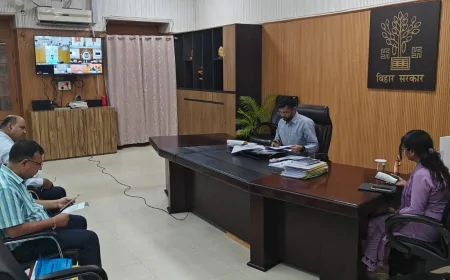
The District Election Officer oversaw fair conduct, with videography capturing proceedings. Appeals urged peaceful voting, countering any fear. This framework enabled the 56% turnout, managing sporadic issues like the Kusumhi boycott without chaos.
Officers' swift response to protests—pacifying yet respecting resolve—demonstrated maturity. Facilities for vulnerable groups ensured equity. Bhojpur's model could inspire future polls, blending technology with human touch.
BJP's post-poll gratitude framed the day as an NDA endorsement, thanking all stakeholders. Durga Raj's optimism predicted sweeps, tying votes to Modi-Kumar development pledges. Workers celebrated perceived high pro-NDA polling.
Opposition voices, though not detailed here, likely countered with boycott narratives as evidence of failures. Kusumhi became a rallying point for accountability demands.
Long-term, such events push parties toward deliverables. Bhojpur's mix—enthusiasm, abstention, protest—mirrors Bihar's complexities. Migration depletes voter bases; development lags fuel boycotts. Yet, inspiring acts affirm resilience.
The Election Commission's role in upholding dignity sets benchmarks. As results unfold, Bhojpur's story will influence governance priorities.
Bhojpur's 2025 elections encapsulated democracy's highs and lows. Peaceful polling with 56% turnout, punctuated by inspiration and protest, highlighted public agency. From centenarians to the disabled, participants embodied willpower. Boycotts like Kusumhi demanded action over promises.
BJP's confidence aside, the day belonged to voters—queuing, debating, abstaining. Security enabled this; administration inclusivity amplified it. As Bihar evolves, Bhojpur reminds: true democracy thrives on participation, accountability, and unyielding spirit.
In a nation of billions, each vote in Bhojpur echoed nationally. It was a celebration, a warning, and a promise—of better tomorrows forged today.
What's Your Reaction?
 Like
0
Like
0
 Dislike
0
Dislike
0
 Love
0
Love
0
 Funny
0
Funny
0
 Angry
0
Angry
0
 Sad
0
Sad
0
 Wow
0
Wow
0