


























































ANTYODAYA: THE FOUNDATION OF A NEW INDIA
India's cultural and philosophical consciousness has always held the view that true progress is possible only when the light of happiness, respect, and prosperity reaches the lives of even the most marginalized, deprived, and deprived individuals. This ideology manifested itself in the form of Antyodaya. Antyodaya is not merely a slogan or a program, but a guiding principle for social life. Antyodaya Day is an opportunity to remind us of this philosophy and put it into practice. This day is celebrated every year on September 25th, the birth anniversary of Pandit Deendayal Upadhyaya. Deendayal Upadhyaya established the principle of Antyodaya at the center of Indian politics and society. He stated that the objective of politics should not be merely the acquisition of power, but rather the use of that power to improve the lives of the last person in society.
ANTYODAYA: THE FOUNDATION OF A NEW INDIA
27-SEP-ENG 40


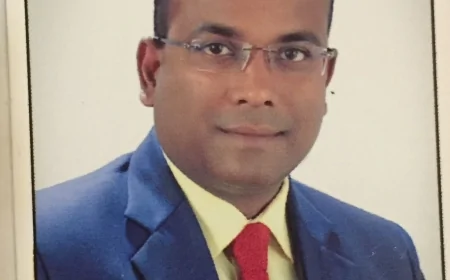
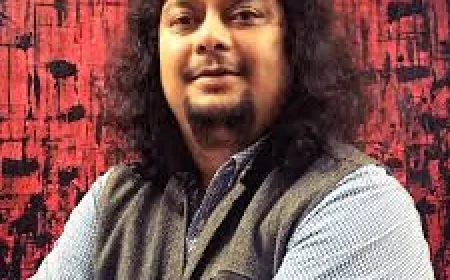
RAJIV NAYAN AGRAWAL
ARA------------------------------India's cultural and philosophical consciousness has always held the view that true progress is possible only when the light of happiness, respect, and prosperity reaches the lives of even the most marginalized, deprived, and deprived individuals. This ideology manifested itself in the form of Antyodaya. Antyodaya is not merely a slogan or a program, but a guiding principle for social life. Antyodaya Day is an opportunity to remind us of this philosophy and put it into practice. This day is celebrated every year on September 25th, the birth anniversary of Pandit Deendayal Upadhyaya. Deendayal Upadhyaya established the principle of Antyodaya at the center of Indian politics and society. He stated that the objective of politics should not be merely the acquisition of power, but rather the use of that power to improve the lives of the last person in society.


Today, Deendayal Upadhyaya's vision is being carried forward in "Village, Poor, and Swaraj." The pace, face, and character of democracy in India are being transformed, and the frenzy of caste and religion is being controlled by emphasizing the politics of faith. Therefore, Mahatma Gandhi, Ambedkar, and Deendayal Upadhyaya are at the forefront of new interpretations of India's construction. The ideals of "Vasudhaiva Kutumbakam" and "Sarvadharma Sadbhavana" have become the most powerful and have become a model for the world. The primary purpose of celebrating Antyodaya Day is to remind us that the true meaning of democracy is realized only when even the last person in society can participate in the national development journey. This day inspires us to ensure that schemes and policies do not remain confined to paper, but that their benefits reach those who have suffered from neglect, poverty, and deprivation for years. Today, India is striving for new heights. Economic development, technological advancement, and global recognition are constantly increasing. But if this progress does not reach the lowest rung of society, then this development is incomplete. Therefore, Antyodaya Day reminds us of the human dimension of development. It makes citizens and policymakers aware of their responsibility to support the underprivileged, promotes social justice, and encourages inclusive development across the country.
Pandit Deendayal Upadhyaya was born on September 25, 1916. He was one of the founders of the Bharatiya Jana Sangh and a profound thinker, philosopher, and social reformer. His greatest contribution was the philosophy of Integral Humanism and Antyodaya. Integral Humanism meant that humans should not be considered merely economic entities, but rather that all aspects of life—physical, mental, intellectual, and spiritual—should be developed in a balanced manner. His philosophy of 'Integral Humanism' focused on individual and collective welfare, social justice, economic equality, and self-reliance. Antyodaya meant that the criterion of development was to assess how the lives of the last person in society were improving. He said that our plans and efforts would be considered successful only when the benefits reach the last person. This philosophy of Deendayal ji is also linked to Mahatma Gandhi's concept of the "last man." Gandhiji used to say that before making any decision, one should consider whether its benefits will reach the last and most vulnerable person. Deendayal Upadhyaya made this idea the basis of political and economic discussions. Today, when conflict persists throughout the country and the world, everyone is fighting to be included in the race for development. Conflicts are taking place in the name of religion, caste, rights, and language. Even in such complex times, Pandit Upadhyaya's "Antyodaya" and Integral Humanism appear to be the most suitable weapon for those suffering from deprivation, neglect, and struggle.
"Antyodaya" literally means "rise of the last person." Its practical meaning is that the poor should have access to the basic necessities of life, the problems of farmers, laborers, Dalits, tribals, and the underprivileged should be resolved, no one in society should be neglected or destitute, and economic inequality should be reduced, and poverty should be addressed so that everyone has equal opportunities. This is not limited to economic upliftment alone, but also a message of establishing social justice, human dignity, and self-reliance. Today, India is moving towards poverty alleviation and strengthening this idea and philosophy. The decision to celebrate Pandit Deendayal Upadhyaya's birth anniversary as Antyodaya Day was taken because he devoted his entire life to the welfare of the deprived, the poor, and the last person in society. His life was a symbol of austerity and simplicity. He himself was free from any personal ambition, but was dedicated to society.
Today, as India moves towards building a 'Strong India' and a 'New India,' the importance of Antyodaya increases even more. Millions of people in India still live below the poverty line. Antyodaya demands that education and health facilities reach every poor and deprived person. It also seeks to ensure that every hand finds work and every family becomes self-reliant. Drawing on the ideas of Pandit Deendayal Upadhyaya, Prime Minister Narendra Modi has also championed the mantra of "Sabka Saath, Sabka Vikas, Sabka Vishwas, and Sabka Prayas." This mantra is a modern interpretation of Antyodaya. The philosophy of Antyodaya becomes even more important today because, in the race for globalization and marketization, the poor and marginalized are often left behind. Only the wealthy and powerful are responsible for development.
If the last person in society goes to bed hungry, our progress is incomplete. If a farmer is forced to commit suicide, our policies are incomplete. If tribals, Dalits, or laborers are still victims of exploitation, our democracy is incomplete. Antyodaya offers solutions to all these problems. It reminds us that true development is one in which everyone participates.
Pandit Deendayal Upadhyaya, who gave the remarkable concept of "Integral Human Philosophy" and "Antyodaya" to make Indian society and nation happy, prosperous, and prosperous, was a great personality, a nation-builder and social reformer. Today's Bharatiya Janata Party is carrying forward his principles and shaping an advanced, strong, and developed India. By deeply assimilating the minds of the people of India, he not only brought about an ideological revolution but also inspired a personal revolution. His philosophy today inspires us to establish a nation and society by placing humanity at the center, along with India's culture and cultural nationalism. Pandit Upadhyay, a man of compassion, intelligence, activism, and dedication, is not a person but an idea, an institution, and a way of life. India and Indianness encompass his life and thoughts. Panditji, who considered national service paramount and dedicated his life to the nation and society, inspired and influenced the nation through his original thinking.
Antyodaya Day reminds us that the true source of a nation's strength is the last person who still lives in poverty. Only if their lives improve can India become truly prosperous and strong. Pandit Deendayal Upadhyay's Antyodaya philosophy continues to guide us today. It is not merely a political program, but a religion of humanity. We must resolve that the center of any plan, any policy, or any effort will always be the last person in society. The message of Antyodaya Day is that building a new India is possible only when the lives of the deprived and neglected are transformed, when there is a smile on every face and respect in every life.
What's Your Reaction?
 Like
0
Like
0
 Dislike
0
Dislike
0
 Love
0
Love
0
 Funny
0
Funny
0
 Angry
0
Angry
0
 Sad
0
Sad
0
 Wow
0
Wow
0