















































































“FROM AJMER TO INSTAGRAM: QUESTIONS ON SAFETY OF DAUGHTERS”?
--The students of Ajmer were educated, but they were unaware of social silences and digital dangers. We have to accept that education should not just teach degrees, but also safety. And upbringing should not be just to make obedient, but to make combative and conscious citizens. Our daughters do not get trapped, they are trapped—and as long as education is limited to marks, these predatory traps will keep on being woven again and again.

“FROM AJMER TO INSTAGRAM: QUESTIONS ON SAFETY OF DAUGHTERS”?
21-JUNE-ENG 15


RAJIV NAYAN AGRAWAL
ARA--------------------------------The students of Ajmer were educated, but they were unaware of social silences and digital dangers. We have to accept that education should not just teach degrees, but also safety. And upbringing should not be just to make obedient, but to make combative and conscious citizens. Our daughters do not get trapped, they are trapped—and as long as education is limited to marks, these predatory traps will keep on being woven again and again.


How are educated girls allowed to get trapped so easily in cases of sexual abuse and blackmailing? This question is often asked when a case of sexual abuse or blackmailing of a girl comes to light in the media. But this question is wrong. The right question should be that she was not trapped, she was trapped—by a conspiracy, a system of exploitation and a nexus of silence. In this case, not only the girl is guilty, but also the society and the system, which instead of making her safe and sensitive, taught her only to “be careful”.
Whenever Ajmer is mentioned in cases of sexual exploitation and blackmailing, it becomes necessary to mention the gangrape case of 1992. The Ajmer gangrape case of that time shook the entire country, when people with political and religious influence, and especially those associated with the Dargah of Khwaja Moinuddin Chishti, were trapping thousands of school and college girls. First they were trapped in the web of love, then they were blackmailed by taking their obscene pictures. Many girls even committed suicide due to this case.
But now, after 30 years, once again a similar scene has come to the fore in Ajmer. This time hundreds of girl students have been blackmailed through social media, Instagram chats, fake profiles and videos. The police have arrested many boys, including minors.
There has definitely been a change in the level of education and awareness of girls these days as compared to 30 years ago, but do we still feel that incidents like Ajmer could have been avoided? Are we doing enough to keep girls completely safe? Are there no serious questions about safety in schools and colleges even today?
Often when a girl is sexually abused, the question arises as to why did she allow this to happen? Was she at fault? But the reality is that when girls are taught from childhood that “stay away from boys” or “you can make mistakes”, they grow up in fear that if something happens, who will support them? This fear and silence makes them victims of criminals. If they are taught that “it is not your fault, you deserve protection, and you have the right to ask for help”, then perhaps they would have been able to overcome these situations.
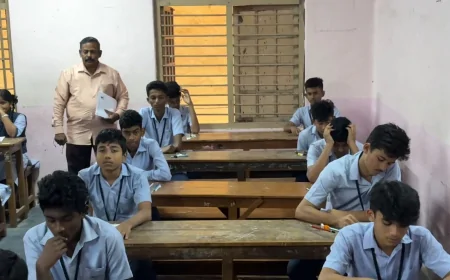
Our schools and colleges have now become mere educational institutions, where education has only one purpose—to get results based on marks. These institutions have neither sex education, nor classes on gender sensitivity, nor any mental health counselling facilities. Girls not only need self-defense education, but they also need to understand what can be the signs of exploitation in love and relationships. When the response to girls' complaints is, "You must have done something, then she made the video," then it is like ignoring the seriousness of the problem.
Social media and chatting apps have opened new avenues for criminals. What happened in the new Ajmer case revealed the modern digital predator. Using social media platforms like Instagram, Snapchat and WhatsApp, first false love relationships are created, then intimate chats and videos are made, and finally the process of blackmailing and exploitation begins. The biggest problem in this is that girls are emotionally vulnerable on these platforms. They see them as a safe, secret relationship, and then the criminals break their trust.
When girls excel in studies, they are praised. But as soon as they befriend a boy, or become active on social media, they are labelled as “loafers” and “spoiled girls”. After incidents like Ajmer, society asks the same question—“Why did you trust them?” When the question should be the reverse—“Where was the security system in your school and college?”
In our society, girls are educated in only one direction, that is, “Be careful”. But are girls also taught how they can protect their rights? Don’t we need to understand that preparing girls to “defend themselves” is not just their personal responsibility but the responsibility of the entire society?
At the time of the Ajmer gang rape case in 1992, the police and administration suppressed the case due to political pressure. The same is happening now—many accused are not being named, and minors are getting recourse to the Juvenile Justice Act. Is this the system we should trust? When the police and administration remain silent, incidents of exploitation and rape are suppressed. The same is happening in today's colleges and schools, where there is no guarantee of safety.
In cases like Ajmer and Kota, it also came to light that girls were trapped through social media, chatting apps, fake profiles. When online communication starts, it starts to feel like a 'confidential relationship'. This trust is exploited
It is not a crime for a girl to trust, fall in love or talk to someone. It is a crime when someone exploits this trust, blackmails her, and forces her to live in humiliation. In such cases, we should not blame the victim, but ask what was the security system in that college? Why did the school administration not find out? What did the police and administration learn from previous incidents? The solution cannot come in just one direction. For this, we have to make the education system, society, police and administration, and the media aware at every level. First of all, we have to make sex education compulsory in the school curriculum. Counseling and digital safety training should be given in colleges. Cyber helplines and rapid response units for women should be established in every district. Along with this, the media must stop blaming the victim and old cases should be investigated impartially. The students of Ajmer were educated, but they were unaware of social silences and digital threats. We have to accept that education should not just teach degrees, but also safety. And upbringing should not be just to make obedient but to make combative and aware citizens.
Our daughters do not get trapped, they are trapped—and as long as education is limited to marks only, these predatory traps will keep getting woven again and again.
What's Your Reaction?
 Like
0
Like
0
 Dislike
0
Dislike
0
 Love
0
Love
0
 Funny
0
Funny
0
 Angry
0
Angry
0
 Sad
0
Sad
0
 Wow
0
Wow
0