
























































WILL THE RAHUL-PRIYANKA DUO BE ABLE TO CHANGE THE POLITICAL EQUATION IN BIHAR
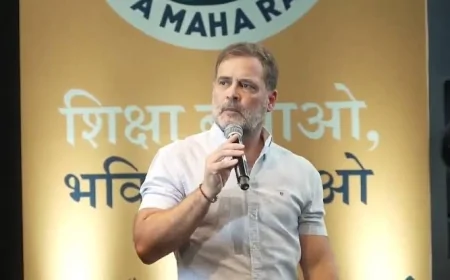
Bihar politics is once again abuzz. This time, the focus isn't just on which party will come to power, but also on whether the Congress party will be able to revive its old support base. Rahul Gandhi is set to enter the Bihar electoral fray on October 29th. This will not be just a rally, but rather the beginning of a new resolve for the Congress party. According to the party's plan, Rahul Gandhi will hold a total of 12 rallies, and Priyanka Gandhi will also bolster the campaign with approximately 10 rallies. This means that this time, the Congress is poised to move beyond mere tokenism and mount a serious challenge.

WILL THE RAHUL-PRIYANKA DUO BE ABLE TO CHANGE THE POLITICAL EQUATION IN BIHAR
30-OCT-ENG 26


RAJIV NAYAN AGRAWAL
ARA------------------------Bihar politics is once again abuzz. This time, the focus isn't just on which party will come to power, but also on whether the Congress party will be able to revive its old support base. Rahul Gandhi is set to enter the Bihar electoral fray on October 29th. This will not be just a rally, but rather the beginning of a new resolve for the Congress party. According to the party's plan, Rahul Gandhi will hold a total of 12 rallies, and Priyanka Gandhi will also bolster the campaign with approximately 10 rallies. This means that this time, the Congress is poised to move beyond mere tokenism and mount a serious challenge.


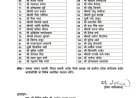
The election campaign will begin just a day before the Grand Alliance releases its manifesto on October 28th. Interestingly, Rahul Gandhi's first rally is scheduled the day after, signaling that the Congress party wants to convey that the manifesto is not just a piece of paper, but a political resolve that the Congress will personally deliver to the people. The Grand Alliance comprises the Congress, the Rashtriya Janata Dal (RJD), and the Left parties. Traditionally, the Congress has played a "junior partner," but this time the party is more assertive than ever about both its participation and presence. The party has released a list of 40 star campaigners for the first phase of campaigning. This includes prominent leaders like Mallikarjun Kharge, Ashok Gehlot, KC Venugopal, Bhupesh Baghel, and Ajay Maken. This means that the Congress has not repeated the mistake of relying solely on one family; instead, it has fielded all the prominent faces of the organization, attempting to demonstrate a "collective campaign."
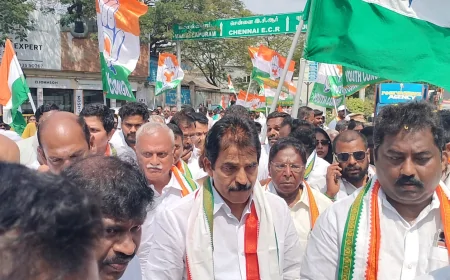
However, things are not as easy as they seem. Discontent within the party over ticket distribution posed challenges early on. Many local leaders alleged that ticket distribution was arbitrary, workers were neglected, and local equations were ignored. The party's top leadership had to intervene to calm this discontent. Ashok Gehlot, KC Venugopal, and Ajay Maken arrived in Patna and reviewed the party's situation in a series of meetings. The Congress party's objective now is to ensure that the organization appears fully united when Rahul and Priyanka begin a series of rallies in Bihar after Chhath Puja. The party does not want to project an image of infighting before the public, so coordination meetings, worker conferences, and a review of the campaign strategy are being held in all districts before Rahul Gandhi's visit.
An interesting aspect of Rahul Gandhi's Bihar visit is that it is a natural extension of his recent Voter Rights Yatra. That Yatra traversed 110 assembly constituencies and was considered an effort to reach the Congress in every village. Now, the party is working on a strategy to convert that public relations momentum into electoral energy. In other words, the Congress is attempting to transform the narrative created in the name of voter awareness into electoral support. But the big question is whether the joint rallies of Rahul and Priyanka will be able to shake the ground realities in Bihar? Bihar's politics is based on caste, social, and coalition calculations. Here, voters aren't swayed by mere charismatic speeches or appeals to dynastic politics. They need concrete local issues, such as employment, migration, education, law and order, and poverty. If the Congress comes forward with concrete promises on these issues, it could regain some of its lost ground.
The Grand Alliance's manifesto will be crucial in this regard. It is believed to include promises such as employment guarantees for youth, farmer loan waivers, and special funding for education. Rahul Gandhi is preparing to highlight these issues in his rallies. Priyanka Gandhi's rallies are being made women-centric, with topics such as women's safety, empowerment of self-help groups, and educational opportunities dominating the agenda.
For the Congress, this election isn't just about Bihar's 243 seats. It's part of its national revival strategy. Congress's performance in Bihar was weak in the 2024 Lok Sabha elections. However, this time the party's focus is on emerging from the shadow of the RJD and establishing itself as an independent political entity. To this end, Rahul Gandhi's campaign will attempt to convey a message of shared leadership rather than shared responsibility. The Congress party faces internal challenges. There is tension between old and new leaders within the organizational structure. Due to RJD's dominance at the local level, Congress workers are often seen as dependents rather than allies. Rahul Gandhi's campaign will attempt to dispel the perception that the Congress is merely a numerical component in the Grand Alliance.
In contrast, the BJP has already launched its campaign aggressively. Several rallies by Prime Minister Narendra Modi are scheduled, and the BJP has vigorously promoted the narrative of a double-engine government versus a chaotic alliance. The challenge for the Congress is to present an alternative agenda to counter this narrative. If Rahul Gandhi limits his speeches solely to criticism of the Modi government, the impact will be limited, but if he can present an alternative vision—a roadmap for Bihar's development—he could shift the electoral discourse. Another interesting aspect is that Priyanka Gandhi is strategizing rallies in coordination with Rahul Gandhi this time. In the past few years, This coordination within the Congress leadership has proven politically significant. Priyanka Gandhi's style is more emotional and communicative, while Rahul Gandhi's emphasis is on policy and ideological issues. If this combination is successful, this double engine could prove to be effective for the Congress in Bihar.
Congress has also experimented with some innovations organizationally. This time, an effort has been made to integrate the campaign at both the digital and ground levels. A social media campaign called "Badalta Bihar, Bolta Yuva" has been launched, through which the party is trying to establish a dialogue with the youth. Additionally, youth dialogues and women's chaupals are being organized in every district. These efforts could move the Congress beyond traditional crowd gatherings and into real public relations. However, it would be wrong to assume that rallies alone will yield immediate benefits. Political memory in Bihar is long. Voters are now influenced not by mere speeches, but by concrete convictions. Congress must understand that a single campaign cannot compensate for the organizational weaknesses it has shown in Bihar over the past three decades. This requires strengthening long-term grassroots networks and local leadership.
Its role in the Grand Alliance will also depend on its effective performance in the number of seats it wins. If Congress manages to cross the 25-30 mark in this election, it could once again emerge confidently in national politics. However, if its performance remains limited like in 2020, the question will once again arise as to whether Congress can still operate on its own.
Another message expected to emerge from Rahul Gandhi's Bihar rallies is that Congress is now considering defeat as a challenge, not a destiny. Rahul has repeatedly stated that he believes in public communication, and this strategy could be effective in a state like Bihar, where politics here still relies on public relations and direct dialogue. If Congress can translate this belief into practice, it could at least regain some of its lost confidence. Priyanka Gandhi's participation will add emotional depth to the campaign. She will address issues concerning women, farmers, and youth, and her speeches will be relatively simple and emotional, enabling a direct connection with rural voters. This factor often proves decisive in Bihar politics, as emotional appeal and social connection carry more weight here than mere promises.
Overall, the 2025 Bihar elections are an existential test for the Congress. This isn't just a battle for seats, but a battle for political identity. Rahul Gandhi's 12 rallies and Priyanka Gandhi's 10 meetings will test whether the Congress still possesses the public communication skills that once made it the center of national politics. If the Congress can strengthen its presence within the Grand Alliance and genuinely work towards public relations, this election could mark the beginning of its revival. But if it relies solely on speeches, promises, and the charismatic appeal of its family, Bihar politics will once again marginalize it. Therefore, along with Rahul and Priyanka's rallies, what is most important is the localization of the Congress—speaking in the language of Bihar, viewing the problems here from a Bihari perspective, and presenting solutions from that perspective. If Congress understands this, then perhaps this election may not be just another story of victory and defeat, but may become the saga of its political revival.
What's Your Reaction?
 Like
0
Like
0
 Dislike
0
Dislike
0
 Love
0
Love
0
 Funny
0
Funny
0
 Angry
0
Angry
0
 Sad
0
Sad
0
 Wow
0
Wow
0