


























































WILL A ‘RED’ WAVE BE SEEN IN BIHAR THIS TIME TOO?
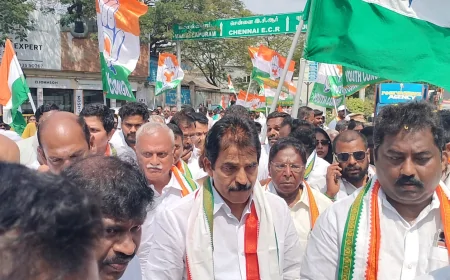
The 2020 Bihar Assembly elections were nothing short of a political renaissance for the Left parties. After decades of drought and marginalization, the Left parties, especially the CPI(ML), CPI, and CPM, once again firmly asserted their presence in the state's political equations. Communist Party of India (Marxist) General Secretary Sitaram Yechury had then said, "These election results have proven that the Left cannot be ignored." This performance in Bihar was not only a sign of organizational energy but also a symbol of the ideological reassurance that the Left parties had nearly lost over the previous two decades.

WILL A ‘RED’ WAVE BE SEEN IN BIHAR THIS TIME TOO?
5-NOV-ENG 26
RAJIV NAYAN AGRAWAL
ARA------------------------The 2020 Bihar Assembly elections were nothing short of a political renaissance for the Left parties. After decades of drought and marginalization, the Left parties, especially the CPI(ML), CPI, and CPM, once again firmly asserted their presence in the state's political equations. Communist Party of India (Marxist) General Secretary Sitaram Yechury had then said, "These election results have proven that the Left cannot be ignored." This performance in Bihar was not only a sign of organizational energy but also a symbol of the ideological reassurance that the Left parties had nearly lost over the previous two decades.


But stability in politics is never assured. When the 2021 Assembly elections were held in West Bengal, the Left parties failed to win a single seat. This result was nothing short of a setback for the history of the Left movement in Bengal, which had ruled for 34 years. Even in states like Uttar Pradesh and Karnataka, the Left's presence remained almost negligible. And even in the 2024 Lok Sabha elections, the Left's position did not see any significant improvement. It is true that their performance in some areas of Bihar indicated that the center of Left politics could no longer be in the South or East, but in North India. Now that Bihar has once again entered the electoral fray, the Left parties are once again focused on the people of Bihar. This time, the CPI (ML) (Liberation), CPI (ML), and CPM are all part of the Grand Alliance and are contesting under a common front. The seat sharing has been finalized, with the CPI (ML) contesting 20 seats, the CPM 4, and the CPI 9. Leaders of all three parties claim better results this time than in 2020, but the question is: do their expectations match ground realities? Political analysts believe that the Left parties' performance in 2020 was partly a result of the COVID-19 situation. A large number of migrant workers returned home at that time. The economic crisis, unemployment, and the indifference of the government machinery brought the issue of class inequality back to the forefront. This is the ground for Left politics, and it was fertile at that time. However, they also add that in the 2024 Lok Sabha elections, the Left and RJD alliance performed well again in the Magadh-Shahabad belt. This region, along with districts like Gaya, Aurangabad, Nawada, Arwal, and Jehanabad, has historically witnessed class struggles. Shahabad's Bhojpur, Buxar, Rohtas, and Kaimur districts have also been traditional Left strongholds. Together, these two regions comprise 36 assembly seats, and the Left parties are considered to have the strongest hold in these areas. Experts say that some of the Left parties' losses in 2020 were by very narrow margins. In seats like Bhore, Bachhwara, and Ara, the margin was less than 500 votes. For example, in Bhore, JDU's Sunil Kumar defeated CPI(ML)'s Jitendra Paswan by just 462 votes, while in Bachhwara, the margin between CPI candidate Awadhesh Kumar Rai and the BJP candidate was less than 500. In Ara, CPI(ML)'s Kayamuddin Ansari lost by a mere 3,000 votes.
This time, CPI(ML) has fielded former JNU Students Union President Dhananjay from Bhore, while Kayamuddin Ansari is once again contesting in Ara. Interestingly, in some seats like Bachhwara, Bihar Sharif, Rajapakad, and Kargahar in Begusarai, both the Congress and the CPI have fielded candidates, creating a situation of conflict within the Grand Alliance. According to experts, the infighting in these seats will directly benefit the NDA. Given the current state of its organization, the CPI should have retreated on some seats. Most of the Left parties contesting the 33 seats in the state are from rural areas, but some urban seats are also crucial for them this time. Digha, Phulwari, Rajgir, and Bihar Sharif, where the BJP has held sway for the past three terms, are the only women candidates. This time, the CPI(ML) has fielded its only female candidate, Divya Gautam. In Phulwari, the CPI(ML)'s incumbent MLA faces JDU veteran Shyam Rajak, who has a reputation for being secular and a strong public relations leader.
According to experts, the NDA's freebie politics has weakened the Left's agenda. The issues on which the Left previously garnered public support are now subsumed under the government's "freebies." Schemes like free rations, the Red Card, and electricity subsidies have blunted the class discontent that used to fuel the Left. The Left's true strength lies in its organizational network and reach with women voters. They have the ability to create ideological solidarity not only among the poor and workers, but also among women. Nitish Kumar's welfare schemes are certainly impressive, but Left politics challenges the linguistic framing of these schemes, presenting development as a right, not a charity. Indeed, this is the ideological point that keeps Left parties' politics alive in Bihar. Here, the Left's struggle is not merely to win seats, but to sustain an alternative political discourse. While mainstream politics revolves around caste and freebies, Left parties still speak in the language of class, inequality, and social justice.
Yet, the Left faces no less challenges. The party's young leadership is limited, its organizational structure is aging, and its rural presence is no longer as strong as before. But it is also true that Bihar is the state where the politics of class struggle has historically found a strong support base, whether it was during the Bhojpur movement or the struggle of landless farmers in Magadha. This is why the Left is seen as most likely to make a comeback here.
The Left's success in this election will depend on several factors: whether it can effectively present its agenda within the Grand Alliance. Will local social dynamics be taken into account when selecting candidates? And most importantly, will the Left parties be able to convince the public that they can still ideologically shape politics?
In 2020, red flags were hoisted again, but in 2025, it's not just a question of color, but of trust. Bihar's politics has been divided by caste and power dynamics. If the Left transcends these boundaries and creates a new definition of alternative politics, it could be indicative not only for Bihar but for the entire country's political landscape. The coming weeks will reveal whether Bihar will turn "red" again or whether this wave will prove to be a temporary blip, like in 2020. But one thing is certain: Left politics continues to fuel debate in Indian democracy, questioning the nature of the system, not power. And this is perhaps its greatest relevance.
What's Your Reaction?
 Like
1
Like
1
 Dislike
0
Dislike
0
 Love
0
Love
0
 Funny
0
Funny
0
 Angry
0
Angry
0
 Sad
0
Sad
0
 Wow
0
Wow
0