































































THIS CHHATH IS IMPORTANT—MORE THAN RELIGION, IT IS A FESTIVAL OF SOCIETY AND CULTURE
The great Chhath festival is not just about worshipping the sun, but also a symbol of social harmony, women's empowerment, environmental awareness, and family unity. This festival connects us to our roots, honors artisans and rural life, and spreads the message of equality. Even in the age of modernity, its simplicity and discipline keep the soul of Indian society alive. That is why—this Chhath is important. Extremely important.

THIS CHHATH IS IMPORTANT—MORE THAN RELIGION, IT IS A FESTIVAL OF SOCIETY AND CULTURE
30-OCT-ENG 43


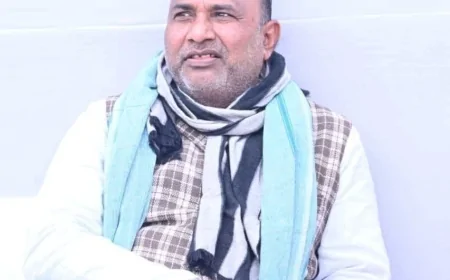
RAJIV NAYAN AGRAWAL
ARA----------------------------The great Chhath festival is not just about worshipping the sun, but also a symbol of social harmony, women's empowerment, environmental awareness, and family unity. This festival connects us to our roots, honors artisans and rural life, and spreads the message of equality. Even in the age of modernity, its simplicity and discipline keep the soul of Indian society alive. That is why—this Chhath is important. Extremely important.


India is a land of festivals, where every celebration is not only a symbol of religious faith but also a celebration of social harmony and human emotions. One of the most unique and relatable festivals among these is Chhath. This festival requires neither a priest nor any show; it is a celebration of a culture that considers equality, restraint, and gratitude to nature as its religion.
Today, when we are becoming disconnected from our roots in the glare of modernity, festivals like Chhath remind us of our identity. This festival isn't just religious—it's a living symbol of cultural, familial, and human unity.
Chhath is essential because it reminds us of where we came from and the values our civilization rests on. In today's times, when migration from villages to cities has become commonplace, with people moving away from their homeland and disappearing into the hustle and bustle of the metropolis, Chhath becomes the occasion when the tradition of returning home is revived. Sons, busy with work throughout the year, return home for this festival. Mothers, who gaze at the sky for months, awaiting their children, break down in tears upon seeing them before them on this occasion. Families, fragmented by financial constraints and distance, reunite on Chhath—this is the true power of this festival.
Chhath is not just the worship of the sun, but the simultaneous worship of family, society, and nature. It reminds us that no tree can bear fruit if it is cut off from its roots.
This Chhath is important because it is a message for the new generation, which has become ignorant of the world of villages, rivers, and fields. Today's children see rivers only in pictures in books, read about the sweet smell of soil only in poetry, and consider Surya Namaskar a "custom." Chhath teaches them that nature is not a subject of worship, but of respect. Worshiping the Sun is not just a symbol of religion, but also of environmental consciousness—this festival shows that life is incomplete without the sun and water.
This festival is an opportunity for a society that has become alienated from nature in the race for technological progress. During Chhath, rivers, ponds, and lakes all come alive. In cities, people try to connect with nature, even if by creating artificial ponds. This effort shows that no matter how far humanity progresses, its soul remains connected to the earth and water.
This Chhath is important because it holds a mirror to the social system that still wants to see women in limited roles. The Chhath fast showcases the extraordinary power of women, symbolizing tenacity, restraint, and dedication. The rigorous day-and-night practice of fasting and purity is not just a testament to faith—it's a testament to self-confidence. This festival is celebrated without priests, without pomp, and without any intermediaries—here, every woman is her own worshipper, a creator.
This tradition challenges the patriarchal mindset that believes that administering religion is solely the responsibility of men. Chhath says, "Faith has no gender, there is equality in faith." This is the same festival that also salutes the setting sun—a wonderful symbol of humility and balance.
Chhath is important because it keeps alive the hard work of thousands of hands connected to folk tradition. Village women prepare soup bowls, dauras, earthen lamps, bamboo baskets, and other puja materials months in advance. This festival is not just an expression of devotion, but also a means of employment and respect. Offerings like pitchers, lemons, suthani, sugarcane, coconuts, and thekua are not only a part of the taste but also drive an entire rural economy.
Even as packaged puja materials are sold in cities, the importance of village-made soup and daura remains intact during Chhath—because people understand that these are not just commodities, but the soul of tradition. Thus, the Chhath festival is not just a celebration of cultural but also of economic renaissance—where artisans, farmers, and women are given equal space.
This Chhath is essential for the millions of Indian diaspora who, despite living far from their homeland, feel connected to their soil through this festival. When Chhath Puja is celebrated on the banks of a reservoir symbolizing the Ganges in Dubai, London, New York, or Mauritius, it is not just a puja but a restoration of culture. This shows that the flow of Indian culture transcends geographical boundaries.
Chhath is an emotional bridge for those diaspora who, despite living abroad, want to remain connected to their homeland. This festival connects families, neighborhoods, and communities. While other festivals display grandeur, Chhath reflects restraint, simplicity, and unity. There is no distinction between high and low, no caste—just a collective feeling: “The Sun God belongs to everyone.”
In today's age, when "festivals" are becoming the subject of photos and social media posts, Chhath remains a festival of experience. It teaches us that tradition doesn't mean inertia, but continuity. Every year, this festival reminds us that modernity and spirituality are not opposites, but complementary. Even amidst smartphones, LED lights, and drone cameras, when a woman fasts with wet hair, it shows that culture is still alive. The work is alive; only its form has changed.
Chhath is proof that the foundation of our civilization is built not on a book or a commandment, but on experience and life-force. This festival belongs to no particular caste or class—it is a celebration of the people's culture that says, "Where there is sun, there is life."
Chhath is not merely a religious belief, but a lesson in social discipline. It teaches that society endures through dedication and restraint. When families, neighborhoods, and communities gather together at the ghats, a collective consciousness is born—one that declares we are one.
In today's time, when the lines of division, separation, and inequality are deepening, a festival like Chhath binds us together. It is neither in favor of any religion nor against any—it is a festival of the "human religion" that says, "The sun belongs to everyone, water belongs to everyone, life belongs to everyone."
Chhath is not merely a worship, but a practice of self-control, gratitude, and unity. This festival connects us to our soil, our mother, our family, and our nature. As long as this festival is alive, the soul of Indian society is alive.
So yes—Chhath is important.
Not for religion, but for society.
For the sons who have forgotten to return home,
For the mothers who wait,
For the artisans in whose hands tradition breathes,
For the women who observe the fast with a smile despite every difficulty,
And for the culture that teaches that saluting even the setting sun is the greatest form of gratitude.
Chhath is important—
Because it keeps us human.
Extremely important.
What's Your Reaction?
 Like
0
Like
0
 Dislike
0
Dislike
0
 Love
0
Love
0
 Funny
0
Funny
0
 Angry
0
Angry
0
 Sad
0
Sad
0
 Wow
0
Wow
0