














































THE GROWING INFLUENCE OF MONEY POWER IN BIHAR: POOR MLAS CONTINUOUSLY DISAPPEARING
Bihar's politics and the practice of lavishing money to win elections are leading to the steady disappearance of poor MPs and MLAs from the Lok Sabha and Legislative Assembly.
THE GROWING INFLUENCE OF MONEY POWER IN BIHAR: POOR MLAS CONTINUOUSLY DISAPPEARING
16-NOV-ENG 11


RAJIV NAYAN AGRAWAL
ARA--------------------------Bihar's politics and the practice of lavishing money to win elections are leading to the steady disappearance of poor MPs and MLAs from the Lok Sabha and Legislative Assembly.


Bihar is one of India's states with deep political roots. From the freedom struggle to the present, Bihar has played a significant role in national politics. However, in the past few decades, Bihar's electoral politics has been going through a phase where money has become paramount. This practice of "lavishing money" to win elections has become so profound that it has virtually eliminated the presence of representatives from poor and ordinary backgrounds in the state's legislative assemblies.
The Growing Influence of Money Power: The history of electoral politics in Bihar has been fraught with ups and downs. While social justice, caste equations, and public support were once key factors, today money power has emerged as a decisive force. Candidates require large sums of money to contest Assembly and Lok Sabha elections. Heavy financial investments have become common for election campaigns, rallies, public meetings, voter wooing, and other expenses. This situation poses a significant obstacle for candidates who lack sufficient financial resources.
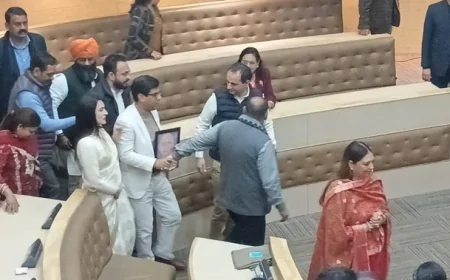
Bihar MLA: Representatives from poor and humble backgrounds marginalized
When the cost of contesting elections skyrockets, naturally, only those with immense wealth or the support of a major political party or a wealthy sponsor are able to enter the fray. This directly impacts the ability of honest, hardworking, and public-spirited individuals, but from economically weaker sections, to play an active role in politics or win elections. The number of poor and middle-class MLAs in the Bihar Assembly is steadily declining, which is a serious concern for democracy.
Reasons for the influence of money power:
1. Rising campaign costs: While the Election Commission has set limits on election expenditure, the reality is far from this. Addressing rallies from helicopters, putting up large-scale hoardings and banners, organizing vehicle rallies, arranging every level of voter reach, and engaging the media—all of these involve significant expenses. These costs become impossible for an ordinary candidate to bear.
2. Vote Buying: Unfortunately, vote buying is rampant in many states, including Bihar. Money is used to directly or indirectly influence voters. This is a perversion that undermines a fair electoral process and paves the way for the wealthy to come to power.
3. Attitude of Political Parties: Political parties often prioritize candidates who have sufficient funds to contest elections. Such candidates help the party raise election expenses and increase the chances of victory. This trend limits the opportunities for poor and capable leaders.
4. Opportunity to earn through corruption: Once someone wins an election with the help of money, they often resort to corruption in an attempt to recoup their investment and raise more funds for future elections. This creates a vicious cycle where the criminalization of politics and the excessive influence of money feed each other.
Impact on democracy: When only the rich or wealthy gain access to Parliament and state legislatures, the decisions they make will not represent the interests of all sections of society. The problems, aspirations, and needs of the poor and marginalized may not receive the prominence they deserve. This is contrary to the basic principle of democracy – “of the people, by the people, for the people.”
The lavish flow of money in Bihar politics poses a major threat to the healthy functioning of democracy. It is not only driving qualified individuals from poor and ordinary backgrounds out of politics, but also making the corridors of power vulnerable to corruption and the influence of money power. If democracy is to be truly people-centric, it is crucial to curb this trend. This requires collective effort, political will, and civic awareness to ensure representation of every section of the society in Bihar's Lok Sabha and Legislative Assemblies, and to ensure that true public servants reach the House.
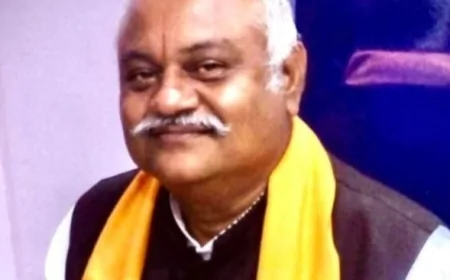
The practice of lavishing money in politics and elections to win is steadily diminishing the ranks of poor MPs and MLAs in the Lok Sabha and Legislative Assembly. No leader is now seen as poor in national and state politics. In the 243 seats of the Bihar Assembly, 218 millionaires have won. Only 25 MLAs have assets less than one crore rupees. Murari Paswan, who won from Pirpainti on a BJP ticket, is the poorest MLA, with a total property value of ₹6.53 lakh. Kumar Pranay, also from the BJP, who won from Munger, is the richest MLA, with assets worth ₹170 crore. The 243 new MLAs have a total property value of ₹2192 crore.
The Association for Democratic Reforms (ADR) has presented this picture of the wealth and poverty of Bihar MLAs by analyzing the affidavits filed during the elections. In 2010, 20 percent of the MLAs in the Bihar Assembly were crorepatis, which increased to 67 percent in 2015. In 2020, this number increased further, and 81 percent of the crorepati MLAs reached Patna. In 2025, all the records of crorepatis till date will be broken. This time, 90% of the 243 MLAs who entered the Bihar Assembly are millionaires. In numbers, there are 218 millionaire MLAs, with assets worth one crore or more. The average assets of the 243 MLAs have increased from 8.2 million in 2010 to 9 crore in 2025. In 2020, the average assets were 4 crore.
Among the three richest MLAs, BJP's Kumar Pranay, who owns assets worth 170 crore, is followed by JDU's Anant Singh, who won from Mokama, with assets worth 100 crore. The third richest new MLA is JDU's Dr. Kumar Pushpanjay, who owns property worth 94 crore. Following Murari Paswan, two other MLAs in the list of the three poorest MLAs are also from the BJP, all three being Dalit leaders who won from SC-reserved seats. Mahesh Paswan, who won from Agiaon, has assets worth 8.55 lakh, and Sujit Kumar, who won from Rajnagar, has assets worth 11 lakh.
55 MLAs with assets exceeding 10 crores have won.
Of Bihar's 218 crore-plus MLAs, 55 have assets exceeding 10 crores. There are 44 MLAs with assets ranging from 10 crores to 5 crores. The highest number of crore-plus MLAs are between 1 crores and 5 crores, with 119. The number of MLAs with assets below 1 crore but above 20 lakhs is 21, while only four MLAs with less than 20 lakhs have reached the House. This means nearly half of the MLAs have assets between 1 and 5 crores.
JDU leads; all MLAs from Congress, AIMIM, and RLSP are crorepatis.
If we look at the party-wise distribution of crorepati MLAs, Nitish Kumar's party, JDU, has the highest number of crorepatis, with 78, with 85 of its leaders becoming MLAs. Of the 89 BJP MLAs who won, 77 are crorepatis. Lalu Prasad Yadav and Tejashwi Yadav's RJD have 24 out of 25 crores as crorepatis. Chirag Paswan's party, the LJP-R, has 16 out of 19 MLAs as crorepatis. Jitan Ram Manjhi's HAM has 4 out of 5 MLAs as crorepatis. CPI-ML has 1 out of 2 MLAs as crorepatis. Besides these, all the MLAs of all other parties are crorepatis. These include 6 from the Congress, 5 from Asaduddin Owaisi's AIMIM, 4 from Upendra Kushwaha's RLM, 1 from the CPM, 1 from IP Gupta's party, IIP, including Gupta himself, and 1 from Mayawati's BSP.
What's Your Reaction?
 Like
0
Like
0
 Dislike
0
Dislike
0
 Love
0
Love
0
 Funny
0
Funny
0
 Angry
0
Angry
0
 Sad
0
Sad
0
 Wow
0
Wow
0