






































































THE CRISIS OF EDUCATION IN BIHAR: PRASHANT KISHORE’S CONTROVERSIAL STANCE AND ITS POLITICAL IMPLICATIONS
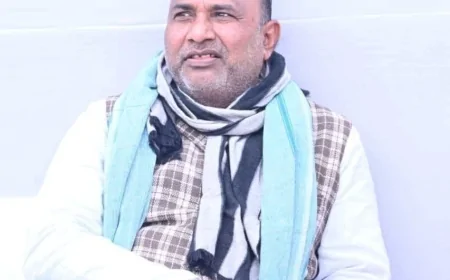
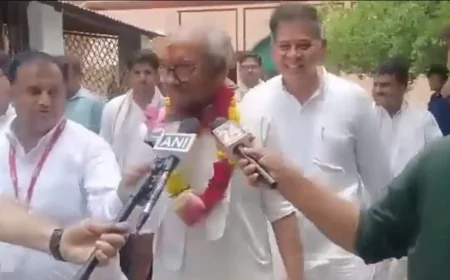
The state of education in Bihar has long been a subject of intense debate, with stakeholders pointing fingers at systemic failures, governmental neglect, and societal challenges. Recently, during a visit to Ara, Bhojpur, Jan Suraj Dal supremo Prashant Kishor sparked controversy by holding teachers responsible for the dismal state of education in the state. His remarks, made during a private reception at Chaugai Kothi, the residence of eminent citizen and social worker Ajit Singh, have ignited a firestorm among educators and raised critical questions about the future of education and its role in the upcoming Bihar Assembly elections. This article delves into the complexities of Bihar’s education crisis, Kishor’s provocative statements, the grievances of contractual teachers, and the broader political implications as the state approaches a pivotal electoral battle.

THE CRISIS OF EDUCATION IN BIHAR: PRASHANT KISHORE’S CONTROVERSIAL STANCE AND ITS POLITICAL IMPLICATIONS
3-SEP-ENG 1


RAJIV NAYAN AGRAWAL
ARA-------------------------------The state of education in Bihar has long been a subject of intense debate, with stakeholders pointing fingers at systemic failures, governmental neglect, and societal challenges. Recently, during a visit to Ara, Bhojpur, Jan Suraj Dal supremo Prashant Kishor sparked controversy by holding teachers responsible for the dismal state of education in the state. His remarks, made during a private reception at Chaugai Kothi, the residence of eminent citizen and social worker Ajit Singh, have ignited a firestorm among educators and raised critical questions about the future of education and its role in the upcoming Bihar Assembly elections. This article delves into the complexities of Bihar’s education crisis, Kishor’s provocative statements, the grievances of contractual teachers, and the broader political implications as the state approaches a pivotal electoral battle.


Bihar’s education system has been plagued by chronic issues for decades. Once, a seat of learning with institutions like Nalanda and Vikramshila universities, the state struggles to maintain its educational legacy in modern times. According to the Annual Status of Education Report (ASER) 2022, only 24.7% of Class 8 students in Bihar could read at a Class 2 level, and just 22.5% could perform basic arithmetic. The state’s literacy rate, while improved to 70.9% as per the 2011 Census, lags behind the national average of 74%. Infrastructure deficiencies, teacher shortages, and administrative inefficiencies have compounded the problem, leaving millions of students with a bleak future.
Successive governments, whether the Congress in the pre-1990 era, the Rashtriya Janata Dal (RJD)-led Mahagathbandhan, or the National Democratic Alliance (NDA), have faced criticism for failing to address these issues. The introduction of contractual teacher appointments in 2006 under the Nitish Kumar-led NDA government was touted as a reform to fill teacher vacancies quickly. However, it has become a lightning rod for discontent, with teachers decrying poor pay, lack of job security, and non-teaching duties that disrupt their primary responsibilities.
During his recent visit to Ara, Prashant Kishor, a political strategist-turned-politician and founder of Jan Suraj Dal, engaged with ad-hoc teachers at a private reception. The teachers raised pressing concerns about their long-pending demand for permanent appointments and improved service conditions. They urged Kishor to make these issues a cornerstone of his party’s campaign for the upcoming Bihar Assembly elections, anticipating that such a stance could garner support from the state’s vast teacher community, estimated at over 4 lakh contractual teachers.
Kishor’s response, however, was unexpected and contentious. He bluntly stated, “The teachers themselves are responsible for the present plight of education in Bihar.” He argued that viewing education solely as an employment opportunity is a “fatal tendency” and emphasized the need to address the broader question of improving Bihar’s educational environment. He pointed to the declining quality of teaching and learning, attributing it to a lack of qualified teachers and systemic failures across governments. His remarks, while reflecting a broader critique of the education system, were perceived as dismissive of the teachers’ legitimate grievances.
Kishor, a 1992 matriculate from Bihar’s education system himself, further remarked, “If teachers don’t teach, how should the government treat them?” This statement, delivered without acknowledging the structural constraints faced by educators, left the teachers in attendance shocked and disillusioned. The exchange highlighted a disconnect between Kishor’s vision for educational reform and the lived realities of contractual teachers, setting the stage for a broader debate on accountability and reform.
The teachers present at the reception were quick to counter Kishor’s accusations, arguing that the government and political leaders cannot shift the blame onto them for systemic failures. Since the introduction of contractual appointments, teachers in Bihar have faced numerous challenges:
- Job Insecurity and Low Remuneration: Unlike their predecessors, who enjoyed permanent positions with fixed pay scales, pensions, and benefits akin to other government employees, contractual teachers receive a fixed “remuneration” rather than a salary. This remuneration, often as low as ₹20,000–₹30,000 per month for secondary teachers, is inadequate given the rising cost of living. The discontinuation of pensions by the central government and the shift to contractual hiring have further eroded job security.
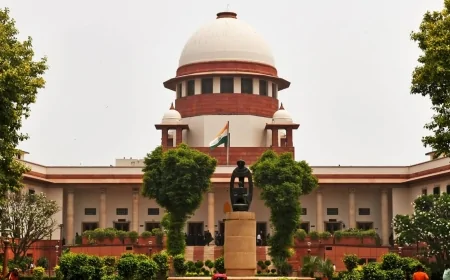
- Non-Teaching Duties: Despite Supreme Court guidelines prohibiting teachers from being assigned non-educational tasks, contractual teachers in Bihar are routinely deployed for duties such as election work, census surveys, and managing mid-day meal programs. These responsibilities disrupt classroom teaching, with some teachers reporting that they spend up to 60–70 days a year on such tasks, as per a 2023 report by the Bihar Shikshak Sangh.
- Lack of Permanent Appointments: Many contractual teachers, some with over a decade of service, possess qualifications and experience comparable to regular teachers. Yet, the government’s reluctance to regularize their positions or provide equitable benefits has led to widespread frustration. Teachers argue that replacing them with new hires, as has been proposed in some recruitment drives, is unjust and disregards their years of service.
- Reduced Leave and Benefits: Contractual teachers are entitled to fewer leave days compared to regular employees, with limited access to medical or maternity benefits. This lack of support affects their morale and ability to focus on teaching.
The teachers at the reception emphasized that these issues are not of their making but stem from policy decisions by successive governments. They questioned how they could be held solely accountable when the system itself undermines their ability to teach effectively. One teacher reportedly asked, “If the government assigns us non-educational work, what is the solution to that?” Kishor’s silence in response to this question underscored the complexity of the issue and his apparent lack of a concrete plan to address it.
Kishor’s critique, while controversial, touches on undeniable truths about Bihar’s education system. The state faces a shortage of qualified teachers, with a 2022 report by the Bihar Education Department indicating a vacancy rate of over 30% in government schools. Infrastructure issues, such as dilapidated classrooms, lack of electricity, and inadequate teaching materials, further exacerbate the problem. The pupil-teacher ratio in Bihar, averaging 50:1 in primary schools, far exceeds the national recommendation of 30:1, making effective teaching a daunting task.
Moreover, the quality of education has been undermined by a lack of teacher training and professional development. While initiatives like the Bihar Education Project and Sarva Shiksha Abhiyan have improved enrollment rates, learning outcomes remain poor. A 2021 study by the National Council of Educational Research and Training (NCERT) found that Bihar’s students scored below the national average in language, mathematics, and science, reflecting a systemic failure to prioritize quality education.
Kishor’s assertion that all governments—Congress, Mahagathbandhan, and NDA—have “destroyed education” resonates with many who see a pattern of neglect. For instance, the RJD’s rule in the 1990s was marked by rampant corruption and a decline in educational infrastructure, while the NDA’s tenure, despite some reforms, has been criticized for its reliance on contractual teachers and failure to address core issues like teacher training and curriculum development.
As Bihar gears up for the Assembly elections, expected in late 2025 or early 2026, Kishor’s remarks could have significant political repercussions. Teachers form a powerful voting bloc in Bihar, with their families and communities amplifying their influence. The state’s 4 lakh-plus contractual teachers, along with regular teachers and their supporters, represent a substantial portion of the electorate. Alienating this group could prove costly for Jan Suraj Dal, a relatively new party seeking to establish itself as a viable alternative to the NDA and Mahagathbandhan.
Kishor’s Jan Suraj Dal has positioned itself as a reformist party, emphasizing good governance, education, and development. His background as a political strategist, having worked with parties like the BJP, JD(U), and TMC, gives him a nuanced understanding of Bihar’s political landscape. However, his blunt criticism of teachers, without offering concrete solutions to their grievances, risks undermining his party’s appeal. Teachers and their unions, such as the Bihar Shikshak Sangh and the Contractual Teachers’ Association, have expressed outrage, with some calling for a boycott of Jan Suraj Dal in the elections.
The teachers’ anger is palpable. As one educator stated, “We are not shirking our duties. We are working under impossible conditions, with no job security and constant pressure from non-teaching tasks. How can Prashant Kishor blame us?” This sentiment is echoed across social media platforms, with hashtags like #ShikshakAtyachar and #BiharTeachers trending on X in recent weeks. The discontent could galvanize teachers to rally behind parties that explicitly address their demands, such as the RJD or CPI(ML), which have historically championed labor rights.
Kishor’s silence on the teachers’ counterarguments during the Ara event suggests a missed opportunity to bridge the gap. His failure to acknowledge the structural issues—such as non-teaching duties and lack of permanent appointments—may portray him as out of touch with the ground realities. With his next visit to Ara looming, teachers and observers are watching closely to see if he will address these “burning issues” or risk further alienating a key constituency.
The education crisis in Bihar demands a nuanced approach that balances accountability with systemic support. While Kishor’s call for teachers to take responsibility is not entirely baseless—there have been instances of absenteeism and inadequate teaching in some schools—the broader context cannot be ignored. Teachers, especially those on contractual terms, operate within a system that limits their efficacy. Addressing this requires a multi-pronged strategy:
- Regularization of Contractual Teachers: The government must prioritize the regularization of qualified contractual teachers who have served for years. This would boost morale, ensure job security, and improve teaching quality. A phased approach, coupled with performance evaluations, could address concerns about competence while rewarding dedication.
- Elimination of Non-Teaching Duties: The Supreme Court’s directive to exempt teachers from non-educational tasks must be enforced strictly. The government could establish dedicated teams for election duties, surveys, and mid-day meal supervision, allowing teachers to focus on education.
- Investment in Infrastructure and Training: Increased funding for school infrastructure, teacher training, and digital tools is critical. Programs like the Samagra Shiksha Abhiyan should be expanded to include regular professional development for teachers, ensuring they are equipped to meet modern educational demands.
- Revising Remuneration and Benefits: Contractual teachers deserve a pay scale commensurate with their qualifications and experience. Restoring pension benefits and providing medical and leave entitlements would align their conditions with those of regular government employees.
- Community and Political Engagement: Political leaders, including Kishor, must engage with teachers’ unions and associations to understand their challenges. A collaborative approach, rather than blame, would foster trust and yield better outcomes.
Education is likely to be a central issue in the upcoming Bihar Assembly elections, given its impact on the state’s youth and future. The NDA, led by Nitish Kumar, has touted initiatives like the Saat Nischay program, which includes educational reforms, but faces criticism for slow implementation. The Mahagathbandhan, comprising the RJD, Congress, and Left parties, has promised to address teachers’ demands, with Tejashwi Yadav recently announcing plans to regularize contractual teachers if elected. Smaller parties, including the CPI(ML) and AIMIM, are also capitalizing on the discontent among educators to gain traction.
For Jan Suraj Dal, the education crisis presents both a challenge and an opportunity. Kishor’s vision for a reformed Bihar resonates with many, particularly the youth, who see him as a fresh alternative to entrenched political dynasties. His emphasis on radical changes to improve education could appeal to voters frustrated with the status quo. However, his recent remarks risk alienating teachers, a group that could sway the election in closely contested constituencies like Ara, Bhojpur, and other parts of the state.
To regain teachers’ trust, Kishor must clarify his stance and propose actionable solutions. For instance, he could advocate for a hybrid model of teacher regularization, combining merit-based assessments with service tenure considerations. He could also champion the creation of a Bihar Education Commission to overhaul the system, involving teachers, administrators, and civil society. Such a move would demonstrate his commitment to reform while addressing the teachers’ grievances.
The education crisis in Bihar is not just a state issue; it has national implications. With a population of over 12 crore, Bihar contributes significantly to India’s workforce. A failing education system risks perpetuating poverty and unemployment, undermining the country’s demographic dividend. The plight of contractual teachers, who form the backbone of the education system, reflects broader issues of labor rights and governance. If left unaddressed, the discontent among teachers could lead to protests, strikes, or even social unrest, as warned by some educators at the Ara event: “The day our suppressed anger comes out, it will not be good for Bihar and the country.”
Kishor’s remarks, while controversial, have brought the education crisis into sharp focus. They highlight the need for a collective reckoning—among teachers, policymakers, and society—to prioritize education as a public good rather than a mere employment avenue. His challenge to teachers to take responsibility must be matched by a commitment from political leaders to create an enabling environment for quality education.
As Bihar approaches the Assembly elections, the education crisis and the plight of contractual teachers will be critical issues shaping voter sentiment. Prashant Kishor’s Jan Suraj Dal has the opportunity to lead the charge for reform, but only if it listens to the voices of educators and addresses their legitimate concerns. Blaming teachers without acknowledging systemic failures is a risky strategy that could cost Kishor politically. Instead, he must offer a vision that combines accountability with support, ensuring that teachers are empowered to deliver quality education.
The teachers’ plea for permanent appointments, fair remuneration, and freedom from non-teaching duties is not just about their livelihoods; it is about the future of Bihar’s children. As the state stands at a crossroads, the question remains: Will leaders like Kishor rise to the occasion, or will the cycle of blame and neglect continue? The answer will determine not only the fate of Jan Suraj Dal but also the prospects of millions of students and educators in Bihar.
What's Your Reaction?
 Like
0
Like
0
 Dislike
0
Dislike
0
 Love
0
Love
0
 Funny
0
Funny
0
 Angry
0
Angry
0
 Sad
0
Sad
0
 Wow
0
Wow
0