














































































SOIL IN INTERWOVEN INTO THE FABRIC OF LIFE: PRAMOD DIXIT MALAY
Earth, water, fire, sky, and air, these five elements compose this mortal body; Saint Tulsidas, through this couplet, has highlighted the importance of soil, an element that aids in the creation of the perishable body of all living beings. Indirectly, this line reveals the spiritual and philosophical aspects of soil. Holding within it the broad contexts of folk life, soil also explains the social and cultural role of humanity. Soil is the fundamental element of life for all living beings. The reverence for soil is evident in various folk rituals. Soil is a symbol of purity, sanctity, and prosperity. While soil embodies stability, it is also a confluence of firmness and gentleness. Soil is the path to the creation of life and also the path to liberation. Soil is the support of hope and faith, and also the unparalleled support of patience, endurance, and the will to live. Soil is the womb of nourishment and also the eye of spiritual philosophy. The quality of soil is its fragrance, which spreads as taste and aroma in various products. Soil is interwoven into the fabric of human life. Happiness, peace, and prosperity come from the soil. If there is soil, then there is civilization and culture. The qualities and glory of soil are encompassed and revered in Sanskrit literature and the works of poets. World Soil Day not only highlights the importance of soil but also inspires and encourages soil conservation.

SOIL IN INTERWOVEN INTO THE FABRIC OF LIFE: PRAMOD DIXIT MALAY
7-DEC-ENG 17


RAJIV NAYAN AGRAWAL
ARA---------------------------Earth, water, fire, sky, and air, these five elements compose this mortal body; Saint Tulsidas, through this couplet, has highlighted the importance of soil, an element that aids in the creation of the perishable body of all living beings. Indirectly, this line reveals the spiritual and philosophical aspects of soil. Holding within it the broad contexts of folk life, soil also explains the social and cultural role of humanity. Soil is the fundamental element of life for all living beings. The reverence for soil is evident in various folk rituals. Soil is a symbol of purity, sanctity, and prosperity. While soil embodies stability, it is also a confluence of firmness and gentleness. Soil is the path to the creation of life and also the path to liberation. Soil is the support of hope and faith, and also the unparalleled support of patience, endurance, and the will to live. Soil is the womb of nourishment and also the eye of spiritual philosophy. The quality of soil is its fragrance, which spreads as taste and aroma in various products. Soil is interwoven into the fabric of human life. Happiness, peace, and prosperity come from the soil. If there is soil, then there is civilization and culture. The qualities and glory of soil are encompassed and revered in Sanskrit literature and the works of poets. World Soil Day not only highlights the importance of soil but also inspires and encourages soil conservation.


The soil, which provides beauty to the earth and life to water, forests, people, and animals, is currently in crisis. The top layer of the earth is dying. The death of the soil is, in reality, the lifelessness of life itself, because soil is the basis of water, food, and air, which are essential for the nourishment and dynamism of life. To raise awareness among the general public about the importance of soil, ensure food security, stimulate economic activity, conserve biodiversity, and understand the contribution of soil to sustainable development, the United Nations observes World Soil Day every year on December 5th. Looking at the history of this event, we find that the International Union of Soil Sciences advocated in 2002 for celebrating December 5th, the birthday of King Bhumibol Adulyadej of Thailand, as World Soil Day, in recognition of his unparalleled contributions to soil conservation. This was approved by the Food and Agriculture Organization (FAO) in June 2013. The 68th General Assembly of the United Nations passed this resolution in December 2013, resolving to celebrate World Soil Day every year on December 5th. The first official theme-based global event was held on December 5, 2014. The theme for 2025 is "Healthy Soils for Healthy Cities," which is not only relevant but also calls for securing a place for soil in urban planning policies and action plans. It is noteworthy that due to excessive concreting in cities, laying asphalt on roads, constructing paved drains, and cutting down trees, the soil is not receiving adequate water, air, and sunlight. There is a need to create policies that prioritize leaving more open spaces in urban planning so that the soil remains healthy and the lives of trees, plants, animals, birds, and humans can be healthy, happy, and secure. On this occasion, the Food and Agriculture Organization (FAO) presents the 'King Bhumibol Adulyadej World Soil Day Award' to individuals who have made significant contributions to soil conservation.
Our general perception of soil is very superficial and commonplace because we see soil all around us. However, it is surprising to learn that this soil is changing its form, properties, and composition due to human intervention. It is worth remembering that it takes approximately 1000 years for two to three centimeters of soil to form. Understanding the Earth's structure, the uppermost layer, composed of organic and inorganic particles, is called soil. Soil is formed from the natural weathering process of rocks located beneath this layer. Soil contains elements such as nitrogen, potassium, phosphorus, calcium, magnesium, manganese, sodium, carbon, oxygen, hydrogen, iron, copper, nickel, cobalt, and sulfur. Soil is affected by heat, rain, water, and air contact and pressure. The varying presence of these elements determines the color of the soil. The Indian Agricultural Research Institute has divided the soils of India into eight groups: alluvial or loamy soil, black soil, red-yellow soil, laterite soil, mountainous-forest soil, desert dry soil, organic soil, and saline soil. The plains of the Ganges, Yamuna, Brahmaputra, Godavari, and Kaveri rivers are formed from alluvial soil deposited by floods, which is suitable for wheat, rice, and potatoes and is extremely fertile. Black soil, suitable for cotton cultivation, is found in the Maharashtra and Gujarat regions, while red soil, favorable for pigeon peas, sorghum, millet, and groundnuts, is found in Madhya Pradesh, Chhattisgarh, Jharkhand, and Odisha. Yellow soil is found in Kerala, and fertile laterite soil, suitable for tea and coffee cultivation, is found in Assam, Karnataka, and Tamil Nadu. In the mountainous soils of Uttarakhand, Himachal Pradesh, and Kashmir, apples, oranges, falsa, malta, peaches, and apricots are grown for horticulture. The dry soil of Rajasthan is suitable for oilseeds, and the organic marshy soil in West Bengal is useful for rice, betel leaf, and jute cultivation. Haryana and Punjab are known for their saline soils. The nature and fertility of the soil are measured by its pH value. Acidic soil has a pH of 1 to 6, saline soil has a pH of 6 to 8.5, and alkaline soil has a pH of 8.5 to 14. The Central Soil Conservation Board was established in 1953 for soil conservation. An organization was established that works for soil improvement. Alluvial loam soil is the most fertile and light. 95 percent of human and animal food is produced from the soil. Of the 18 chemical elements essential for plants, 15 are obtained from the soil. The study of soil is called soil science or pedology. The Russian geologist Vasily Dokuchaev is considered the father of soil science. In the context of India, the work of soil-related research, study, and classification was done by J.W. Leather, who is called the father of soil science in India.
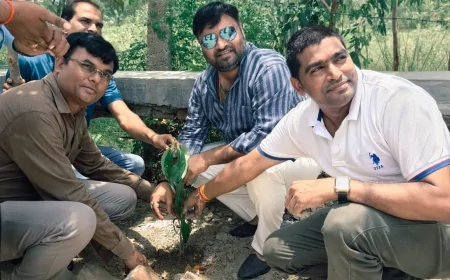
The diverse uses of soil in folk life confirm the foresight of our ancestors, which was done to introduce the future generation to the conservation and importance of soil. The tradition of worshipping the mother goddess during weddings, bringing soil from the field on Nag Panchami and sowing wheat in two baskets filled with soil, and the custom of filling a new pot with water and placing four small lumps of soil under it on Akshaya Tritiya were all part of recognizing the identity of the soil, its water retention and germination capacity, and connecting the family's young children to their native soil. The whitewashing and plastering of courtyards and doorways with red, yellow, and white soil was nothing but a manifestation of the intimacy of folk life with the soil. Bringing soil from the fields and ponds during the months of Baisakh and Jyeshtha and collecting it at home, and then, after the rains, during the months of Ashwin and Kartik, applying a thick layer of that soil mixed with cow dung and straw to the eroded courtyards and yards is a fragrant chapter of the mutual dependence of man and soil. However, the soil is suffocating due to the plastic sheets and disposable materials thrown in the fields. The trees standing on the embankments have been cut down and sacrificed to brick kilns and furniture factories. As a result, the soil is groaning under the scorching heat. On World Soil Day, we can give life to dying soil by planting trees, adopting plastic-free daily practices, organizing workshops, discussions, debates, speeches, and essay competitions on soil, and by cultivating a sense of respect for the earth. If the soil survives, we will survive, and with it will survive the profound importance and dignity of the earth in our lives, as well as health and prosperity.
What's Your Reaction?
 Like
0
Like
0
 Dislike
0
Dislike
0
 Love
0
Love
0
 Funny
0
Funny
0
 Angry
0
Angry
0
 Sad
0
Sad
0
 Wow
0
Wow
0