






















































































SHAME WILL BE ON KNOWLEDGE, NOT ON ENGLISH!
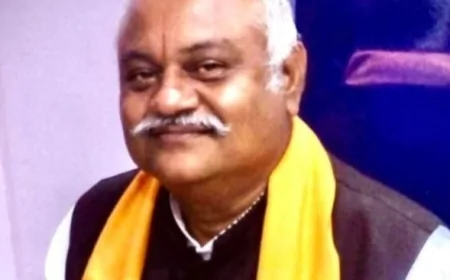
According to ‘Telegraph’, Amit Shah has said that people will soon be ashamed of speaking English; that is, according to us, people will be ashamed of their knowledge and ability to raise questions!

SHAME WILL BE ON KNOWLEDGE, NOT ON ENGLISH!
29-JULY-ENG 15


RAJIV NAYAN AGRAWAL
ARA--------------------------According to ‘Telegraph’, Amit Shah has said that people will soon be ashamed of speaking English; that is, according to us, people will be ashamed of their knowledge and ability to raise questions!


We will call this statement of his the dream of a dictator to form an ‘obedient society’. An ‘obedient society’ is a sadist society, where humanity is purged of morality. People are made robotic.
For robots, it is not mantras, but chants, and command-like signals that are important. The robotic man is also a rapist, because for him the body is important, the humanity behind it disappears.
Why is no language of India considered the ‘language of knowledge’ in the world, has Amit Shah ever thought about this?
The language of knowledge is that which makes a man doubtful, not self-absorbed; which descends from the abstractness of teaching to the concrete circumstances of life; In which teaching is not imposition but dialogue.
They will never know that the “language of knowledge” does not consider itself static; it modifies itself with the pace of life; it derives its legitimacy from experience rather than power. It is beyond their understanding that the crisis of language is actually the crisis of the disintegration of our culture; in a society in which the process of keeping the movement of the human mind outside itself through language and reacquiring it again and again stops, language becomes neither the language of knowledge nor of liberation.
It is no coincidence that not a single language of India has received the status of a global or national ‘language of knowledge’ today – neither in science, nor in philosophy, nor in sociology, nor in technology, nor in the discussions of justice. Today, no university takes higher research in Indian languages seriously. Technology, law, medicine, international policy – the language of all is English. Even morally educated parents want to keep their children away from Indian languages, especially Hindi medium. The main reason for this is not just the colonial legacy or the dominance of English, but within independent India itself, language was never allowed to consciously connect with inquisitiveness and self-development.
Why did languages like German, French, Japanese, Russian in the West become the languages of knowledge in their societies? Because the power, intellectual class and education policy there created the modern discourse of knowledge in those languages. Hegel, Kant, Heidegger etc. made German the language of philosophy. Jacques Lacan, Derrida Foucault etc. made French. In China, Mandarin included science, politics, technology – everything. Self-immersion was not done in the desire to be global.
In the words of Lacan, it is the lack of that culture (symbolic system) in which a society understands itself as a developing and thoughtful society.
In our country, language became the carrier of religious tradition or emotional nationalism, it could not play the role of any knowledge tradition. That is why Hindi or Tamil are not seen as languages of knowledge, but as languages of emotional identity.
Would Amit Shah want language to be a place for doubt, questions and controversy? As long as language remains a medium of devotion or pride, it cannot become a carrier of knowledge.
The reality of India today is that the ranking of press freedom has fallen to 159; the country has slipped to 107th position in the hunger index; where asking questions has become treason; and the government is proud of its own illiteracy by playing with ignorant communal slogans and statistics. All this is strongly opposed to freedom, inquisitiveness and discretion.
The truth is that the question of 'language' here is not just a question of linguistics, but also primarily a question of the soul of democracy.
What's Your Reaction?
 Like
0
Like
0
 Dislike
0
Dislike
0
 Love
0
Love
0
 Funny
0
Funny
0
 Angry
0
Angry
0
 Sad
0
Sad
0
 Wow
0
Wow
0