







































































REFUSAL TO TAKE COGNIZANCE OF THE ED’S CHARGE SHEET IN THE NATIONAL HERALD CASE IS SIGNIFICANT IN MANY WAYS: DEVANAND SINGH
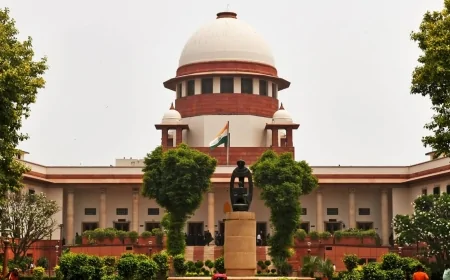
Last Tuesday, December 16, an order from the Rouse Avenue Court in Delhi became the focus of Indian politics and legal discourse. The court refused to take cognizance of the charge sheet filed by the Enforcement Directorate (ED) in the National Herald case. Technically, this was a procedural order, but its implications are far-reaching, ranging from the interpretation of the law to the functioning of investigative agencies and political accusations and counter-accusations.

REFUSAL TO TAKE COGNIZANCE OF THE ED’S CHARGE SHEET IN THE NATIONAL HERALD CASE IS SIGNIFICANT IN MANY WAYS: DEVANAND SINGH
19-DEC-ENG 17
RAJIV NAYAN AGRAWAL
ARA--------------------------Last Tuesday, December 16, an order from the Rouse Avenue Court in Delhi became the focus of Indian politics and legal discourse. The court refused to take cognizance of the charge sheet filed by the Enforcement Directorate (ED) in the National Herald case. Technically, this was a procedural order, but its implications are far-reaching, ranging from the interpretation of the law to the functioning of investigative agencies and political accusations and counter-accusations.


Immediately after this order, both ends of the political spectrum became active. The Congress party called it a judicial stamp on the misuse of the agency, while the Bharatiya Janata Party termed it merely a technical hurdle, making it clear that no one had received a 'clean chit'. But amidst this noise, the real question lies elsewhere: were the minimum legal conditions for initiating an investigation into a serious crime like money laundering met or not?
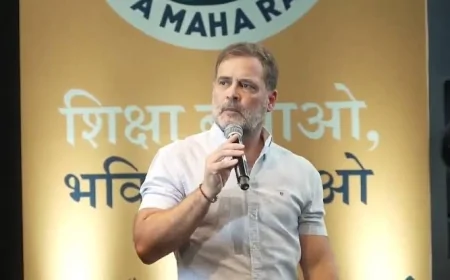
The National Herald case formally began in 2013 when senior BJP leader and former MP Dr. Subramanian Swamy filed a complaint in a lower court in Delhi. He alleged that the top leadership of the Congress, Sonia Gandhi, Rahul Gandhi, and others, had, under a well-planned conspiracy, transferred assets worth approximately Rs. 2000 crore of 'Associated Journals Limited' (AJL) to a company called 'Young Indian' for a mere Rs. 50 lakh.
AJL is the company that once published the National Herald newspaper, a newspaper founded by the country's first Prime Minister, Jawaharlal Nehru. This historical background made the case even more politically sensitive. In his complaint, Dr. Swamy leveled charges of fraud, criminal conspiracy, and breach of trust. In 2014, the court took cognizance of this complaint and ordered Sonia Gandhi, Rahul Gandhi, and other accused to appear before it. This criminal complaint is still pending in court today.
Parallel to this criminal complaint, in 2021, the Enforcement Directorate registered an Enforcement Case Information Report (ECIR) in this case. An ECIR is similar to a police FIR, but it is not made public.
The ED argued that the AJL-Young Indian deal involved the illegal acquisition of assets, which constitutes an offense under the Prevention of Money Laundering Act. Following this investigation, in April 2024, the ED filed a charge sheet in the Rouse Avenue Court, naming a total of seven accused, including Sonia Gandhi, Rahul Gandhi, Young Indian company, and its directors Suman Dubey and Sam Pitroda. Filing a charge sheet and the court taking cognizance of it are two separate processes. A charge sheet is the conclusion of the investigating agency, while cognizance is the formal step taken by the court to begin the trial. If the court refuses to take cognizance, the trial cannot proceed based on that charge sheet. The Rouse Avenue Court did exactly that.
The most important question before the court was whether the ED could initiate a money laundering investigation without an FIR. The defense argued that an investigation under the PMLA is only possible if a 'predicate offense' (the underlying crime) has first been registered as an FIR and is being investigated by the police. Conversely, Additional Solicitor General SV Raju, appearing for the ED, argued that since the court had taken cognizance of Dr. Swamy's complaint in 2014, a separate FIR was not necessary.
The court completely rejected this argument. The court clearly stated that there is a fundamental difference between a private complaint and an FIR registered by the police. The police have more extensive powers and resources for investigation.
The ED can only take action under the PMLA when the source of illegal income is revealed through an investigation based on an FIR registered by an agency. The court also highlighted that the ED's own annual reports acknowledge that the agency typically initiates money laundering investigations only after other investigating agencies have taken action.
The most interesting aspect of this judgment is that the court cited the ED's own internal correspondence and notings. According to the court, between 2014 and 2021, ED officials at various levels were of the opinion that a PMLA case could not be made out solely on the basis of Dr. Swamy's complaint. The ED had also acknowledged in a letter to the CBI in 2014 that money laundering proceedings were not possible in this case. The CBI did not register an FIR for 11 years. It was due to this 'hesitation' that the ED also did not register an ECIR until 2021. The court concluded that when the ED itself had long maintained that PMLA was not applicable in this case, filing a chargesheet later on the same grounds was not in accordance with due process.
Therefore, it is crucial to understand that the court did not say that no scam occurred in the National Herald case. The court did not comment on the merits of the allegations. The court's decision was solely on the limited question of whether the necessary legal procedure for prosecuting a money laundering case had been followed. The answer was—no. Interestingly, in October 2024, the Economic Offences Wing of the Delhi Police registered an FIR in this case. This could, in principle, provide the ED with a new basis. However, SV Raju clarified in court that this new FIR is not related to the existing chargesheet. Legal experts believe that this If the ED registers a fresh ECIR based on this new FIR, the court will have to decide whether it constitutes a case of double jeopardy, that is, being prosecuted repeatedly for the same offense.
The Congress is presenting this as a moral and political victory, while the BJP is calling it a temporary relief, but amidst these claims, the real question is institutional: are the investigating agencies free from political pressure?
Is the law being used within the bounds of due process? And are the courts now expecting stricter adherence to procedure from the agencies? This order from the Rouse Avenue Court indicates that the judiciary is now considering ‘process’ rather than ‘intent’ as decisive.
Overall, the National Herald case is not yet over. The trial on Dr. Subramanian Swamy's original complaint continues. The ED can appeal to the High Court. A new investigation is possible based on the new FIR, but this decision has established a fundamental principle: that there are no shortcuts in legal battles, no matter how political the case may be. This is the greatest legacy of this judgment.
What's Your Reaction?
 Like
0
Like
0
 Dislike
0
Dislike
0
 Love
0
Love
0
 Funny
0
Funny
0
 Angry
0
Angry
0
 Sad
0
Sad
0
 Wow
0
Wow
0