



























































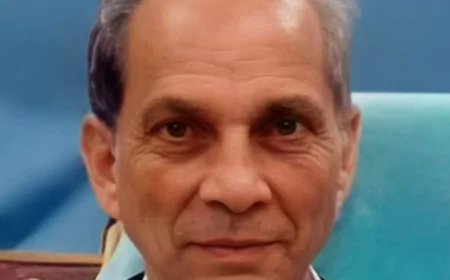



PRASHANT KISHORE IS A UNIQUE CHARACTER IN INDIAN POLITICS
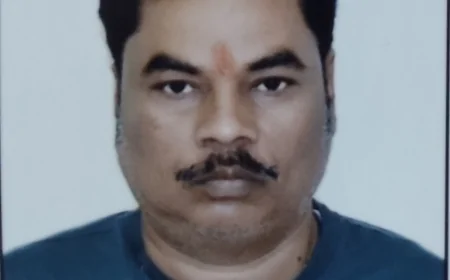
Prashant Kishor is a unique character in Indian politics. Neither a leader, nor a party chief, nor a government official, yet the way he has influenced the direction and discourse of electoral politics in the last decade is extraordinary. The story of his rise begins as a strategist who entered Narendra Modi's Gujarat election campaign in 2011 by forming a group called Citizens for Accountable Governance. The success of this experiment gave him national recognition, and the unprecedented victory of the Bharatiya Janata Party in the 2014 Lok Sabha elections established Prashant Kishor as the most sought-after electoral brain in Indian politics.

PRASHANT KISHORE IS A UNIQUE CHARACTER IN INDIAN POLITICS
15-JULY-ENG 3


RAJIV NAYAN AGRAWAL
ARA---------------------------Prashant Kishor is a unique character in Indian politics. Neither a leader, nor a party chief, nor a government official, yet the way he has influenced the direction and discourse of electoral politics in the last decade is extraordinary. The story of his rise begins as a strategist who entered Narendra Modi's Gujarat election campaign in 2011 by forming a group called Citizens for Accountable Governance. The success of this experiment gave him national recognition, and the unprecedented victory of the Bharatiya Janata Party in the 2014 Lok Sabha elections established Prashant Kishor as the most sought-after electoral brain in Indian politics.


But his role was not just that of a technical strategist. He understood and presented politics as a kind of branding and consumer product. The ideology, policies, or long-term commitment of workers of a political party are not central to his model. His emphasis is on how to capture the superficial layers of data, surveys, and public sentiments and present the candidate and the party in a form that matches the immediate expectations and sentiments of the public. This approach, on the one hand, challenges the intellectualism of traditional politics, while on the other hand it limits the discourse on democracy to 'management' and 'performance'.
Prashant Kishore formulated the strategy for the success of the 'mahagathbandhan' for Nitish Kumar in 2015, which succeeded in stopping the BJP in Bihar. After this, he also formulated strategies for opposing parties like Congress, AAP, Trinamool, YSR Congress, DMK, and even Shiv Sena. It is also noteworthy that Prashant Kishore's clients have been parties of almost every ideology - from the right-wing BJP to secular left-leaning parties. This makes it clear that he has no ideological inclination, but rather works for 'client service' and 'electoral victory'. His company 'I-PAC' i.e. Indian Political Action Committee was formed for this purpose.
The biggest feature of his politics is: ideology-less, data-based management-policy. He frames issues in such a way that public sentiments emerge, whether those issues have a long-term solution or not. For example, in campaigns like 'Baat Bihar Ki' and 'Jan Suraj', he raised issues like caste, unemployment, and development, but there was less of a framework for solutions and more of an effort to rehabilitate himself politically. He used the Jan Suraj campaign as a ladder to enter politics.
The special thing about Prashant Kishor's strategy is that he senses the weakness of local level leaders and the policy laxity of the parties. He knows that most of the political parties in India have become ideologically hollow and do not have long-term training or the tendency to stay connected with the public. He enters this void - with his team, surveys, slogans and social media strategy. He explains to the leaders how electoral victory is possible - without a ground movement, without an ideological fight, only through 'image management'. This model is an attempt to apply capitalist 'product management' in politics.
But this is also the biggest weakness of this strategy. It considers the public only as voters, not citizens. She considers society as a 'target audience', not an active participant. This is the reason that in whichever parties she adopted, she brought immediate success there, but long-term mass organization or ideological unity was not created. Whether it is the Congress government in Punjab or the return of Mamata Banerjee in Bengal - Prashant Kishore's strategy played an important role in all these, but after coming to power, no solid alternative politics emerged. This is because Prashant Kishore's politics is the politics of immediate victory - it is not connected to ideology, movement and deep struggles of the society.
Today, when he is engaged in creating his own political ground in Bihar through 'Jan Suraj', it will be interesting to see how much of that ground will be ideological, how much organizational, and how much just management-centric. So far Jan Suraj seems like a confused experiment - neither a full-fledged party, nor a mass movement, nor a social movement, nor a clear ideological document. This shows that Prashant Kishore claims 'bottom-up' politics, but his background and working style is 'top-down' i.e. politics of ideas and images imposed from above.
I have no confusion in understanding where Prashant Kishor's political mind works from. He does not grasp the complexities of society, but the superficial emotions of the society. He does not do politics of system-change, but politics of selling the system afresh while staying within it. His mind is like a laboratory in which the chemical composition of public sentiments is changed in such a way that any leader, idea and party becomes a saleable product.
If any political party wants an effective counter to Prashant Kishor's politics, then it will have to go deeper than the election strategy and establish a dialogue with the consciousness of the society. Prashant Kishor solves politics like a marketing problem - but the solution to this is not just better publicity, but in building a better ideological foundation, strong organizational structure and a lively, dialectical relationship with the public. I know on which principles his politics runs, how he brings emotion, aspiration and confusion to power by combining them in a single brand. That is why if any party wants a counter to him, then it will have to do it. If you want, I can tell you how not only Prashant Kishore's strategy can be neutralised, but the public can also be connected more deeply.
I do not claim that I am the only one who can understand this. If anyone understands that chapter of global politics and philosophy - where the relationship between propaganda and power is not a mere technical relationship but a sign of a deep ideological rift - then he will also understand. From there we come to know how images start covering reality, and how the most dangerous enemy of democracy is the one who convinces the public that there is no such thing as an alternative left.
What's Your Reaction?
 Like
0
Like
0
 Dislike
0
Dislike
0
 Love
0
Love
0
 Funny
0
Funny
0
 Angry
0
Angry
0
 Sad
0
Sad
0
 Wow
0
Wow
0