




























































NOW FEAR OF FOREIGN NAMES IN VOTER LISTS
As was expected, the real game behind the revision of voter lists in Bihar has started peeking out from behind the curtain. It has started with the claims that the information received from door-to-door visits during the revision of voter list has revealed that a large number of names of Nepalese, Bangladeshis and Myanmarese people are in the voter list.

NOW FEAR OF FOREIGN NAMES IN VOTER LISTS
16-JULY-ENG 12


RAJIV NAYAN AGRAWAL
ARA--------------------------As was expected, the real game behind the revision of voter lists in Bihar has started peeking out from behind the curtain. It has started with the claims that the information received from door-to-door visits during the revision of voter list has revealed that a large number of names of Nepalese, Bangladeshis and Myanmarese people are in the voter list. Of course, till now this alleged information has come to the media only as information coming from 'sources' present in the Election Commission. The Election Commission itself has neither formally made any such statement nor made any such claim. However, the scale on which these news have appeared in the media and in fact everywhere, makes it clear that this is not a matter of suppressed information, which has been exposed by some isolated sources and has come to the hands of this or that media institution. On the contrary, this is a case of news being planted on a large scale by the Election Commission itself in the name of 'sources'. It is no secret that the Election Commission, having settled into the general work culture of opaqueness of the Modi regime, has also minimized its communication with the public through the media and directly with the political parties, forgetting the demands of maximum transparency of its independent role. Like the Modi regime, now the Election Commission also holds fewer press conferences and meetings with the political parties, the main stakeholders of the election process, and resorts to planting news in the name of 'sources' as much as possible. The same is happening in the case of propaganda about the presence of a large number of foreigners in the voter lists.


Needless to say, this is a game of creating a public perception and promoting it to the maximum. In this game, such propaganda in the name of 'sources' is particularly helpful, as the institution whose name is used to make it credible does not need to do anything to support or refute it and in this way, in fact, it is helping in the formation of this perception with silent approval. This is also being helped in a significant way in the sense that there is no one to take responsibility for answering questions and investigating this news, which should really be called a rumour. For example, in connection with the notion of ‘a large number of names of foreigners in the voter list’, which the entire propaganda system associated with the ruling Sangh-BJP is engaged in spreading vigorously, neither will there be any answer as to how much this ‘large number’ is, nor will there be any answer as to how the officials got this information while going door-to-door? How did the lower level officials, mostly school teachers playing the role of BLOs, who allegedly went door-to-door, know, through what kind of investigation did they come to know that many names included in the voter list are actually of foreigners?
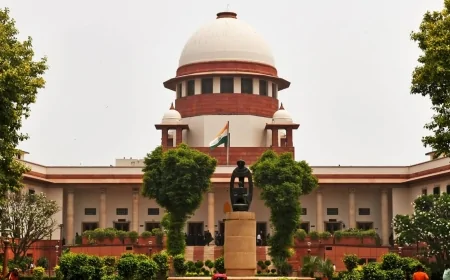
On the other hand, to these rumours being spread in the name of ‘sources’, another rumour has been added in the name of the Commission that these names will be removed from the final voter list. How? There is no answer to this question either, although it is being said in a roundabout way that the names will be removed ‘after investigation’. But, as has been forcefully underlined in the legal challenges to the ongoing revision process in Bihar in the Supreme Court and with which the court also seems to have agreed, verification of citizenship does not come under the purview of the Election Commission. In such a situation, the Commission cannot make the verification of citizenship the basis for adding/removing names from the voters' list in any form. But the purpose is not so much to remove names as to raise the fear of foreign infiltration.
Two purposes of this game can be easily identified. The first is that what was being feared from the very beginning, that the purpose of this entire process of special intensive revision of the voter list is to exclude a significant number of legitimate voters from these lists in the name of cleaning up the voter lists, may be being justified in this way. And since the method of this revision has been designed in such a way that it will hit the rural and urban poor, people of weaker sections/castes, less educated people, minorities and women the most, while it will hit the rich, educated, upper castes the least, this 'cleaning' of the voter lists will objectively help the ruling party, which has relatively less support from the deprived and relatively more support from the empowered. The Election Commission may also have an extra interest in all this because at the end of this process, the elimination of a significant number of voters, which is inherent in this process itself, will not only be justified in the name of elimination of 'foreigners', but the Commission, instead of answering for the shortcomings of its method of voter list revision, as evidenced by the elimination of so many names, will also be able to pat itself on the back for allegedly protecting the country's democratic system from foreigners. Remember that the 'news' of foreign names in the voter list has gained momentum especially when, despite the mainstream media becoming the mouthpiece of the Election Commission just like the government, many courageous independent journalists have exposed the truth that the Election Commission, in its haste to make this impossible revision possible within the stipulated time frame, has set aside all the rules and regulations made by itself at the ground level. This has led to a situation of huge rigging and arbitrariness in the voter lists.
There is a connection. Avoiding questions through such diversionary tactics has become an integral part of the current ruling culture.
The second objective is even more straightforward. Raising the fear of the threat of foreign infiltration is a major arrow in the quiver of the current rulers. A major basis for the prominence of this arrow is that 'foreigner' can easily be made synonymous with 'Muslim' and thus the 'threat of foreign infiltration' can easily be made a weapon of anti-Muslims. In the 11 years of the Modi regime, and especially since the time of the 2024 general elections, there has been a special increase in anti-Muslim propaganda, and since the results of the general elections, the current ruling forces have been particularly fanning the fear of Muslim infiltrators. In the Jharkhand assembly elections, every possible effort was made, even at the level of the Prime Minister, to raise the issue of Bangladeshi infiltration, although the people of Jharkhand rejected it. Now, for the Bihar elections and beyond that, especially for the assembly elections in Assam and West Bengal to be held early next year, efforts are being made to raise the specter of Bangladeshi infiltration. However, the reach of this game is universal. That is why, in the last few months, from the capital Delhi to Mumbai and in many other parts of the country including Odisha, Bengali-speaking Muslims are being specifically targeted in the name of catching the alleged infiltrators.
Meanwhile, again, reports have started coming in from sources that the Election Commission has started taking steps for a special in-depth review on a national scale, just like Bihar. Naturally, the opposition parties have criticized the Election Commission's haste and said that it should have waited for the decision on the challenges pending in the Supreme Court for this process. These petitions are likely to be heard in the Supreme Court on July 28. Remember that the Supreme Court is not only considering the issue of scheduling of the special in-depth revision of Bihar, but also the issues of the procedure adopted for it and the jurisdiction, which are relevant in the context of this all-India effort. Not only this, as former Election Commissioner Lavasa has pointed out in one of his articles - the division of all voters into two categories on the basis of the 2003 voter list and similarly, the division of voters into categories on the basis of their dates of birth is also not going to be easily digested by the court.
What's Your Reaction?
 Like
0
Like
0
 Dislike
0
Dislike
0
 Love
0
Love
0
 Funny
0
Funny
0
 Angry
0
Angry
0
 Sad
0
Sad
0
 Wow
0
Wow
0