







































































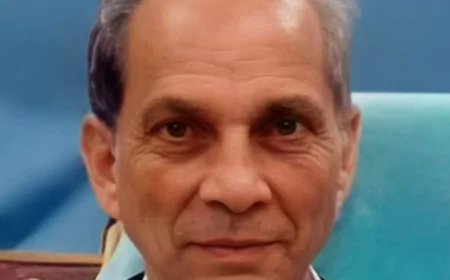



KNOWLEDGE OF SANSKRIT IS ESSENTIAL TO PROTECT CULTURE: JIYAR SWAMI
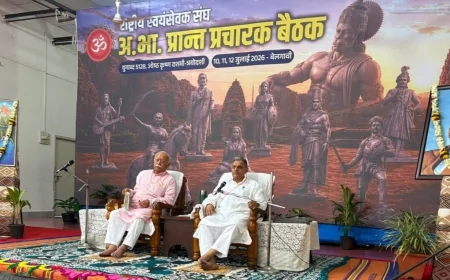
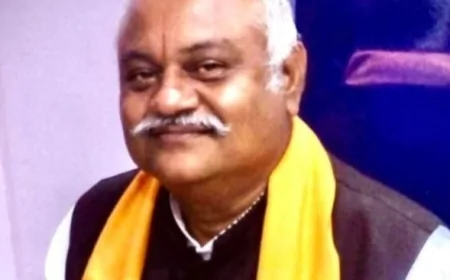
At the Paramanpur Chaturmasya fasting site, India's great sage, Saint Shri Lakshmiprapanna Jiyar Swami Ji Maharaj, said that knowledge of Sanskrit is the fundamental duty of saints, sages, and sages. Sanskrit is not just a language; it is also the voice of God; Sanskrit is the voice of the Vedas. Sanskrit was invented by God. Sanskrit is the mother of culture. Without Sanskrit, the culture of human life cannot be complete. No matter how many different languages there are in the world, we all use them in our daily lives. But when it comes to worship, recitation, and chanting mantras according to Vedic tradition, Sanskrit, the divine language, is the best language for it.


KNOWLEDGE OF SANSKRIT IS ESSENTIAL TO PROTECT CULTURE: JIYAR SWAMI
18-SEP-ENG 16


RAJIV NAYAN AGRAWAL
ARA------------------------- At the Paramanpur Chaturmasya fasting site, India's great sage, Saint Shri Lakshmiprapanna Jiyar Swami Ji Maharaj, said that knowledge of Sanskrit is the fundamental duty of saints, sages, and sages. Sanskrit is not just a language; it is also the voice of God; Sanskrit is the voice of the Vedas. Sanskrit was invented by God. Sanskrit is the mother of culture. Without Sanskrit, the culture of human life cannot be complete. No matter how many different languages there are in the world, we all use them in our daily lives. But when it comes to worship, recitation, and chanting mantras according to Vedic tradition, Sanskrit, the divine language, is the best language for it.


To govern human life, the government has enacted a constitution and numerous other laws and regulations. Similarly, the rules, regulations, and articles governing this entire world and universe have been created by the Supreme Being, God, whose language is Sanskrit. Therefore, if you do not know, understand, or study Sanskrit, you will not be able to learn the dignity, method, lifestyle, and values of human life. This is why, especially those who consider themselves saints, mahatmas, and sages must have knowledge of Sanskrit.
6,000 years ago, when history, Puranas, Vedas, and Upanishads existed in the form of Shruti (sentences), or simply by hearing, they were written down by Vyasa. After this, the Vedas, Puranas, history, and Upanishads exist today in written form. But if you do not know Sanskrit, how will you understand the meaning of the verses written in the Vedas, Puranas, history, and Upanishads? Therefore, there should be no controversy over Sanskrit. A saintly Mahatma should be able to read, speak, write, and understand Sanskrit.
It is said that there were no scholars before Adi Shankaracharya. But this is completely incorrect. Because even before Adi Shankaracharya, there was a scholar named Kumarila Bhatta. He worked hard to establish the Vedic tradition and culture. Kumarila Bhatta was once walking through the streets of Varanasi when the daughter of the King of Kashi was crying. Kumarila Bhatta asked the King of Kashi, "Sister, why are you crying?"
He said that there was no one to carry forward the Vedic tradition. Who would make the effort to organize religion, values, and culture in society? Kumarila Bhatta received education from Buddhists and defeated them in a debate. After this, Kumarila Bhatta became a great scholar. Later, he regretted that he had done wrong by defeating the gurus from whom he had received his education.
He was about to leave his body after reaching Prayagraj. Meanwhile, the first Adi Shankaracharya of Kerala was also there. He also considered himself a great scholar. He was looking for the greatest scholar with whom he could defeat in a debate. Adi Shankaracharya arrived in Prayagraj. He asked Kumarila Bhatta for a debate, but Kumarila Bhatta refused. He said, "One of our disciples lives in Shahabad district of Bihar, named Mandana Mishra. You should go and debate with him."
Adi Shankaracharya arrived at Mandana Mishra's village. He spoke a sentence in Sanskrit and asked some women where Mandana Mishra lived. The women, understanding Sanskrit, responded in Sanskrit. It is said that even in the past, women were educated and knowledgeable in Sanskrit. Women are not educated today.
Adi Shankaracharya arrived at Mandana Mishra's home. The two men debated, in which Mandana Mishra was defeated. His wife said, "Maharaj, a husband and wife run the household together. We are in the household. The wife is half of the husband. That is why, so far, you have defeated my half. Meaning, you have defeated the husband." You haven't completely defeated us yet. You should debate with us. When Adi Shankaracharya began questioning Mandana Mishra's wife, Mandana Mishra's wife defeated Adi Shankaracharya.
Because Adi Shankaracharya was a celibate, he lacked experience in the questions Mandana Mishra's wife asked. He said, "I need some time to answer your questions." Such great Sanskrit scholars were not only men but also women. Therefore, knowledge of Sanskrit, especially for those who consider themselves saints, should be a must.
According to the Srimad Bhagavata Katha, the dynasty into which Lord Krishna was born was called the Chandravanshi dynasty. The first of the Chandravanshi dynasty was King Pururavas, son of the Moon. King Pururavas was such a powerful and handsome king that he was even talked about in heaven. Once, Urvashi, the most beautiful nymph in heaven, approached King Pururavas and proposed marriage, setting a condition. King Pururavas agreed.
Urvashi's condition was that she would only see him without clothes when she was with him within the bounds of lineage. Beyond that, if she ever saw him without clothes, she would abandon him. Her second condition was that she had a lamb and that lamb must never go missing. "Yes. If I get lost, I will abandon you." King Pururavas agreed to Urvashi's condition. Urvashi and King Pururavas had several children, including Ayu, Shrutayu, Shatayu, Ray, Vijay, and Jai.
Once, Indra, the king of gods, came to earth searching for Urvashi. He saw Urvashi's lamb and took it away. Hearing the lamb's call, King Pururavas was asleep. He suddenly woke up and went to check. At that time, he was without clothes. Urvashi also came at the same time. When Urvashi saw Pururavas without clothes, she immediately abandoned him and returned to heaven.
After this, King Pururavas became sad due to Urvashi's grief. After this, Pururavas' eldest son became King Ayu. Later in their lineage, the sage Jahnu was born, who was very powerful. In the lineage of Sage Jahnu, King Kushamu was born. In his lineage, King Gadi was born, a very powerful and mighty king. This same King Gadi's son was Sage Vishwamitra.
Parashuram was also born in this lineage. King Sahastrarjuna was also born in the Chandra dynasty. In the lineage of Pururava, a king named Ugyasava was born. His wife's name was Madalasa. Queen Mother Madalasa taught her son Alakh about politics, religious ethics, social ethics, and many other principles. He gave six teachings on ethics. Next in this lineage, King Nahusha was born, followed by Yayati, from whom King Yadu was born. In the name of this Yadu, Lord Krishna's lineage became known as the Yaduvanshi dynasty. In this Chandra dynasty, King Bharata, Sage Bharadwaj, and numerous other powerful kings were born.
What's Your Reaction?
 Like
0
Like
0
 Dislike
0
Dislike
0
 Love
0
Love
0
 Funny
0
Funny
0
 Angry
0
Angry
0
 Sad
0
Sad
0
 Wow
0
Wow
0