













































































HARIYALI TEEZ: ROOTS OF TRADITION AND BRANCHES OF MODERNITY
Hariyali Teej is not just a festival of makeup, swing and fasting, but it is a symbol of Indian woman's self-confidence, love and connection with nature. In the race of modernity, this festival may be becoming a medium of display, but its soul is still alive in the mind of woman, environment and folk culture. This festival gives the message of stability in relationships, harmony in society and bringing greenery in life. There is a need to live it again with simplicity, collectivity and sensitivity, so that tradition moves forward with modernity.

HARIYALI TEEZ: ROOTS OF TRADITION AND BRANCHES OF MODERNITY
27-JULY-ENG 11


RAJIV NAYAN AGRAWAL
ARA----------------------------Hariyali Teej is not just a festival of makeup, swing and fasting, but it is a symbol of Indian woman's self-confidence, love and connection with nature. In the race of modernity, this festival may be becoming a medium of display, but its soul is still alive in the mind of woman, environment and folk culture. This festival gives the message of stability in relationships, harmony in society and bringing greenery in life. There is a need to live it again with simplicity, collectivity and sensitivity, so that tradition moves forward with modernity.


As soon as the name of Hariyali Teej is taken, a picture emerges in front of the eyes - fields wearing green dupatta, earth wet with raindrops, swinging girls, hands decorated with mehndi and the melodious echo of folk songs. But this picture now remains only in memory, because the fast pace of modernity has diluted the colors of traditions. Still, Hariyali Teej is still deeply embedded in the minds of Indian women. This festival today holds special importance not only in religious or traditional terms but also in social, mental and cultural contexts.
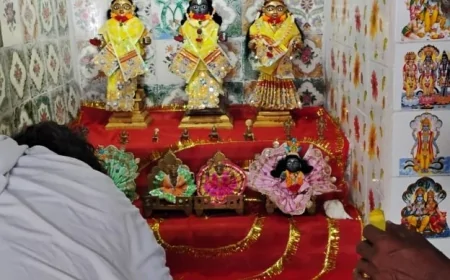
Hariyali Teej is a major festival celebrated in the rainy season, which is celebrated by married women in memory of the reunion of Shiva-Parvati. It comes on the third day of the Shukla Paksha of the month of Shravan, when the sky is filled with clouds and greenery spreads on the earth. The basic sentiment of Hariyali Teej is love, dedication, beauty and oneness with nature. Earlier, where this festival was celebrated collectively in villages and towns in the open environment, today its soul is getting lost somewhere in urban apartments, air-conditioned halls and the shine of social media.
The question is not whether the festival is being celebrated or not, the question is with what spirit are we celebrating it. Earlier, this festival used to be a natural opportunity to give women a little relief from the busyness
and hard work of the whole year, and to preserve their emotional world. Women used to meet each other in the natural environment without any pretense, share their joys and sorrows, weave their experiences in folk songs. But now this festival has been transformed into events like 'Best Makeup Competition', 'Teej Queen' and 'Selfie with Swing', where competition has taken the place of compassion.
Hariyali Teej highlights that side of the female mind which is connected to love, waiting and family dedication. In today's era when relationships are changing into quick communication and momentary emotions, then this festival gives the message of stability, faith and patience. This festival also teaches that relationships are not maintained only by rights, but by duty and emotion. Whether it is fasting for the long life of the husband or imagining marital relations like Shiva-Parvati, there is a feeling hidden in all these which makes a woman a symbol of self-confidence, not of sacrifice.
If seen in the modern context, this festival gives birth to many new meanings. While earlier Teej was limited to married women only, now in many places unmarried girls have also started celebrating it as a spiritual experience and collective culture. For working women, this festival is becoming a medium to connect with their existence and cultural identity. The same women, who sit in front of computer screens in offices all day, connect with nature for a few moments by swinging on the occasion of Teej. This connection is like an emotional healing in today's era of mental fatigue and stress.
But this journey of modernity does not bring only positive change. Teej has now become a 'social media event', where every woman has to dress up thinking that her photo should look the most beautiful. Trends like #TeejLook, #GreenDressChallenge and #TeejVibes on Facebook and Instagram fill the festival with glamour, but also hollow its soul. The festival has now become more involved in the competition of show-off than happiness of the mind. This is the reason that even after the festival is over, the mind is not satisfied, because that bonding, that togetherness, that intimacy is now limited only to pictures.
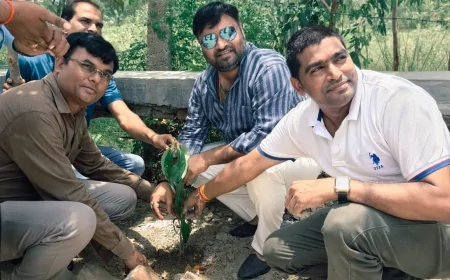
The most beautiful thing about Hariyali Teej was that this festival used to take us closer to nature. Swings in the fields, paper flowers hanging on trees, images of Shiva-Parvati made of clay - all these used to remind us that we are a part of nature. Today, when we are struggling with crises like climate change, global warming, deforestation and pollution, then festivals like Teej can give us the consciousness of environmental protection. If the tradition of planting a tree is started on every Teej, if children are taught to love trees along with swinging, then this festival can become an environmental movement, not just a religious one.
Women used to sing folk songs on Teej, which contained the pain of a woman, her hopes, her laughter, and her dialogue with society. Today those folk songs have become mobile ringtones or are limited to YouTube views. We need to bring these songs back to life. We need to weave the voice of women back into her language, her melody, and her folk music. If we really talk about women empowerment, it is important to revive these cultural platforms because they provide women with the most natural platform for self-expression.
Today, when women are participating in every field of education, service, politics and science, it is necessary that festivals are also accepted in their new forms. Teej should not be limited to traditional makeup and fasting, but it should be linked to self-reflection, cultural dialogue and social consciousness. Teej should not be a festival celebrated only within the four walls of the house, but it can become an opportunity for women's awareness, environmental protection, folk culture preservation and social dialogue. If a woman plants a tree on Teej, distributes food to malnourished children, conducts a dialogue against domestic violence, then she can give a new consciousness to this festival.
Urbanization and consumerism have turned our festivals into gifts, expensive lehengas and Instagram-worthy decorations. Teej has now become the center of readymade garments, beauty parlors and 'fashion show with swing theme'. We are forgetting that the beauty of this festival was in its simplicity - the green dupatta woven by mother's hands, the swing decorated by sister, the mehndi given by the neighbor. This simplicity made the festival a celebration, this intimacy made it alive. If we do not give up simplicity and intimacy while adopting modernity, then this festival can become more prosperous.
Hariyali Teej is the poem of the woman's mind, which she writes on the pages of nature every year. This festival tells us that a woman is not just a symbol of sacrifice, but is also the power of creation. When she swings, she does not just enjoy, she communicates with time - with the past moments, with the coming tomorrow. When she worships Shiva-Parvati, she does not just perform religious deeds, she recognizes the energy, dedication and power within herself. And when she wears green clothes, she does not just adorn herself, she embraces the greenery of life.
Therefore, there is a need to connect Hariyali Teej with its soul again. Make tradition and modernity companions, not opposing poles. While cherishing traditions, make the new generation understand that a festival is not just an occasion to wear clothes and get photographed, but is a name for living the basic values of life. If we understand this feeling of Teej, then this festival can make our society even more beautiful, inclusive and sensitive.
What's Your Reaction?
 Like
0
Like
0
 Dislike
0
Dislike
0
 Love
0
Love
0
 Funny
0
Funny
0
 Angry
0
Angry
0
 Sad
0
Sad
0
 Wow
0
Wow
0