

























































CHANGING MEANING OF RAKSHABANDHAN: FROM TRADITION TO MODERNITY
The thread of Rakshabandhan is not tied only on the wrist, but on the heart. It is a promise – of staying together, of protection, and of understanding without saying. There is an innocent prayer in the sister's rakhi that is not expressed in words, and there is a resolve in the brother's eyes that gives courage to fight every challenge. No matter how much time changes, no matter how much the distance is, this thread brings back the warmth of relationships every time. Rakshabandhan is not a festival, it is a feeling – which connects us every year.

CHANGING MEANING OF RAKSHABANDHAN: FROM TRADITION TO MODERNITY
9-AUG-ENG 36


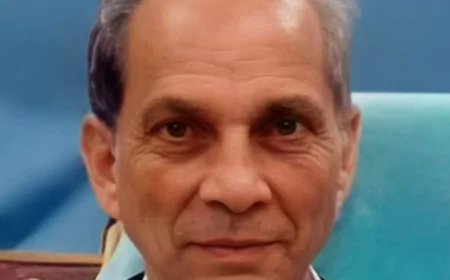
RAJIV NAYAN AGRAWAL
ARA--------------------------The thread of Rakshabandhan is not tied only on the wrist, but on the heart. It is a promise – of staying together, of protection, and of understanding without saying. There is an innocent prayer in the sister's rakhi that is not expressed in words, and there is a resolve in the brother's eyes that gives courage to fight every challenge. No matter how much time changes, no matter how much the distance is, this thread brings back the warmth of relationships every time. Rakshabandhan is not a festival, it is a feeling – which connects us every year.


India is a country full of diversity, where every festival not only symbolizes religious faith, but also strengthens social and cultural relationships. One of these special festivals is Rakshabandhan, which symbolizes the sweetness, love and protection of the brother-sister relationship. But with changing times, society, technology and thinking, the meaning of Rakshabandhan is also changing. This change is not limited to rituals, but can also be clearly seen in the soul of this festival, its purpose and its social context.
Raksha Bandhan is deeply rooted in Indian history, mythology and social traditions. Whether it is the story of Draupadi and Shri Krishna or the Rakhi sent by Queen Karnavati to Humayun, this festival has always been a symbol of a moral pledge between the protector and the protected. In earlier times, Rakhi was limited only to the blood relationship of brother and sister. The sister would tie a Rakhi on the brother's wrist and the brother would promise to protect her throughout his life. This relationship was full of affection, trust and dedication.
Now the scope of Raksha Bandhan is not limited to blood relations only. Today many women tie Rakhi to their friends, colleagues, teachers, soldiers and even nature. This shows that “protection” is no longer the responsibility of a particular person, but has become a wider responsibility of social and emotional relationships. The most beautiful example of this is that now sisters also tell their younger brothers - “I will also protect you.” That is, the relationship of protection is no longer one-sided, it has become mutual.
Today technology has changed the equation of relationships. Earlier, one had to go to the post office to send a Rakhi, but now digital Rakhis, video calls, online gifting and virtual ceremonies are happening in just one click. Brothers and sisters living abroad may be far away now, but the tradition of tying Rakhi on video call, Tilak on the screen and digital sweets have created a new kind of feeling of connection. Some people may call it a lack of emotions, but the truth is that technology has also provided a means to bridge the distance.
Earlier, on Raksha Bandhan, the brother used to give sweets and gifts to the sister. This was a kind of expression of love. But now many sisters say - "Bhaiya, I don't want gifts, I want a little leisure, time, understanding." Today's sister is self-reliant. She wants emotional security, mental support and equal participation. Instead of gifts, transparency, communication and time have become more in demand in relationships.
In the olden times, the meaning of Raksha Bandhan was - "Brother will protect the sister." But today this definition is changing. Girls are also self-reliant today, they are helping their brothers, giving them mental and financial support. Rakshabandhan no longer says that only the brother will be the protector, but it shows that both brother and sister can become protection, support and inspiration in each other's life.
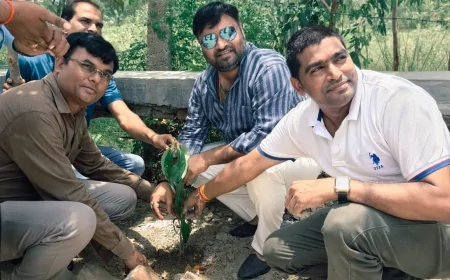
In today's time, Rakshabandhan is not only a festival of brother and sister, it has also become a symbol of protection of nature, social harmony and equality. In many places, the tradition of tying rakhi to trees has started - "Vriksha-Raksha Bandhan". Children and women are giving the message by tying rakhi to trees that we are committed to protect not only humans but also nature. Similarly, sending rakhi to soldiers shows that we are also emotionally connected with the heroes who protect the country.
Sisters are no longer just beggars of protection, but are also self-respecting, self-reliant and sensitive. In many families, sisters are helping their brothers financially, educationally or socially. This change indicates that Raksha Bandhan is now coming out of the mould of masculinity and femininity and is standing on the ground of human values and equality.
In today's busy life, the ways of expressing emotions may have changed, but their importance has not diminished. Brothers and sisters now remain supportive in each other's lives throughout the year, not just on the day of Rakhi. Raksha Bandhan is an excuse to relive those relationships, which sometimes had fights, sometimes sweetness, sometimes anger and sometimes immense affection. This festival reminds us that relationships are not made, they are maintained.
Today Raksha Bandhan is not limited to only Hinduism or Indian culture. This festival has now also become a symbol of communal harmony, national unity and social harmony. At many places, Muslim girls tie Rakhi to Hindu brothers, Christian children send Rakhi to soldiers - all this indicates that the pledge of protection is the pledge of humanity, not just of any religion, caste or community.
The changing meaning of Raksha Bandhan makes us understand that festivals are not just rituals, they are ideas, emotions. Today's Raksha Bandhan teaches us this: that protection is not one-sided, it is mutual. That relationships are not made of blood, but of emotions. That nature, society and country also deserve our protection. And that women can not only be protected, but also protectors. Raksha Bandhan is no longer just a festival, it is a philosophical viewpoint that says that society and relationships can survive only with love, dedication and equality.
What's Your Reaction?
 Like
0
Like
0
 Dislike
0
Dislike
0
 Love
0
Love
0
 Funny
0
Funny
0
 Angry
0
Angry
0
 Sad
0
Sad
0
 Wow
0
Wow
0