














































CHALLENGE: ALCOHOL PROHIBITION AND ITS DARK SIDE
It has been almost eight years since the implementation of alcohol prohibition in Bihar. The Nitish Kumar government had imposed a complete ban on the sale and consumption of alcohol in the entire state, calling it a big step towards social reform. But what was the effect of this law on the ground? Did it reduce crime? Or has another criminal world flourished in its name?

CHALLENGE: ALCOHOL PROHIBITION AND ITS DARK SIDE
13-JUNE-ENG 8
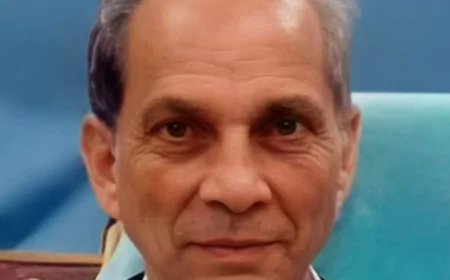
RAJIV NAYAN AGRAWAL
ARA--------------------------It has been almost eight years since the implementation of alcohol prohibition in Bihar. The Nitish Kumar government had imposed a complete ban on the sale and consumption of alcohol in the entire state, calling it a big step towards social reform. But what was the effect of this law on the ground? Did it reduce crime? Or has another criminal world flourished in its name?


When alcohol prohibition was implemented in Bihar in 2016, its intention was very clear – to make the society drug-free, to provide relief to women from domestic violence, and to save the youth from addiction. Initially, it also gave positive signs. But gradually the way the illegal liquor business increased, it brought the foundation of this policy itself under question.
Today the situation is such that alcohol prohibition has become less of a 'law' and more of an 'opportunity' - for criminals as well and to some extent for some parts of the system as well.
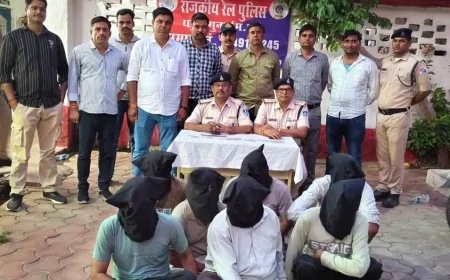
Due to prohibition in Bihar, the illicit liquor trade has turned into an organised crime. It is no longer confined to local distilleries but is linked to interstate networks. Alcohol is being smuggled in from Uttar Pradesh, Jharkhand, Bengal and even Nepal.
Villages where toddy and mahua were consumed earlier are now being supplied with illegal foreign liquor. This is no longer the work of “petty criminals” but of organised gangs – who have weapons, money and political connections.
The state has seen the deployment of brilliant IPS officers – such as Rajwinder Singh Bhatti, Vinay Kumar and Kundan Krishnan. These officers have set examples in crime control in their respective areas. Yet if they are not able to succeed fully in Bihar, it is a serious sign.
This makes it clear that the problem is not just of law enforcement but there are deep flaws in the entire administrative and political system.
Today, many say that “kidnapping cases have reduced in Bihar.” This is true, but incomplete. In fact, criminals have changed their methods, not their intentions. Rather than risky crimes like kidnapping, low-risk and high-profit crimes like alcohol smuggling, counterfeit liquor manufacturing, and drug supply, they are now choosing the path. This has changed the nature of crime in the state, but the number and level of organized crime has increased.
The debate has now intensified whether prohibition should be lifted in Bihar. If the government does so, its immediate impact could be extremely destabilizing.
Thousands of people who are involved in illicit liquor today – whether mafia, kiln operators, or delivery boys – will become unemployed in one go. And when the source of income is lost, the inclination towards crime becomes a social compulsion.
Mere law is not enough to make the policy of prohibition successful. This requires:
Technical surveillance system: Tracking the network with the help of drones, CCTV, mobile tracking and forensics. Honest administration: Coordination and corruption-free functioning between the police, excise department and local administration. Political will: Any decision – whether to end prohibition or strictly enforce it – should be taken above political gains. Preparation for the transition period: If prohibition is lifted, then arrangements for employment, rehabilitation and monitoring should be prepared in advance during that transition period.
What's Your Reaction?
 Like
0
Like
0
 Dislike
0
Dislike
0
 Love
0
Love
0
 Funny
0
Funny
0
 Angry
0
Angry
0
 Sad
0
Sad
0
 Wow
0
Wow
0