











































































ACCIDENT AT RELIGIOUS PLACES—WHEN WILL THE SYSTEM FINALLY WAKE UP?
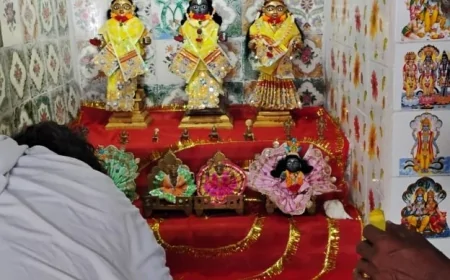
The tragic deaths in the stampede at the Venkateswara Swamy Temple in Srikakulam, Andhra Pradesh, have once again raised serious questions about our administrative structure, the sensitivity of governments, and the accountability of the system. Every time such a tragedy occurs, some lives are lost, some families are devastated, and some tears are shed—then the same rehearsed statements: "An investigation has been ordered," "Action will be taken against the culprits," "Compensation will be provided to the affected families," and then everything vanishes. The question is: how long will we continue to suffer from this negligence, this administrative lethargy, this fatal negligence, and this insensitive system? This is not the first incident of a stampede at a religious place, but regrettably, lessons are not being learned from past mistakes. The temple administration and the government are responsible for such tragic, ironic, and tragic incidents. Once again, the failure of crowd management has resulted in mourning for the devotees, creating a scene of screams, cries, and pain. The statements being made after this incident are like adding insult to injury for the victims.

ACCIDENT AT RELIGIOUS PLACES—WHEN WILL THE SYSTEM FINALLY WAKE UP?
4-NOV-ENG 20


RAJIV NAYAN AGRAWAL
ARA-----------------------The tragic deaths in the stampede at the Venkateswara Swamy Temple in Srikakulam, Andhra Pradesh, have once again raised serious questions about our administrative structure, the sensitivity of governments, and the accountability of the system. Every time such a tragedy occurs, some lives are lost, some families are devastated, and some tears are shed—then the same rehearsed statements: "An investigation has been ordered," "Action will be taken against the culprits," "Compensation will be provided to the affected families," and then everything vanishes. The question is: how long will we continue to suffer from this negligence, this administrative lethargy, this fatal negligence, and this insensitive system? This is not the first incident of a stampede at a religious place, but regrettably, lessons are not being learned from past mistakes. The temple administration and the government are responsible for such tragic, ironic, and tragic incidents. Once again, the failure of crowd management has resulted in mourning for the devotees, creating a scene of screams, cries, and pain. The statements being made after this incident are like adding insult to injury for the victims.


Religious sites are centers of faith, centers of energy, where people come to seek peace and devotion. But it's ironic that even at these sacred sites, people face untimely deaths. What happened in Srikakulam is not just an accident, but a systemic failure. The administration always throws up its hands in the towel on crowd management. There are no adequate barricades, no entry-exit balance, no adequate police force or volunteers to control the crowds, and no medical assistance. It's unfortunate that despite the increasing number of devotees at temples, festivals, and special occasions, there's no sign of preparedness. The Venkateswara Swamy temple in Srikakulam was reopened only a few months ago, and the state government stated that district officials were unaware of the situation. However, this does not absolve the responsibility for how a religious site was gathering in numbers far in excess of its capacity, yet the local police and administration remained unaware.
The statements of the government and temple management suggest that both sides are attempting to absolve themselves of responsibility for the incident. Hari Mukunda Panda, the Odisha-based architect who built the temple, claims that the railing on the stairs broke and caused the accident. However, this explanation is insufficient. The failure of devotees to find a way out after the stampede is a result of the administrators' negligence. There was only one entrance and exit to the temple, and even when the crowd grew beyond expectations, the police and administration were not informed. Panda's response is that no one is responsible for this incident, that it was an act of God. Such thinking is shameful in the scientific age of the twenty-first century. It's like mocking the suffering of those who lost loved ones. This incident is no exception, but rather the latest in a horrific series of incidents reported worldwide in recent years, where lapses in crowd control and the indifference of the administration and the government towards the public have led to dire consequences and tragedy. The mourning, chaos, and tragic scene in Srikakulam have not only exposed the security system's shortcomings but also exposed the inhuman face of the ruling and religious systems. Every time, there are talks of investigation, strict action, and learning, but the result is nothing short of a mere eyewash. Neither the government nor the administration is learning any lessons, nor is the public recognizing the need to exercise restraint and discipline. The continued series of stampedes also brings disrepute to the country internationally, as they send the message that the Indian government and administration are completely incapable of preventing stampedes. Stampedes in public places occur in other countries as well, but not to the extent they do in our country.
This is not the first incident. In the past, similar stampedes have occurred at several sites, including the Prayagraj Kumbh Mela, Ayodhya, the famous Mansa Devi Temple in Haridwar, Sabarimala, Vaishno Devi, Pulakeswaram, and the Deori Temple. It's worrying that no one seems willing to learn from past incidents. This is the third major accident in Andhra Pradesh this year alone. Several stampedes resulted in deaths in Tirupati in January and Simhachalam in Visakhapatnam in April. So far this year, 114 people have lost their lives in various stampedes across the country. Governments often talk about "learning," but the reality is that the ability to learn seems to have vanished from our system. It's not difficult to estimate crowds for religious events. Today is the age of technology, and modern systems like CCTV, drones, digital ticketing, and crowd-sensing systems are available. However, these are not utilized because, in the name of religion and faith, "management" is always left to chance. Unless an accident occurs, no official even bothers to visit the temple premises. And when it does, the politics of "press conferences" and "compensation" begins. This also raises a social question: has our faith become so blind that we ignore safety rules? Will maintaining discipline and order during religious events diminish our devotion? This deadly combination of anarchy, administrative laxity, and chaos in the name of faith must stop now. Governments should make crowd management a part of national policy. Permanent crowd control systems should be developed at every major religious site. It should have clear entry and exit routes, emergency exit gates, trained volunteers, medical teams, and ambulances. The local administration should conduct security mock drills regularly.
Why are we so indifferent to crowd management in the world's most populous country? To eliminate crowd bottlenecks at large-scale events, improving crowd management infrastructure, providing adequate training to security personnel, increasing public awareness, and utilizing modern technologies are now absolutely essential. What is needed today is not just compensation and investigations, but accountability. An investigation without answering questions like which officer was negligent, which department ignored security protocols, and why the crowd was left unchecked is dishonest. This Srikakulam tragedy is another warning. If governments don't wake up now, such incidents will only increase in the future, as religious faith is growing, but the management mindset remains the same. Crowds are not just numbers; they are life, they are family, they are hope. When they are crushed, it's not just an accident, it's a symbol of governance failure and government negligence. Whether it's the tragedy at Tamil cinema superstar Thalapathy Vijay's rally in Karur, Tamil Nadu, or the Srikakulam incident, mistakes are being repeated again and again. Instead of learning lessons after accidents, responsible individuals and organizations seek cover. Governments must understand that crowd management is a necessity for a country like India. Announcing compensation can alleviate the situation, but accountability must be established and negligence must be punished. Will this call still not reach the authorities?
What's Your Reaction?
 Like
0
Like
0
 Dislike
0
Dislike
0
 Love
0
Love
0
 Funny
0
Funny
0
 Angry
0
Angry
0
 Sad
0
Sad
0
 Wow
0
Wow
0