













































































WHO GET BENEFITS OF SUBSIDY?
It is repeatedly argued that giving concessions to industrialists is necessary for the development of the country. But whose development? Of those rural areas where drinking water is still not available? Of those government schools where the appointment of teachers is pending for years? Or of those health centers where there is such a rush of patients that the turn of the last man does not come.

WHO GET BENEFITS OF SUBSIDY?
2-JULY-ENG 3


RAJIV NAYAN AGRAWAL
ARA-------------------------It is repeatedly argued that giving concessions to industrialists is necessary for the development of the country. But whose development? Of those rural areas where drinking water is still not available? Of those government schools where the appointment of teachers is pending for years? Or of those health centers where there is such a rush of patients that the turn of the last man does not come.


The biggest theoretical question is this - is the state the protector of the rights of the people, or the broker of the expansion of capital? When railways, airports, minerals, banks, insurance, everything is gradually being handed over to a favorite special corporate group, then it becomes necessary to think in which direction the system is moving.
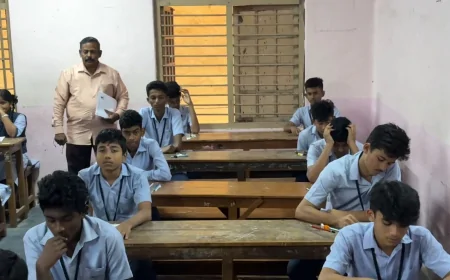
It is also often claimed that privatization will increase efficiency. But no one asks whether public institutions were not deliberately weakened? Weren't railway passenger coaches deliberately kept dirty, so that the public itself says that it should be handed over to private hands? Weren't government schools kept suffering from shortage of teachers and unavailability of resources, so that the market of private schools flourishes?
In India, the word ‘subsidy’ has been made derogatory for the poor – questions are raised on scholarships, Parliament is heated up over farmer loan waivers, there is no debate on the price of gas cylinders but the abolition of subsidies is called a reform. On the other hand, reduction in corporate tax, concession on land acquisition, privatization of contracting in government schemes – all these are considered normal things, there is no political uproar over them.
Another question that arises is whether the aim of the state is to bring economic equality or to concentrate economic power? When on the one hand unemployment in the country is at a historic level, and on the other hand some capitalists are doubling their wealth every year, then this inequality can be possible only with the silent approval of the state.
This becomes even more dangerous in the context of India because here democracy has become just an electoral process – there is no direct participation of the public in policy-making. Neither the farmers are asked what their needs are, nor the workers are asked in whose interest the change in labor laws is. Decisions are imposed from the top, and only impacts reach down – often disastrous impacts. Public money is being used to advance the rich. And if someone says today that these capitalists are nothing without government support, he is not lying. Rather, he is summing up the truth in one sentence.
We need to accept that until governments do not make economic justice their central objective, until policy-making is not in the hands of the people, this game will continue – benefits to the rich, knowledge to the poor that work hard, one day you too can become Elon Musk!
The reality is that to become Elon Musk or Adani, one does not need any invention, but government grants and political access – and not every citizen gets that.
What's Your Reaction?
 Like
0
Like
0
 Dislike
0
Dislike
0
 Love
0
Love
0
 Funny
0
Funny
0
 Angry
0
Angry
0
 Sad
0
Sad
0
 Wow
0
Wow
0