

























































































RELIANCE’S DECISION IS NOT JUST A CORPORATE MOVE BUT ALSO A SIGNAL OF INDIA’S DIPLOMATIC STRATEGY: DEVANAND SINGH
-India's energy strategy appears to be taking a new direction once again amid international political pressures. The decision by Reliance Industries Limited, the country's largest corporate group, to stop importing Russian crude oil for its Jamnagar refinery is not just a business decision but an indicator of changing global dynamics. The turmoil in energy markets following the Russia-Ukraine war, the stringent sanctions imposed by the US and the European Union, and increasing diplomatic pressure on India have combined to create an environment in which both India's private and public sectors are now treading cautiously.

RELIANCE’S DECISION IS NOT JUST A CORPORATE MOVE BUT ALSO A SIGNAL OF INDIA’S DIPLOMATIC STRATEGY: DEVANAND SINGH
29-NOV-ENG 10
RAJIV NAYAN AGRAWAL
ARA-----------------------------India's energy strategy appears to be taking a new direction once again amid international political pressures. The decision by Reliance Industries Limited, the country's largest corporate group, to stop importing Russian crude oil for its Jamnagar refinery is not just a business decision but an indicator of changing global dynamics. The turmoil in energy markets following the Russia-Ukraine war, the stringent sanctions imposed by the US and the European Union, and increasing diplomatic pressure on India have combined to create an environment in which both India's private and public sectors are now treading cautiously.


The implications of Reliance's decision must be seen at multiple levels: trade, diplomacy, energy security, and India's position within the legal framework of international sanctions. This move highlights the extent to which the decisions of superpowers in global politics influence global energy flows, and how emerging economies must balance their strategic interests.
Reliance Industries, India's largest importer of Russian oil, imports nearly half of its Russian crude oil shipments to India and processes it at its massive Jamnagar refining complex. This refinery not only supplies fuel to the domestic market but also leads in export-oriented production. Therefore, the new restrictions imposed by Western countries on the origin of fuel directly impact its operating strategy.
The European Union is going to ban the import of fuel products made from Russian crude oil from next year. Under these restrictions, refineries will have to increase their supplies from non-Russian sources to continue operating uninterrupted in the European and American markets. Reliance signaled that it does not want to jeopardize its export potential in global markets by changing its import patterns months before the rules come into effect.
The company also acknowledged that it had completed the process of reducing its dependence on Russian crude oil well ahead of schedule to ensure full compliance with European sanctions that will come into effect on January 21, 2026. Given the severity of the US sanctions, this decision appears to be a premature strategic move.
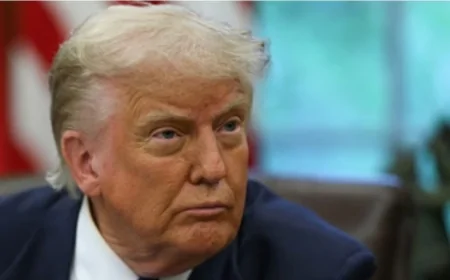
The White House has openly praised Reliance's decision. This stance by the US government is significant because the trade dispute between India and the US has deepened significantly over the past two years. President Donald Trump had described India's increasing energy and arms purchases from Russia as "activities that benefit Russia against Ukraine" and in response, imposed tariffs of up to 50 percent on India. This additional 25 percent of these tariffs were specifically applied to countries involved in energy or defense deals with Russia.
This aggressive US stance virtually stalled the pace of India-US trade talks. Despite India's repeated explanations that purchasing cheap Russian energy directly contributes to stabilizing global energy prices, the US did not show any flexibility in its position.
But now that India's major refining companies, particularly Reliance, are significantly reducing their purchases of Russian oil, the US stance appears to be softening. The White House not only welcomed this decision but also expressed hope that the pending trade talks between India and the US could pick up steam. This situation indicates that India's move is a major signal towards meeting US diplomatic expectations.
The unprecedented increase in India's oil imports from Russia proved to be an economic boon for India compared to before the war. While Russian oil represented only 2.5 percent of India's total purchases in 2022, this figure reached nearly 35.8 percent in 2024–25. The substantial discounts offered to Indian refineries not only helped keep domestic fuel prices in check but also made the export-oriented refining model more profitable.
But this increase was as economically beneficial as it was politically sensitive. Strict sanctions from the US and European countries and pressure on countries that provide energy revenue to Russia have complicated the situation for India. India has consistently argued that energy security is a top priority for any country and that Russia's concessional rates provided a stable option during wartime. However, this situation has not been sustainable under the pressures of global geopolitics.
In the past few months, both state-owned and private refineries have seen a sharp shift in import patterns. Reliance has reduced imports from sanctioned Russian companies by approximately 13 percent. Meanwhile, increases in imports from Saudi Arabia and Iraq by 87 and 31 percent, respectively, have highlighted the shift in Indian companies toward alternative sources. State-owned oil companies have also indicated a shift away from Russian crude oil for December contracts. This is partly due to financial institutions and insurance companies refraining from financing ships carrying Russian oil due to Western sanctions. All these developments have resulted in Russia's share in India's energy basket. It is gradually decreasing, and this change is not entirely voluntary, but a precautionary decision made in light of global pressures and potential future risks.
Experts believe that given India's rapid reduction in Russian imports, the US should remove the additional 25 percent tariff imposed on Indian goods. They argue that when the US fails to respond positively to India's goodwill, it weakens mutual goodwill and negatively impacts the progress of trade talks.
This is true, as US-imposed tariffs not only impact India's exports but also send a message that the US is not hesitant to use trade policy as a political tool. If India succeeds in convincing the US that it is respecting Western sanctions by changing the import patterns of Reliance and other companies, the prospects for progress in trade talks may improve. While reducing imports from Russia may be diplomatically beneficial, it could also prove economically challenging.
The heavy discounts offered by Russia appear to be gradually ending. This could impact both domestic fuel prices and refinery margins. India imports approximately 85 percent of its oil from abroad. Therefore, the price and stability of alternative sources are always a concern.
Energy cooperation has been a major pillar of Russia-India relations. If Indian companies reduce imports, it could lead to a cooling in relations, although defense cooperation remains central to the two countries' relationship. Rising demand for Saudi and Iraqi oil could impact global prices, increasing financial pressure for India. After months of uncertainty, public recriminations in diplomacy, and a deadlock in trade talks, it now appears that tensions between India and the United States may be easing. Reliance's shift in imports is the signal the United States has been waiting for, though experts believe this is only the beginning. A real solution will come when the US lifts additional tariffs, breaks the impasse on the India-US trade deal, and both countries formulate a common strategy on energy security and global supply chain issues.
Overall, Reliance's decision is not merely a corporate move, but also a signal of India's diplomatic strategy. Reliance's decision to stop Russian crude oil is not merely a technical decision made due to global sanctions. It is also an attempt by India to address the changing geopolitical environment and reorient its energy diplomacy. While India seeks to improve trade relations with the US, it also seeks to avoid damaging decades-old relations with Russia. The next few months will reveal the benefits this move brings to the India-US trade negotiations and how India creates a new import balance to meet its energy needs. However, Reliance's move will undoubtedly mark a turning point in India's recalibration of its energy strategy under the pressure of diplomatic and sanctions pressure from global powers.
What's Your Reaction?
 Like
0
Like
0
 Dislike
0
Dislike
0
 Love
0
Love
0
 Funny
0
Funny
0
 Angry
0
Angry
0
 Sad
0
Sad
0
 Wow
0
Wow
0