















































PARLIAMENTARY UPROAR, GOVERNMENT’S ASSERTIVENESS AND QUESTIONS RAISED ABOUT THE OPPOSITIONS’S OBSTRUCTIONIST POLITICS: PM SAYS-NO DRAMA, ONLY DELIVERY
The winter session of Parliament began on December 1, 2025, and will continue until December 19. Before the start of the session, Prime Minister Narendra Modi gave a direct but clear message to the opposition. He said, "There should be delivery here, not drama. There should be talk about policy, not slogans, and that should be reflected in your intentions." He clearly stated that Parliament should focus on the country's development and policy issues, and not just on political rhetoric and disruptions.
PARLIAMENTARY UPROAR, GOVERNMENT’S ASSERTIVENESS AND QUESTIONS RAISED ABOUT THE OPPOSITIONS’S OBSTRUCTIONIST POLITICS: PM SAYS-NO DRAMA, ONLY DELIVERY
5-DEC-ENG 2
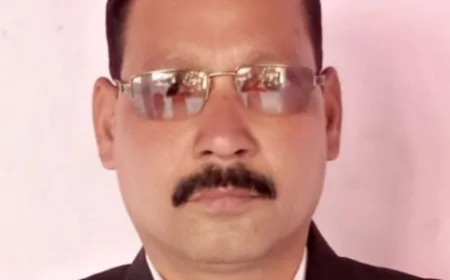
RAJIV NAYAN AGRAWAL
DELHI---------------------------The winter session of Parliament began on December 1, 2025, and will continue until December 19. Before the start of the session, Prime Minister Narendra Modi gave a direct but clear message to the opposition. He said, "There should be delivery here, not drama. There should be talk about policy, not slogans, and that should be reflected in your intentions." He clearly stated that Parliament should focus on the country's development and policy issues, and not just on political rhetoric and disruptions.


The session began, and the same thing happened that has become a habit for the opposition. There was a lot of uproar in the Lok Sabha regarding the SIR (Special Investigation Report). The House was adjourned for a day, and now there is apprehension that the opposition will create disruptions in Parliament because it is following its old pattern. The way the entire House walked out over the SIR issue in the last session is likely to be repeated in this session as well.
Disruptions and stoppages in parliamentary proceedings happen in parliaments all over the world, but continuously creating deadlocks in Parliament and creating problems even after reaching agreements in preliminary meetings has become the behavior of the Indian opposition. This pattern of the opposition is very old. Even after agreeing to cooperate in the all-party meeting, the opposition has already written the script to disrupt parliamentary proceedings.
In the last monsoon session, the opposition continued to create disruptions by making issues out of the Election Commission's process in Bihar, Operation Sindoor, and the statement of US President Donald Trump. In the July-August 2024 monsoon session, the Lok Sabha functioned for only 29% of the time and the Rajya Sabha for only 34%. In the winter session of 2024, productivity fell to 52% in the Lok Sabha and 39% in the Rajya Sabha. A total of 419 questions were included in the monsoon session of the 18th Lok Sabha, but due to continuous disruptions by the opposition, only 55 questions could be answered. The Congress opposition disrupted the 2023 budget session by raising the issue of the hit-job report published by Hindenburg Research against Adani, effectively wasting the entire session. Before the winter session of 2023, the opposition created a ruckus over Apple phone notifications. Apple's clarification dashed the opposition's hopes.
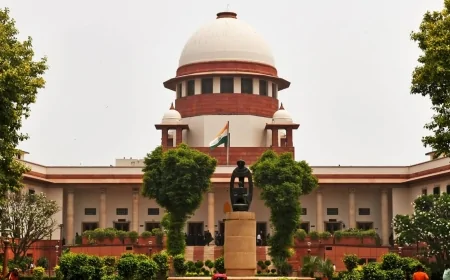
In 2021, before the monsoon session, a controversy erupted over the Pegasus story, with claims that the government was involved in snooping. This story later turned out to be false, but the parliamentary session was wasted. In 2021, Rahul Gandhi raised the alleged scam in the Rafale aircraft purchase. This was raised after some reports appeared in the foreign media. Parliamentary sessions in 2021 were tumultuous because of this. The baseless claims in the Rafale case did not hold up in Parliament or the Supreme Court, but parliamentary time continued to be wasted.
According to an estimate, running Parliament for one minute costs ₹2.5 lakh. This includes the salaries of MPs, electricity and water bills, and other expenses. Even if we consider the cost to be ₹2.5 lakh per minute today, hundreds of crores of rupees will be spent on this winter session, which is public money.
While the opposition has continuously engaged in theatrics, the Modi government has focused on delivery despite these disruptions. Many changes have taken place in Parliament during the 11 years of the Modi government. The railway budget and the general budget were merged. A new Parliament building was constructed, and the 'Nari Shakti Vandan Adhiniyam-2023' (Women's Reservation Bill) was passed. The government has also repealed several old laws. Emphasis is being placed on making Parliament paperless. The Modi government has so far passed 421 bills in Parliament, while a total of 1576 old and redundant laws have been repealed.
During the winter session of Parliament, which runs until December 19, a total of 13 bills are listed for legislative work, which are expected to be passed during the session. These bills include: the Atomic Energy Bill, the Higher Education Commission Bill, the National Highways (Amendment) Bill, the Corporate Laws (Amendment) Bill, the Securities Markets Code Bill, the Manipur GST (Amendment) Bill, the Insolvency and Bankruptcy Code (Amendment) Bill, the Repealing and Amendment Bill, the Arbitration and Conciliation Bill, the Insurance Laws (Amendment) Bill, the Central Excise (Amendment) Bill, the Health Security and National Security Cess Bill, and the Jan Vishwas (Amendment) Bill.
In a democracy, the real strength of the opposition lies in its constructive approach, logic, and ability to raise the genuine voice of the people. However, when every issue is met with uproar, every discussion is turned into chaos, and every session is transformed into a battleground, it weakens the democratic culture. The opposition's job is to hold the government accountable, not to hold the House hostage. The opposition has turned Parliament into a theatrical stage and introduced numerous characters into it.
There is plenty of drama and uproar in Parliament, but the work for which Parliament is convened, the work in the national interest, is not getting done. Representatives are elected to Parliament to formulate policies for the country and to raise the voice of their constituencies, but instead of discussion, what is the Indian opposition doing? Only creating drama so that no work in the national interest can be done in Parliament. Now, every session of Parliament is known for its disruptions, therefore, some new methods should be adopted to run Parliament.
What's Your Reaction?
 Like
0
Like
0
 Dislike
0
Dislike
0
 Love
0
Love
0
 Funny
0
Funny
0
 Angry
0
Angry
0
 Sad
0
Sad
0
 Wow
0
Wow
0