EMERGENCY: AN ERA OF REPRESSION AND RESISTANCE
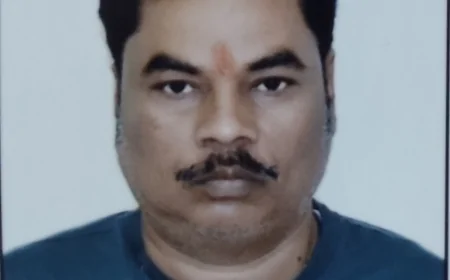
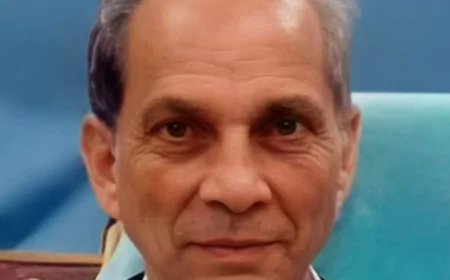
--When the internal emergency was declared 50 years ago, I was the Kerala State President of the Students Federation of India and a student of political science at Sree Narayana College, Kollam. Less than a week after the declaration of emergency, we violated the emergency and staged a protest in the heart of Thiruvananthapuram city, right in front of the Government Secretariat, shouting slogans like “Throw the Emergency into the Arabian Sea”. We were arrested and after the usual physical torture in the lockup, which was very common in those dark days, were jailed under the Defence of India (DIR) Act, said Sanjay Parate, general secretary, CPI(M).
EMERGENCY: AN ERA OF REPRESSION AND RESISTANCE
22-JUNE-ENG 14
RAJIV NAYAN AGRAWAL
ARA----------------------------When the internal emergency was declared 50 years ago, I was the Kerala State President of the Students Federation of India and a student of political science at Sree Narayana College, Kollam. Less than a week after the declaration of emergency, we violated the emergency and staged a protest in the heart of Thiruvananthapuram city, right in front of the Government Secretariat, shouting slogans like “Throw the Emergency into the Arabian Sea”. We were arrested and after the usual physical torture in the lockup, which was very common in those dark days, were jailed under the Defence of India (DIR) Act, said Sanjay Parate, general secretary, CPI(M).
During the emergency, Comrade A.K. Gopalan, E.M.S. Namboodiripad and other such prominent leaders were arrested and then released for fear of public discontent. Many leaders of the CPI(M), including present and former polit bureau members, were jailed under the Maintenance of Internal Security Act (MISA) and DIR.
Even before the declaration of the Emergency, West Bengal was under the reign of quasi-fascist terror under Congress Chief Minister Siddhartha Shankar Ray since 1972. It is true that the Indira Gandhi regime exhibited fascist tendencies during the internal emergency. It is also true that many condemned it in the strongest terms as a fascist move. At the same time, it should not be forgotten that Comrade AKG had described Indira Gandhi as a female Hitler. However, it was not fascism, but an extremely autocratic regime that exhibited some such fascist tendencies.
It is worth noting that it was in this context that Comrade EMS took the initiative to publish Georgi Dimitrov's famous thesis, The United Front Against Fascism, in Malayalam, with a rather lengthy preface of his own. This document, also known as the Dimitrov Thesis, is an authoritative text that discusses what fascism is, and how to build a broad coalition or platform in the fight against fascism. In 1935, at the 7th Congress of the Third International (also known as the Communist International), which was founded under the leadership of Lenin, the new phenomenon that had emerged in Mussolini's Italy, Hitler's Germany and other countries was extensively analysed. That document, including the concluding speech, effectively put forward the summary of all those discussions.
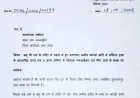
Dimitrov defined fascism as the open terrorist dictatorship of the most reactionary, most chauvinistic and most imperialist elements of financial capital. He also said, "No general characterisation of fascism, however correct it may be in itself, can relieve us of the need to study and take into account the specific features of the development of fascism and the different forms of fascist dictatorship in different countries and at its different stages. It is necessary to investigate, study and find out the national specific relations and the specific national characteristics of fascism in each country and accordingly to outline effective methods and forms of struggle against fascism." The capture of state power by fascism is not a simple replacement of one bourgeois government by another, but a replacement of one form of ruling class by another bourgeois, thereby establishing an open terrorist dictatorship in place of parliamentary democracy. At the 9th General Session of the CPI(M) held at Madurai in 1972, it was pointed out that there were serious problems in the Indian economy and the failure of the Congress to implement the promises made in the 1971 elections, including Garibi Hatao, was causing widespread discontent among the Indian masses. The political resolution adopted at that General Session stated that the regime of Indira Gandhi was fast turning into an oppressive dictatorship. While the CPI(M) had predicted the future dangers and actively opposed the dark days of Indian democracy, there were some who actively supported it. The tradition of RSS leaders Hegdewar and Golwalkar exhorting Indian youth not to waste their energies in fighting British imperialism and Savarkar submitting half a dozen mercy petitions to colonial authorities was maintained by them even during the Emergency. During the Emergency, RSS Sarsanghchalak Madhukar Dattatreya Deoras wrote letters to Indira Gandhi seeking clemency. A copy of these letters written by Deoras is enclosed as an appendix to his book ‘Hindu Sangathan aur Authoritarian Politics’. In a letter dated August 22, 1975, Deoras praised Indira Gandhi’s address to the nation, calling it timely and balanced. He concluded the letter by clearly stating his intentions: I request you to take this into consideration and lift the ban on RSS. If you deem it fit, I will be very happy to meet you personally.
In another letter dated November 10, 1975, Deoras distanced RSS from the anti-government movements of the time, contrary to the claims of many BJP leaders. He wrote: The name of RSS has been taken in the context of Jayaprakash Narayan's movement. The government has also linked RSS to the Gujarat and Bihar movements without any reason. The Sangh has no connection with these movements. Once again he appealed to Indira Gandhi to lift the ban and demanded the support of RSS.
Deoras promised: The selfless efforts of lakhs of RSS workers could be used to further the government’s development programmes.
The immediate fallout of this letter was that the Uttar Pradesh unit of the Bharatiya Jana Sangh (BJS), the predecessor of the BJP, announced its full support to the government on June 25, 1976, the first anniversary of the declaration of Emergency. It further pledged not to participate in any anti-government activity. Interestingly, according to reports, 34 BJS leaders in UP and Madhya Pradesh joined the Congress.
Former Intelligence Bureau (IB) chief T.V. Rajeshwar, who served as its deputy chief during the Emergency, writes in his book ‘India: The Crucial Years’ that Deoras established a direct line of communication with the Prime Minister’s Office and expressed strong support for many of the steps taken to impose order and discipline in the country (emphasis ours). This included praising Sanjay Gandhi's family planning campaign, especially its implementation among Muslims.
Senior BJP leader Subramanian Swamy, in an article titled 'Unlearned Lessons of Emergency' published in 'The Hindu' on 13 June 2000, has exposed the dubious role played by the RSS and its leaders during this period. He has said that Atal Bihari Vajpayee spent only a few days in jail and was out on parole for the rest of the Emergency. Swamy claims that Vajpayee had entered into an agreement with Indira Gandhi in which he had pledged that if he was released, he would not engage in any anti-government activity. According to Swamy, Vajpayee did whatever the government told him to do while he was out on parole. He further alleged that in November 1976, senior RSS leader Madhavrao Mule advised him (Swamy) to stop his resistance efforts, as the RSS had finalised the document of surrender to be signed at the end of January. During the Emergency, which they now claim to have bravely opposed, such a dual role was played by the RSS.
The declaration of internal emergency was by no means a spur of the moment decision. The JP movement was rapidly gaining popularity and students and youth were coming out in large numbers in support of the call for total revolution. This naturally led Indira Gandhi and the Congress to the path of persecution. The railway strike of 1974 had shaken the government. The atrocities committed against it led to widespread protests all over the country. However, the Congress government in Gujarat was unable to withstand the anger of the people as elections were not being held and Morarji Desai went on a hunger strike against it. Finally, with no way out, Indira Gandhi was forced to announce elections in Gujarat.
The Gujarat election verdict and the Allahabad High Court verdict were pronounced on the same day, 12 June 1975. In both cases, Indira Gandhi and the Congress party suffered humiliating defeats. The High Court judgment found the then Prime Minister guilty of electoral malpractice and barred her from holding elected office or contesting elections for 6 years. She approached the Supreme Court for an unconditional stay. However, Justice Krishna Iyer granted her a stay on humiliating terms. Therefore, if she wanted to continue in power, she had no choice but to declare an emergency. Not only was it a dictatorial act, it was also a declaration made without following due procedure. The Shah Commission had found that the then Prime Minister had decided to declare an emergency without consulting her own cabinet!
It is said that in a democratic house there will be some room for dictatorship. In modern bourgeois parliamentary democracy, freedom of expression, freedom of assembly, etc. are part of it. But when a situation arises that an exploitative system can be changed into an egalitarian one through mass movements, such freedoms and rights will be abolished. Then the dictatorial tendencies cloaked in the shiny garb of bourgeois democracy will reveal their ugly face. This is what we saw 50 years ago during the internal emergency and are seeing now during the undeclared emergency under the Narendra Modi government.
It was the common people of India, especially the poor and rural sections of our population, who reacted most bitterly against the internal emergency in the 1977 elections. In fact, elections were held by easing some of the conditions imposed during the emergency and the actual emergency was lifted only when Indira Gandhi and the Congress suffered a humiliating defeat at the hands of the Indian people.
If India's internal emergency teaches us anything, it is that the people are supreme and will not tolerate any ruling class that crushes them; no matter how big and powerful they are. It also reminds us that we must move forward firmly in our fight for the people and with the people.
What's Your Reaction?
 Like
0
Like
0
 Dislike
0
Dislike
0
 Love
0
Love
0
 Funny
0
Funny
0
 Angry
0
Angry
0
 Sad
0
Sad
0
 Wow
0
Wow
0