














































CM RECOUNTED THE STORY OF THE ‘EDUCATION REVOLUTION’
-Amidst the excitement of the Bihar Assembly elections, Chief Minister Nitish Kumar shared the 20-year story of Bihar's education journey in a lengthy tweet. He explained that before 2005, the state's education system was in complete disarray, but after the formation of the new government, extensive reforms were made across primary, higher, and technical education. CM Nitish Kumar stated that now there are schools in almost every hamlet in the state, millions of teachers have been appointed, and the literacy rate has reached close to 80 percent.

CM RECOUNTED THE STORY OF THE ‘EDUCATION REVOLUTION’
3-NOV-ENG 6


RAJIV NAYAN AGRAWAL
PATNA---------------------------Amidst the excitement of the Bihar Assembly elections, Chief Minister Nitish Kumar shared the 20-year story of Bihar's education journey in a lengthy tweet. He explained that before 2005, the state's education system was in complete disarray, but after the formation of the new government, extensive reforms were made across primary, higher, and technical education. CM Nitish Kumar stated that now there are schools in almost every hamlet in the state, millions of teachers have been appointed, and the literacy rate has reached close to 80 percent.


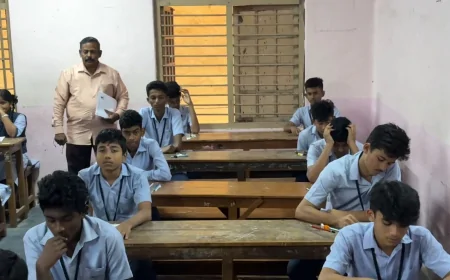
Chief Minister Nitish Kumar (CM Nitish Tweet) stated that before 2005, the state of education in Bihar was very poor. Students were unable to attend school. Government school buildings were dilapidated. The number of primary schools in the state was very low. There was a severe lack of educational infrastructure. Schools lacked benches and desks for children to sit on. There was a severe shortage of teachers in government schools.
Between 1990 and 2005, the state saw negligible teacher recruitment. The student-teacher ratio was abysmal. At that time, there was only one teacher for every 65 children. Approximately 12.5 percent of children were completely out of school, meaning they were cut off from education. The majority of these children belonged to the marginalized Mahadalit and minority communities, unable to attend school. Even the few teachers who existed at the time were unable to receive their salaries on time.
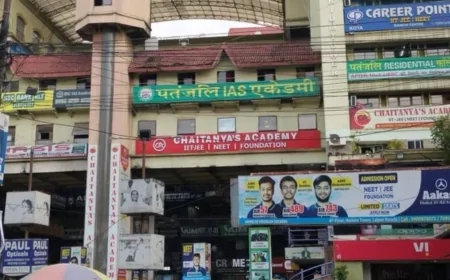
Very few girls were able to attend school. Girls were unable to pursue further studies after the fifth grade. The state's education system was completely devastated. Those in power had reduced education to a travesty. There were virtually no good colleges and educational institutions in the state for further studies after the 10th grade. There was a severe lack of good institutions for higher and technical education. The academic sessions were so delayed that students took up to five years to complete their graduation. The state's youth were forced to migrate to other states to pursue higher and technical education. At that time, those in power considered their duties and responsibilities towards education fulfilled by opening "shepherd schools" instead of building new schools in the state.
The Chief Minister (CM Nitish Tweet) stated that after the formation of the new government in the state on November 24, 2005, we began working to improve the education system on a priority basis. To achieve this, we first increased the education budget year after year. You will be surprised to know that in 2005, the total education budget in the state was only ₹4,366 crore. Now, in 2025-26, the Education Department's budget has increased to ₹60,964.87 crore, representing approximately 22 percent of the state's total budget.
Along with the construction of new school buildings on a war footing across the state, work has also been initiated to renovate old school buildings. While there were a total of 53,993 schools in the state in 2005, this number has increased to 75,812 in 2025. Currently, 97.61 percent of the hamlets in the state are covered by government schools. High schools have been established in all panchayats and education up to 12th grade has been started so that girls do not have to travel far for studies and are facilitated in their education. Meanwhile, the number of teachers has also been continuously increased.
In 2024, 238,744 teachers were appointed through the Bihar Public Service Commission, and in 2025, 36,947 head teachers and 5,971 headmasters were appointed. Additionally, 368,000 teachers employed through local bodies in 2006 are being regularized through competency tests. Thus, the number of government teachers in the state has now reached approximately 600,000. The appointment of such a large number of teachers in the state is being discussed nationwide today.
He (CM Nitish Tweet) said that arrangements for benches and desks were made in schools. Now, the 'Unnayan Bihar Yojana' has been implemented to provide high-tech education in schools. Today, most schools up to 10+2 in the state have computer labs, e-libraries, and laboratories. Additionally, state-of-the-art libraries have been opened at the block and panchayat levels for students preparing for competitive examinations in rural areas, where students are provided with notebooks, books, other study materials, as well as high-speed internet access.
Previously, the number of girls in schools was very low. In 2006-07, our government launched a uniform scheme for female students. In 2008, a bicycle scheme was launched for 9th-grade female students, which was praised in many countries worldwide, and other states also adopted the bicycle scheme. Later, from 2010, the benefits of the bicycle scheme were extended to boys as well. As a result, the number of girl students in Matriculation and Intermediate now exceeds that of boys.
We first conducted a survey, which revealed that the 12.5 percent of children who are unable to attend school are mostly from the lower strata of society, the Mahadalit class, and the Muslim community. Special efforts were made to bring these children to school. Tola Sevaks were appointed to take children from Mahadalit families to school, and Tola Sevaks (Talimi Markaz) were appointed to bring children from the Muslim community to school. These were appointed as Shiksha Sevaks, who help these children reach school. Due to our government's efforts, almost 100% of children are currently attending school.
Enhancing comprehensive reforms in the education system, our government implemented an academic calendar in the state. Matriculation and intermediate examinations are now being conducted on time, and results are also being released on time. We also paid special attention to higher education and technical education in the state. In 2005, there were only 10 state universities in the state, but today their number has increased to 21, with the establishment of four central universities and eight new private universities. We have also decided to establish degree colleges in all block headquarters in the state in a phased manner, and work on this is progressing rapidly.
In addition, with the efforts and cooperation of the state government, several national-level educational institutions have also been established in the state. These include Chanakya National Law University, Chandragupta Institute of Management, Indian Institute of Technology (IIT) in Bihta, Patna, All India Institute of Medical Sciences (AIIMS) in Patna, National Institute of Fashion Technology (NIFT), Indian Institute of Management (IIM) in Bodhgaya, and Indian Institute of Information Technology (IIIT) in Bhagalpur. In 2017, we established the Bihar State University Service Commission to recruit lecturers in higher educational institutions.
Before 2005, the state had very few engineering and medical colleges. Today, engineering colleges operate in all 38 districts. The number of polytechnic institutes has increased from 13 to 46, and the number of ITIs has increased from 23 to 152. For medical education, in addition to AIIMS and IGIMS in Patna, the state has 12 government medical colleges. Furthermore, including AIIMS Darbhanga, a total of 21 new government medical colleges are under construction in the state, which will be completed soon. This will bring the total number of government medical colleges in the state to 35.
In addition, (CM Nitish Tweet) nine private medical colleges are also being opened in the state. Before 2005, students from Bihar used to go outside the state to study engineering and medicine because the state's government engineering colleges had only 460 seats. Now, the number of seats has increased to 14,469. As a result, students here are no longer forced to travel abroad for higher, technical, and medical education; instead, students from other states are coming here to study.
Due to our efforts in the field of education, the state's literacy rate has reached nearly 80 percent today, and the female literacy rate, which was only 33.57 percent in 2001, has now increased to 73.91 percent.
This radical change in the field of education in the state is not just a matter of numbers; it reflects our priority, commitment, and positive initiatives towards education. Education is now truly the right of every child in Bihar. I am pleased that we have achieved considerable success in educating our state and society over the past 20 years.
Remember the work we have done to provide quality education to the children and youth of the state. We will continue to do so in the future. We deliver on our promises. Jai Bihar!
Chief Minister Nitish Kumar (CM Nitish Tweet) described this as "Bihar's education revolution," claiming that his government fulfilled its promises and will continue to prioritize education.
What's Your Reaction?
 Like
0
Like
0
 Dislike
0
Dislike
0
 Love
0
Love
0
 Funny
0
Funny
0
 Angry
0
Angry
0
 Sad
0
Sad
0
 Wow
0
Wow
0