





































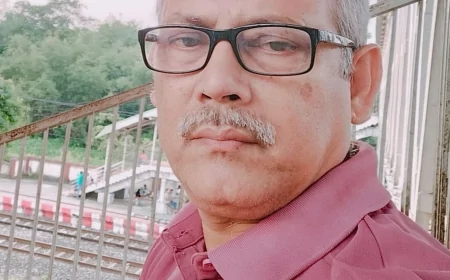






















A NEW CABINET IN BIHAR WITH A CHANGED EQUATION WILL BE CRUCIAL FOR THE FUTURE POLITICAL DIRECTION: DEVANAND SINGH
-Bihar has once again witnessed the political scene that has become a hallmark of its political landscape for the past decade and a half: Nitish Kumar's swearing-in ceremony marking his return to power. On Thursday, he took oath as Chief Minister for the tenth time, marking not only a unique political achievement but also making it clear that stability in Bihar politics remains synonymous with complex and changing equations.
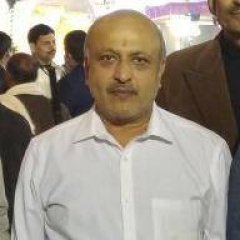
A NEW CABINET IN BIHAR WITH A CHANGED EQUATION WILL BE CRUCIAL FOR THE FUTURE POLITICAL DIRECTION: DEVANAND SINGH
21-NOV-ENG 18


RAJIV NAYAN AGRAWAL
ARA------------------------------Bihar has once again witnessed the political scene that has become a hallmark of its political landscape for the past decade and a half: Nitish Kumar's swearing-in ceremony marking his return to power. On Thursday, he took oath as Chief Minister for the tenth time, marking not only a unique political achievement but also making it clear that stability in Bihar politics remains synonymous with complex and changing equations.


The ceremony, held at Patna's historic Gandhi Maidan, was attended by Prime Minister Narendra Modi, Home Minister Amit Shah, and Chief Ministers of several states. This scene clearly indicates the extent to which the central government's top leadership is reposing its trust in the leader of its ally in Bihar. This trust stems not from the results of the recent assembly elections and the new political structure that has once again pushed Bihar towards the National Democratic Alliance (NDA).
In this assembly election, the NDA secured a majority by winning 202 out of 243 seats, nearly marginalizing the opposition. The BJP's 89 seats, the JDU's 85, the Lok Janshakti Party (Ram Vilas)'s 19, the Hindustani Awam Morcha's 5, and the Rashtriya Lok Morcha's 4 seats, together create a numerical equation in which decision-making power is no longer confined to a single party, but rather to a collective one. However, it is also true that both the JDU and the BJP are on equal footing in terms of their political base and support base. This fact could have a significant impact on the balance of power, departmental allocation, and policy decisions in the future.
Most interestingly, even though the BJP emerged as the largest party this time, the Chief Minister's post still went to the JDU. This is the result of Nitish Kumar's political acumen and his "organizing ability," which has once again placed him at the helm of power. Nitish Kumar's influence in Bihar politics is evident not only in his position but also in his political acumen. He is one of the few leaders in Indian politics who has strategically handled constantly shifting alliances, political polarization, and social dynamics.
From leaving the Grand Alliance and returning to the NDA in recent years to now forming a stable government, Nitish Kumar's journey exemplifies political pragmatism. He has the image of "Sushasan Babu," and while this image has faced criticism over time, his administrative experience is undeniable. His selections and portfolio allocations in this cabinet indicate that he intends to move forward with both continuity of governance and social balance in mind. On Thursday, 26 ministers were sworn in as ministers in the Nitish Kumar government, including three women and one Muslim. While this number may not seem large, it holds significant significance in terms of social representation and political message.
This time, Samrat Chaudhary and Vijay Kumar Sinha were sworn in as the two prominent faces from the BJP.
Samrat Chaudhary has risen rapidly within the BJP over the past seven years. First, he became the state president, then the deputy chief minister, and now, once again, he has emerged as a prominent figure in the cabinet. His social base is deeply rooted among the core OBC voters. The political background of his father, Shakuni Chaudhary, and mother, Parvati Devi, has given him a strong base, a fact the BJP understands well, and this is why he has been seen as a potential candidate for the chief ministership.
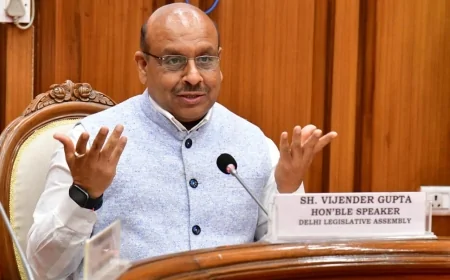
Vijay Kumar Sinha, who comes from the RSS and Akhil Bharatiya Vidyarthi Parishad background, is considered a reliable organizational figure for the party. From the position of Assembly Speaker to Deputy Chief Minister, his role has always been crucial. The inclusion of these two leaders in the cabinet signals the BJP's strategy to expand its political base in Bihar and create a second line of leadership.
The JDU includes leaders like Vijay Kumar Chaudhary, Bijendra Prasad Yadav, Shravan Kumar, Ashok Chaudhary, Madan Sahni, and Sunil Kumar, whose administrative acumen and experience strengthen the stability of the Nitish Kumar model.
The reinstatement of Leshi Singh in the cabinet indicates that Nitish Kumar prefers to move forward with his old and trusted team. His consistent victories from the Dhamdha constituency and his strong hold in the Seemanchal region make him a key political figure.
The inclusion of Mohammad Zama Khan, the JDU's only Muslim minister, also signals political balance. The issue of Muslim representation has always been sensitive in Bihar, and the selection of Zama Khan sends a clear message from the JDU in this regard. The two ministers from the LJP(R)—Sanjay Kumar and Sanjay Kumar Singh—represent the continuation of Ram Vilas Paswan's political legacy.
HAM's Santosh Suman, son of Jitan Ram Manjhi, strengthens the presence of Dalit politics.
The inclusion of Deepak Prakash from the RLM also gives Upendra Kushwaha's political base representation in power. The combined representation of all these smaller allies proves that Nitish Kumar understands both the constraints and benefits of a multi-party coalition. This time three women Leshi Singh, Rama Nishad and Shreyasi Singh were included in the cabinet. While Leshi Singh is an experienced leader, the rise of Shreyasi Singh is a message from Bihar's new political generation.
By winning a medal at the international level, she represents a new kind of leadership in Bihar politics. Her victory is not only political but also symbolic, a blend of sports, youth power, and women's leadership.
Rama Nishad's inclusion emphasizes social justice and the political presence of the Nishad community. Nitish Kumar's return is no less than a simple political event. It is a result of the combined impact of Bihar's broader social fabric, caste dynamics, party interests, coalition compulsions, and leadership strategies.
In the coming times, the government will face challenges on several key fronts. Unemployment remains a major issue in Bihar. Youth have high expectations from the new government. This is the front that both built and, at times, challenged Nitish Kumar's image. Expectations of improvement in this area from the new government are natural.
Both the JDU and the BJP have their own influence in this region. The success of this coordination will depend on the efficiency of the government. As large as the NDA came to power with a majority, so too does the responsibility of maintaining harmony among such diverse political parties.
Nitish Kumar's rise to power for the tenth time is not merely a personal achievement, but a reflection of the complexities of Bihar's political tradition, social structure, and power dynamics. The new cabinet is a blend of experience, youthful energy, social representation, and political strategy that will shape Bihar's course in the years to come. However, the real test begins now—when the time comes to fulfill promises, fulfill public trust, and provide stable, effective, and progressive governance. This chapter in Bihar politics has opened with new opportunities and new challenges. Now it remains to be seen in which direction and at what speed this coalition government moves towards development.
What's Your Reaction?
 Like
0
Like
0
 Dislike
0
Dislike
0
 Love
0
Love
0
 Funny
0
Funny
0
 Angry
0
Angry
0
 Sad
0
Sad
0
 Wow
0
Wow
0