










































































Transforming Bihar: A Historical and Modern Journey
Bihar, a state in India renowned for its rich cultural and historical heritage, is today advancing toward a new era. Once the cradle of the ancient Magadh Empire, home to globally celebrated institutions like Nalanda and Vikramshila universities, and the birthplace of Buddhism and Jainism, Bihar is undergoing a transformative phase in development, education, healthcare, infrastructure, and social consciousness. This book, Transforming Bihar, narrates the story of Bihar’s journey from ancient times to the present day. It not only highlights the state’s triumphs and tribulations but also underscores how the pride of being a Bihari is resonating in the hearts of its people today.

Transforming Bihar: A Historical and Modern Journey
3-AUG-ENG 16


RAJIV NAYAN AGRAWAL
ARA--------------------------


Introduction
Bihar, a state in India renowned for its rich cultural and historical heritage, is today advancing toward a new era. Once the cradle of the ancient Magadh Empire, home to globally celebrated institutions like Nalanda and Vikramshila universities, and the birthplace of Buddhism and Jainism, Bihar is undergoing a transformative phase in development, education, healthcare, infrastructure, and social consciousness. This book, Transforming Bihar, narrates the story of Bihar’s journey from ancient times to the present day. It not only highlights the state’s triumphs and tribulations but also underscores how the pride of being a Bihari is resonating in the hearts of its people today.
Bihar is not merely a geographical entity; it is an idea, a culture, and a dream. This book weaves together the glorious tales of Bihar’s past, its present progress, and its future possibilities. From antiquity to modernity, Bihar has repeatedly proven its resilience in overcoming challenges and redefining its identity. The purpose of this book is to preserve this transformation and inspire every Bihari to take pride in their roots.
Dedicated to the indomitable spirit of Bihar, which continues to march forward despite adversities, this book tells the story of millions of Biharis who, through their hard work, dedication, and resolve, have not only reshaped their state’s image but also carved a niche on national and international platforms. It connects Bihar’s historical pride, contemporary efforts, and future aspirations, encouraging every Bihari to contribute to their state’s progress and embrace their identity with pride.
1. Ancient Bihar: The Golden Age of Glory
1.1 The Magadh Empire and Buddhist-Jain Traditions
Bihar’s history spans thousands of years, brimming with tales of glory and prosperity. In ancient times, Bihar was the heart of the Magadh Empire, emerging as the cultural and political capital of India. Magadh, encompassing present-day southern Bihar, was ancient India’s most powerful empire. Emperor Chandragupta Maurya, guided by his mentor Chanakya, transformed Magadh into a vast empire that unified the Indian subcontinent. Chanakya’s Arthashastra, a monumental treatise on statecraft and economics, stands as a testament to Magadh’s intellectual prowess.
Emperor Ashoka, celebrated in world history as an apostle of non-violence and peace, elevated Magadh’s capital, Pataliputra (modern-day Patna), into one of the world’s most prosperous and influential cities. After embracing Buddhism following the Kalinga War, Ashoka placed Bihar on the global stage. His rock edicts and stupas, still present across Bihar, bear witness to his policies of peace and equality.
Bihar is the sacred land where Lord Buddha attained enlightenment in Bodh Gaya and Lord Mahavira was born in Vaishali. The rise of Buddhism and Jainism on Bihar’s soil enriched not only India but the entire world with spiritual and philosophical insights. Sites like Bodh Gaya’s Mahabodhi Temple, Rajgir’s Shanti Stupa, and Vaishali’s Ashokan Pillar continue to attract pilgrims and tourists from across the globe. Bihar provided a global platform for the spread of Buddhism, playing a pivotal role in establishing Buddhist culture in countries like Sri Lanka, Thailand, and China.
1.2 Nalanda and Vikramshila: Global Centers of Knowledge
Ancient Bihar was a global hub of education. Nalanda University, established in the 5th century during the Gupta dynasty, was the world’s first residential university. It housed over 10,000 students and 2,000 teachers who studied subjects like mathematics, astronomy, philosophy, medicine, and literature. Chinese travelers Hiuen Tsang and Yijing described Nalanda as an “ocean of knowledge,” attracting scholars from across the world. Its nine-story library, known as Dharmaganj, was one of the largest repositories of knowledge globally.
Vikramshila University, founded in the 8th century by the Pala dynasty, was renowned for its studies in tantra and Buddhist philosophy. Like Nalanda, it drew scholars from far and wide. These universities made Bihar synonymous with global education, fostering not only academic excellence but also cultural and intellectual exchange.
1.3 The Medieval Period: A Time of Ups and Downs
The medieval period saw Bihar endure invasions and political upheavals. In the 12th century, Bakhtiyar Khilji destroyed Nalanda and Vikramshila universities, dealing a severe blow to Bihar’s educational and cultural heritage. The burning of Nalanda’s library, with millions of manuscripts reduced to ashes, dimmed Bihar’s intellectual brilliance. During the Mughal and British eras, Bihar further weakened economically and socially.
However, the Mithila region’s scholarly traditions and Maithili literature kept Bihar’s cultural identity alive. Scholars like Vidyapati enriched Maithili literature, while Madhubani painting, a hallmark of Mithila, gained global recognition. This art form not only preserved Bihar’s cultural heritage but also showcased it on the world stage.
1.4 The British Era: Exploitation and Resistance
During British rule, Bihar faced economic exploitation. Its fertile lands were used for indigo cultivation, pushing farmers into poverty and servitude. In the First War of Independence in 1857, Bihar played a significant role, with Veer Kunwar Singh leading a rebellion against British rule in Arrah and Jagdishpur. Bihar’s contribution underscored its importance in the freedom struggle.
However, British policies weakened Bihar’s economic and social fabric. Neglect of education and healthcare further hindered development, causing significant damage to Bihar’s cultural and intellectual legacy.
2. Post-Independence: A Period of Challenges
2.1 1947-2000: “Jungle Raj” and Backwardness
Post-independence, Bihar faced numerous challenges. The period from 1947 to 2000 was particularly tough, marked by economic backwardness, corruption, and crime, which tarnished Bihar’s image. This era, often referred to as “Jungle Raj,” saw a breakdown in law and order. Education and healthcare systems were nearly collapsed. According to the 2001 census, Bihar’s literacy rate was a mere 47%, with female literacy at just 33.6%.
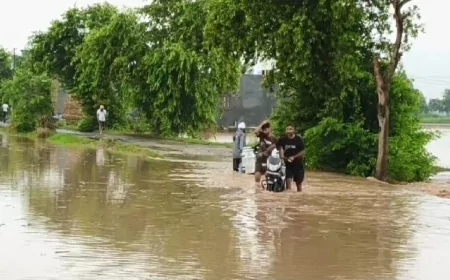
Agriculture, the backbone of Bihar’s economy, suffered from natural disasters like floods and droughts. The recurring floods of rivers like the Ganga and Kosi devastated farmers’ livelihoods. For instance, the 1987 Kosi flood displaced millions and caused widespread agricultural damage. The lack of employment opportunities forced millions of Biharis to migrate to cities like Delhi, Mumbai, and Punjab. During this period, the term “Bihari” was often mocked, hurting the self-esteem of its people.
2.2 Social and Cultural Perspective
Bihar’s social structure during this period was complex, plagued by caste-based discrimination, gender inequality, and early child marriages. Women in rural areas faced particularly dire conditions, with low literacy rates and minimal socio-economic participation. The lack of basic infrastructure, such as electricity and roads, further hindered development. For example, in the 1990s, many villages in Bihar lacked electricity and paved roads.
Culturally, Bihar preserved its rich traditions, but economic and social challenges dimmed its vibrancy. Elements like Madhubani painting and Maithili literature survived, but their global outreach remained limited. Bihar’s cultural identity needed revitalization.
2.3 Migration: Bihar’s Greatest Tragedy
Migration became Bihar’s most significant tragedy during this period. The lack of jobs and economic opportunities forced millions to leave their homes for other states. Biharis dominated as rickshaw pullers in Delhi, dabbawalas in Mumbai, and laborers in Punjab’s fields. This migration not only weakened Bihar’s economy but also disrupted its social and familial structures.
3. 2005 Onwards: Bihar’s Renaissance
Since 2005, Bihar has embarked on a new trajectory. Under the leadership of Nitish Kumar, the state government focused on restoring law and order, improving infrastructure, and implementing social reforms. Slogans like “There’s a new dawn in Bihar, with Nitish Kumar” reflect this renewed image. Bihar has made remarkable strides in economic, educational, healthcare, and social sectors, forging a new identity.
3.1 Economic Development: A New Beginning
Bihar’s economy has undergone a revolutionary transformation since 2005. According to NITI Aayog, from 2010 to 2020, Bihar’s GDP growth rate surpassed the national average. Per capita income improved, though it remains below the national average. In 2004-05, Bihar’s per capita income was just ₹10,000, rising to approximately ₹54,000 by 2022-23.
The agricultural sector saw initiatives promoting solar energy and organic farming. The Bihar Agricultural Investment Promotion Policy encouraged farmers to adopt solar pumps and organic practices, stabilizing their incomes. For example, Ramprasad Yadav, a farmer from Bhagalpur, reduced irrigation costs by 40% using solar pumps. The Saat Nischay Yojana emphasized improving infrastructure, education, and employment opportunities in rural and urban areas.
The Bihar Startup Policy spurred entrepreneurship among the youth. For instance, AgriTech Solutions, a Patna-based startup, created a digital marketplace connecting farmers directly to consumers. However, limited industrialization and job opportunities remain challenges. According to NITI Aayog’s 2022-23 survey, Bihar’s multidimensional poverty rate is 26.59%, higher than the national average of 11.28%. Nevertheless, Bihar’s economic progress has given it a new identity.
3.2 Education: A New Light of Knowledge
Bihar has made significant strides in education through various government initiatives:
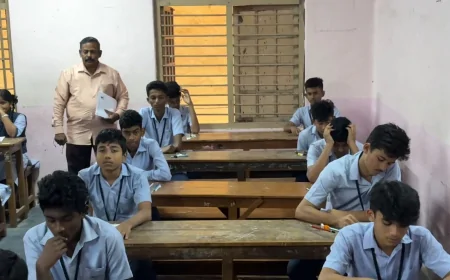
- Mukhyamantri Poshak Yojana: Provides free uniforms and books to students from grades 1 to 12, increasing school attendance by 20%. For example, a government school in Samastipur saw attendance rise from 50% in 2010 to 85% by 2023.
- Mukhyamantri Balika Cycle Yojana: Offers bicycles to girls to attend school, reducing dropout rates by 30%. Rani Kumari from Darbhanga continued her education due to this scheme and topped the Bihar Board’s 10th exam in 2023.
- Smart Classrooms: In 2025, the Bihar government planned to introduce smart classrooms in 8,000 schools, promoting digital education.
According to the 2021 census, Bihar’s literacy rate rose to 69.83%, with female literacy reaching 60.5%, a significant improvement from 2001’s 47%. The revival of Nalanda University is a crucial step in restoring Bihar’s ancient educational legacy. In 2025, the government allocated ₹178 crore for additional classrooms and infrastructure. However, challenges like poor educational quality in rural areas, inadequate teacher training, and limited access to secondary education for girls persist. For instance, dropout rates for girls in districts like Madhepura remain above 25%, with early marriages and social norms posing barriers.
3.3 Healthcare: A New Hope for Life
Bihar has made significant progress in healthcare. The number of Primary Health Centers (PHCs) and Community Health Centers (CHCs) increased from 1,800 in 2005 to over 3,500 by 2025. New hospitals in districts like Sitamarhi and Darbhanga have strengthened healthcare services. The Mukhyamantri Kishori Swasthya Karyakram focuses on adolescent girls’ health, while the National Health Mission (NHM) has improved vaccination and maternal-child health services.
For example, a PHC in Purnea vaccinated over 1,000 children in 2023, reducing infant mortality by 15%. Maternal mortality dropped from 312 per 100,000 in 2005 to 149 per 100,000 by 2023, though it remains above the national average of 97. Challenges include limited healthcare access in rural areas and rebuilding infrastructure in flood-affected regions like the Kosi area, where PHCs often shut down during floods.
3.4 Infrastructure: The Foundation of Development
Since 2005, Bihar has seen revolutionary changes in roads and electricity supply. The Mukhyamantri Gram Sadak Yojana connected rural areas to urban markets, with 85% of villages linked by paved roads by 2025, up from 20% in 2005. The Har Ghar Bijli Yojana brought electricity to over 95% of villages. For instance, a village in Supaul, without electricity until 2018, now has solar-powered streetlights and household electricity.
The Patna Metro project, progressing rapidly in 2025, and new bridges over the Ganga are enhancing connectivity. The education department allocated ₹39 crore for school infrastructure and ₹14 crore for boundary walls in 2025. However, recurring damage to roads and infrastructure in flood-prone areas like the Kosi region remains a challenge, with reconstruction costing billions annually.
3.5 Social Consciousness: A New Bihari Pride
Bihar has witnessed a remarkable shift in social consciousness. The Jeevika program empowered rural women through self-help groups. For example, Sangeeta Devi from Muzaffarpur started a small business under Jeevika, inspiring 50 other women in her village. The 50% reservation for women in Panchayati Raj brought 1.2 lakh female representatives to leadership roles by 2023.
Bihar’s new generation takes pride in being “Bihari.” However, social stereotypes and gender inequality persist, with early marriages affecting over 30% of girls in some districts. Limited access to education for rural girls continues to hinder social progress. Nevertheless, growing social awareness is fostering pride in Bihar’s cultural identity.
4. Bihar’s New Identity: A Matter of Pride
Today, Bihar is not just a geographical region but an emotion. Biharis have transformed their state’s image through resilience and hard work, establishing their presence on national and international stages. Bihari youth excel in competitive exams like IAS and IPS. For instance, Shruti Sharma from Patna became the first Bihari woman to secure All India Rank 1 in the 2023 UPSC exam.
The diligence and entrepreneurship of Bihari migrant workers have illuminated Bihar’s name across India, from rickshaw pullers in Delhi to successful entrepreneurs in Mumbai. Bihar’s cultural heritage is undergoing a renaissance, with Madhubani painting, Mithila folklore, and dishes like litti-chokha gaining global popularity. Tourist destinations like Bodh Gaya, Nalanda, and Rajgir attract millions, with Bodh Gaya hosting over 10 lakh foreign tourists in 2024.
4.1 Cultural Renaissance
Efforts to revive Bihar’s cultural heritage are underway. Madhubani painting has been proposed for UNESCO’s cultural heritage list. The Bihar government established the Madhubani Art Center to train and provide market access to local artists. The annual Litti-Chokha Festival in Patna is gaining popularity among tourists and locals alike.
4.2 Tourism: Bihar’s New Strength
Bihar’s tourism sector is rapidly developing. Sites like Bodh Gaya, Nalanda, Rajgir, and Vaishali draw global visitors. The government’s Buddhist Circuit initiatives include improved roads, hotels, and tourist facilities. In 2025, Bihar allocated ₹500 crore for tourism to establish the state on the global tourism map.
5. Challenges and Future Directions
Bihar’s journey remains incomplete. Key challenges and solutions include:
- Industrialization: Establishing industries and creating jobs is crucial. Special Economic Zones (SEZs) and industrial parks, like the planned park in Hajipur, could create 10,000 jobs and curb migration.
- Education Quality: Focus on teacher training, digital education, and rural school facilities. In 2025, Bihar announced recruitment for 6,421 school assistant positions.
- Healthcare Services: Expand PHCs and CHCs in rural areas and leverage technologies like telemedicine, which benefited over 1 lakh patients in 2024.
- Flood Management: Develop sustainable infrastructure and modernize Kosi river dams, with ₹1,000 crore allocated for flood management in 2025.
- Social Inclusion: Promote gender equality and eliminate caste-based discrimination through awareness campaigns like Beti Bachao, Beti Padhao.
6. A Message for Biharis
Bihar is transforming, and this change is the result of our collective efforts and belief. Every Bihari must contribute to the state’s progress. Whether in education, healthcare, or social consciousness, every small step can elevate Bihar to new heights. Bihar is not just a state; it is a pride, an emotion, and a dream. Let us unite to make this dream a reality.
Conclusion
The story of Transforming Bihar is an inspiring journey from ancient glory to modern renaissance. This book connects Bihar’s past, present, and future, instilling pride in every Bihari. Bihar’s new image is not only an inspiration for its residents but for the entire nation. Bihar is changing, and this transformation gives us a renewed reason to be proud.
What's Your Reaction?
 Like
0
Like
0
 Dislike
0
Dislike
0
 Love
0
Love
0
 Funny
0
Funny
0
 Angry
0
Angry
0
 Sad
0
Sad
0
 Wow
0
Wow
0